
Influencer
How Rowan Ellis Turned Queer Video Essays Into A Platform For Deep Thinking And Digital Solidarity

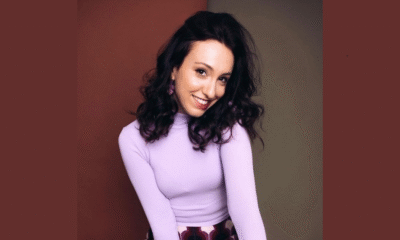
Rowan Ellis has built a digital space where complex ideas feel accessible, necessary, and deeply human. Her long-form video essays, which cover topics ranging from queer history to the politics of rest, have turned her YouTube channel into a destination for viewers seeking more than surface-level commentary.
Rowan approaches online creation with the curiosity of a researcher, the structure of a dramaturg, and the candor of someone who understands the internet not as a spectacle, but as a place where people gather to learn, question, and build community. But, before establishing herself as a digital creator, she was a student trying to understand where her interests fit.
“I did English literature, so it was an essay-based humanities subject, very much like media analysis,” she says. That foundation led her into a master’s program in Advanced Theatre Practice at London’s Royal Central School, where she entered as a director, but left with a deeper interest in dramaturgy. The problem was that in the UK, “there weren’t many jobs for it,” she recalls. “I came out afterwards and was sort of like, I kind of don’t really know what I’m going to do.”
While studying, Rowan was quietly posting on YouTube, not to become a creator, but because the platform offered something the university didn’t: open discourse. She used the now-defunct video response feature to engage with people discussing literature, philosophy, and ideas she cared about. “It was back when YouTube allowed you to do video responses, and I would mainly do video responses with my webcam,” she says.
That modest experimentation would eventually become a career. But before that shift, Rowan worked in social media roles at the London Film School, The Pool, and, finally, at Penguin Books, running socials and events for their YA division. Those roles let her combine her varied interests at a time when she feared that choosing one path meant losing other options. “I was interested in so many different things,” she says. “I was worried that pursuing one avenue was going to shut down others.”
Throughout those years, YouTube remained her creative outlet, offering the intellectual engagement she loved without the gatekeeping that had frustrated her in academia. “You gave an essay to someone and they marked it, and there was no discussion,” she says. YouTube, by contrast, allowed her to build a direct relationship with an audience willing to respond to her efforts, rather than grading her work in silence.
A New Kind of Video Essayist
Rowan didn’t begin her channel intending to produce the research-heavy, 45-minute-plus videos she releases today. Her early uploads were short, playful explorations of topics she had studied, not deep dives. “The first video was actually a video about Shakespeare’s sonnets,” she says. “I was like, ‘It’s very funny to me that Shakespeare sonnets are used so often within people’s wedding days and that fundamentally Shakespeare’s sonnets are so unromantic.’”
Over time, the format around her changed. YouTube’s embrace of longer content, paired with the rise of podcasts, changed what viewers expected. “The rise in these long, hour-long podcasts primed people for the understanding that independent digital media can be long form,” she explains.
The algorithm played its part too. Once “video essay” became a recognized genre on the platform, viewers who watched one long-form analysis would be recommended to others, even on completely different topics. For creators like Rowan, it meant no longer squeezing ideas into ten-minute blocks. “It became much more about what length does this video have to be to do justice to what the video is trying to do,” she says.
Today her videos tend to run forty-five minutes or longer, driven not by algorithmic pressure but by the ambition of the ideas. “Realistically, this is what I’ve wanted to do,” she says.
Crafting Narrative, Structure, and Intellectual Depth
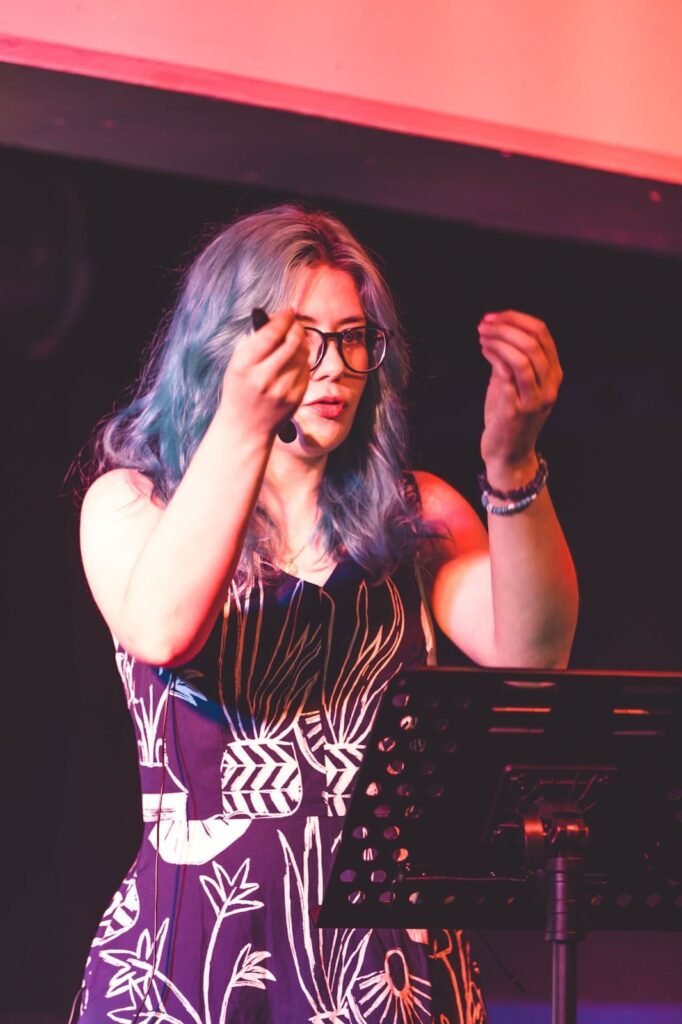
Each video begins with a growing list of future topics, some five years old, others sparked by a recent cultural shift. Once Rowan chooses one, she starts by “dumping all of the ideas that I have around the topic already; things I already know, questions that I have,” she explains.
She collaborates with researchers and co-writers, including Dr. Emilie Maine and Isabel Moncloa Daly, each bringing their own expertise and instincts. Rowan deliberately refuses to watch other creators’ videos on the same topic, joking, “Any time I watch a video about a topic that I want to make a video on, I will just watch that video and go, oh, what’s the point? Like they already did it so good.”
Instead, her collaborators map what exists, identify gaps, and help her shape a structure – one of the most critical parts of her process. “The first thing that happens when I’m going through scripting is figuring out a structure,” she says. For a recent video on the far right’s use of diet culture, she organized the research around five identity markers: masculinity, femininity, class, race, and religion. Once the framework is defined, she begins interviewing experts, conducting surveys, analyzing studies, and integrating findings.
Rowan describes her goal as making complex ideas accessible without reducing them – not dumbing it down. But she also avoids academic jargon because, according to her, the balance comes from believing “you don’t necessarily have to trick people into enjoying engaging their brains.”
Her trust in the audience is clear. People make time for her long videos intentionally, she argues, often watching on TVs during meals or while doing chores. “I do think that this idea that people are fundamentally changed to the point where they are unable to engage in depth or long-form content doesn’t necessarily feel correct to me,” she says.

A Creator Ecosystem Grounded in Community
Rowan’s creator ecosystem extends beyond YouTube. She maintains a presence on Instagram, runs a Patreon community that grew substantially after a video she posted about the economics of online creation, and is managed by Ziggurat XYZ, a talent management and creative agency.
“This is an industry that’s sort of only maybe 20 years old,” she says. “No one has had a full career on YouTube.” Without models for long-term financial sustainability, many UK creators rely on AdSense or corporate sponsorships. And unlike Canada’s Media Fund, the UK’s Arts Council, National Lottery, and British Film Institute “explicitly exclude online video.”
That leaves Patreon as one of the few sources of non-corporate funding. And for Rowan, its value is not just financial. “I’m able to have what feels like a much deeper and more reciprocal relationship with that part of the audience,” she says. Her Patreon Discord is filled with long messages, journal recommendations, and discussions about upcoming topics. “It’s been a really nice kind of mini collaborative element.”
Audience feedback matters to her, but with limits. “I have to be really careful because of a deep sense of self-doubt that any feedback is like some kind of objective truth,” she says. She looks for patterns rather than reacting to individual comments, preserving a vision she has spent years developing.
Creative Freedom and Collaborative Leadership
Rowan reveals that going full-time on YouTube was the biggest personal turning point in her career. “I am so unbelievably anxious and risk-averse,” she admits. She loved the stability of a monthly paycheck. But after witnessing layoffs and redundancies during COVID, that security felt less certain.
A Penguin workshop called “Squiggly Careers” unexpectedly pushed her toward change. “By the end, I basically was like, ‘Oh, I think I’m quitting my job,’” she laughs. “I don’t think that was meant to happen.”
As her channel grew, she built a small team comprising researchers, editors, and collaborators she trusts to match her tone and intellectual approach. “It’s people who understand what you’re trying to do, but have ways of adding to it with their own expertise,” she says.
Her leadership philosophy is grounded in respect and clarity: giving collaborators creative freedom within a shared vision. “I’m not interested in a situation where people are feeling super rushed or pressured or unappreciated,” she says.
The Ideas She Wants to Explore Next
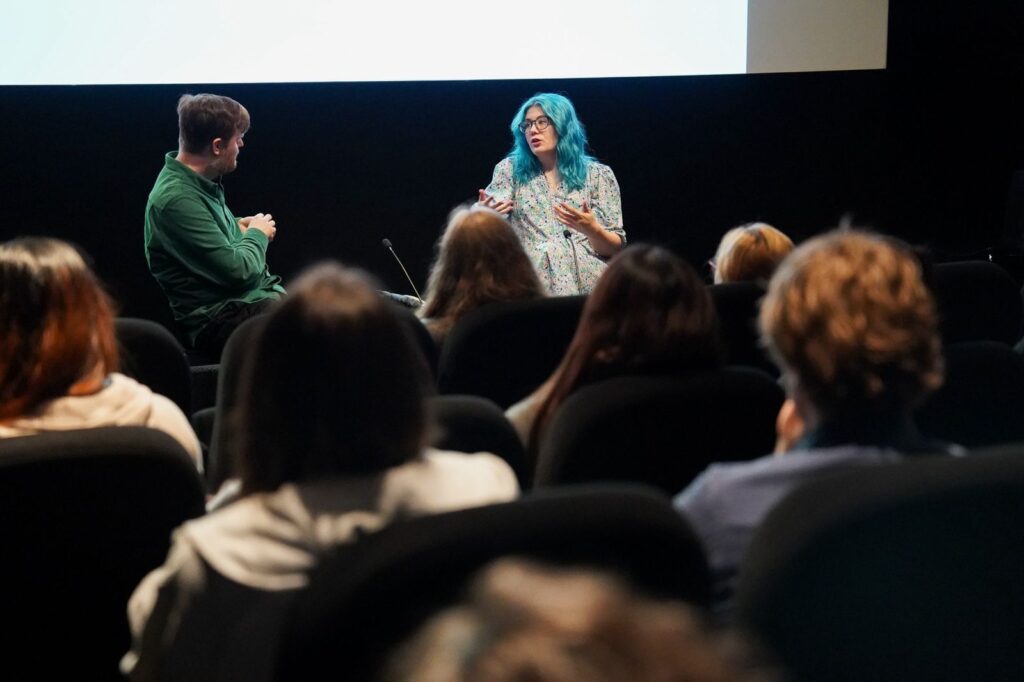
Rowan’s next video, tentatively titled “The Politics of Rest,” grew out of her recent three-week residency in Berlin. The city’s creative community made an impression on her – “immediately, people were, like, ‘Let’s hang out again’” – but so did an installation she stumbled across while visiting an exhibition on future visions. A collective called “Temporary Landing Zone” invited visitors to nap, read, or lie down in the gallery, reclaiming rest as a form of resistance. “We’re so unused to that in the world of capitalist productivity,” she says.
Beyond YouTube, Rowan is finishing a book she will soon begin querying, and she remains committed to exploring ideas that push her beyond familiar formats. The dream project she’s carried with her for years is a documentary on the Blood Sisters, a group of lesbians in San Diego who organized blood drives during the AIDS crisis. “Almost 200 lesbians show up,” she says. “There is almost no information about these women … it’s one of those pieces of queer history that’s so close to being lost.”
Ideally, it would be a YouTube project if funding models existed for that kind of work. “It feels like I want to push towards that being a type of funding which is possible,” she says.
Looking Ahead Without Losing Focus
Rowan doesn’t make long-term plans because she believes that YouTube is too unpredictable for that. But the creator knows what success looks like. “I want to feel as sort of solid and established as I do now,” she says. More importantly, she wants room to experiment and avoid stagnation. Whether through a documentary-style video, another book, or something she hasn’t yet imagined, the goal is to keep pushing outward.
As she puts it, “I don’t want to feel like I’m getting into a stagnant rhythm. Eventually, I want to do something that feels experimental or new, perhaps within the wider context of my work.”