




Strategy
How In My Jammers Built a Creator Campaign Around Co-Designed Products Instead of Sponsored Posts

Most creator campaigns end with a sponsored post. In My Jammers builds inventory instead. When the bamboo sleepwear brand launched its “In My Jammers x Lauren Lane” collection with lifestyle creator Lauren Lane, the deliverable wasn’t content. It was 13 SKUs of physical product, a hard launch date, and production minimums committed to one creator’s personal aesthetic.
Sara Vickers, the brand’s co-founder, describes the difference between that model and a standard sponsorship deal without hedging. “The creator gets to bring their own personal touch to this collection versus just saying, ‘we love these PJs, we love this brand,'” she says. “It really becomes a part of them and their personality, and their audience really resonates with that.”
Founded by Sara and Zach Vickers, In My Jammers makes premium bamboo sleepwear for babies, toddlers, and families from its base in Scottsdale, Arizona. The brand has run creator co-design collaborations since 2023: rather than paying influencers for promotional posts, it works with selected creators to develop original prints and colorways drawn from their actual lives, then produces those designs as full collections. The “IMJ x Lauren Lane” launch was among the model’s most recent executions.
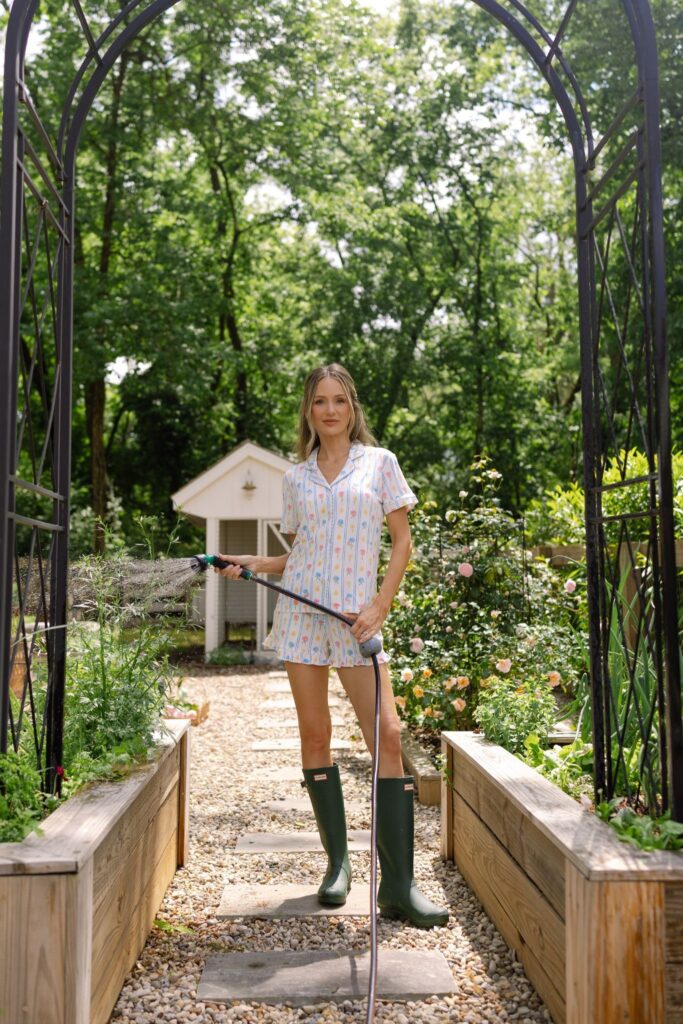
Lauren, a lifestyle and beauty creator based in Nashville and wife of country music artist Chris Lane, was selected because her life produced specific, usable design source material. A former Bachelor contestant who built a following through parenting and lifestyle content, she brought to the collaboration what Sara describes as a different quality among national influencers: a personal specificity rooted in her domestic life. Her garden and her children’s enthusiasm for bugs became the literal foundation for the collection’s prints.
The Campaign Doesn’t Start With a Contract
Before In My Jammers proposes a collection to any creator, it sends product. In Lauren’s case, the brand shipped her pajamas well before any collaboration was discussed. By that point, Lauren was already familiar with what In My Jammers makes.
“I’ve been following along with In My Jammers for years, long before this collaboration was ever on the table,” she says. “It felt like a very natural fit from the beginning.”
“We had sent Lauren some PJs before ever starting a collaboration,” Sara adds. “We really had just sent gifting to make sure that she really loved the quality and what the brand stood for before ever bringing an offer to her as far as a collection.”
Analytics matter in the selection process, Sara confirms, but the brand’s established track record with co-design means follower count is not the primary variable. The question is whether the creator’s actual life produces source material that can translate into product. Lauren’s documented fixation on her garden answered that question before any formal conversation began.
“Lauren is obsessed with her garden,” Sara says. “So we knew that was the direction she was gonna go in.”
Creative Control Is Not a Concession. It’s the Model.
One of the sharpest distinctions between In My Jammers’ approach and a standard licensing deal is where design authority sits. At this brand, it sits with the creator.
“This was all Lauren’s idea,” Sara says of the “IMJ x Lauren Lane” collection. “We really gave her free rein as far as creativity.”
In practice, that meant Lauren submitted her inspiration, a designer translated it into production-ready prints, and the brand worked through revisions with her until the collection felt genuinely hers. The flower direction shifted late in development. Lauren steered it toward a variety she felt better represented her actual garden.
Sara frames that kind of feedback as the point, not a complication. The brand’s creative director owns the marketing calendar and rollout sequencing. The collection’s visual identity belongs to the creator. “Our designer kind of took her inspo and just brought it to life,” Sara says.
Lauren’s own account of the process reflects that latitude. “I wanted the prints to feel whimsical and nostalgic while still being something moms would love too,” she says. “The In My Jammers team was so collaborative throughout the process and really encouraged me to bring my vision to the table.”
That approach stands in contrast to a practice Sara describes encountering in the industry: presenting creators with a set of pre-designed options and asking them to select one. “Some brands will give you three prints and present them to you and be like, ‘choose which you want in your collection,'” she says. “It doesn’t really resonate with the creator.”
The Teaser Strategy Compresses the Reveal Window
In My Jammers doesn’t announce collaborations far in advance. The brand holds the campaign close to the on-sale date, managing the timeline to sustain anticipation without depleting it.
“We are very strategic when it comes to teasing the collection,” Sara says. “We don’t roll it out too far in advance. We really keep it pretty close to when it’s launching.”
For the Lauren Lane collaboration, the teaser sequence was designed to obscure her identity, inviting followers to guess who the collaborator was before the reveal. The response told the brand something it factored into its read of the partnership.
“People were able to truly guess that it was Lauren with very little detail,” Sara says. “That just also tells you that people know Lauren and follow her for a reason.”
The full launch calendar was locked well in advance, even as the public rollout stayed compressed. In My Jammers’ creative director built and owned the complete sequence: photography, teaser content, the giveaway reveal, and the ongoing posting cadence through the collection’s sell period.
The Print That Sold First Wasn’t the Most Detailed
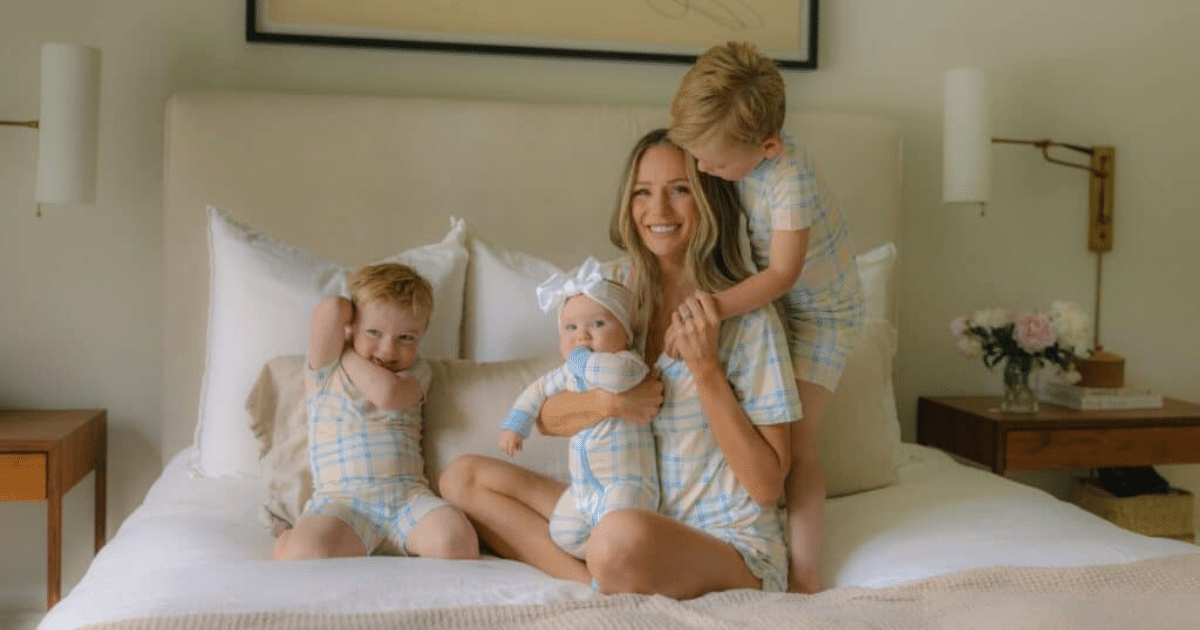
Among the 13 SKUs in the “IMJ x Lauren Lane” collection, the first to sell out was the plaid print, a result Sara describes as surprising and, on reflection, not surprising.
The plaid was the collection’s simpler design. Less visually complex than the floral and bug-themed prints that gave “IMJ x Lauren Lane” its identity, it offered something the more detailed pieces did not: gender-neutral flexibility … a single style that mothers could match with children of any gender.
“Moms love to be able to match with their children,” Sara says. “I felt like that would have a play in it.”
The result points to how two different dynamics operate inside a co-design launch. The creator’s most personal prints draw the audience in, anchoring the collection’s identity in the creator’s life. The piece that converts most immediately can be the one that serves the broadest functional need within that theme.
Build the Brand Before You Borrow the Audience
Sara’s core advice for other brands considering creator co-design reflects a specific ordering of steps: establish your own consumer relationship first, then layer in the creator’s.
“It starts with your audience, it starts with the brand’s audience first,” she says. “And then you can kind of tap into creators’ audiences. I think it’s really important to build your brand and your community first, and then be able to build off of that.”
The framework positions co-design as a scaling tool for brands that already have an established customer base, not a mechanism for generating one from scratch. The creator’s audience compounds what exists rather than substituting for it.
The Prints Outlast the Campaign
Sara says the Lauren Lane collaboration stands as one of the brand’s smoothest executions. “I wouldn’t have changed anything,” she says. Communication with Lauren’s team was efficient, inventory landed on schedule, and the collection has since sold through.
Where a standard sponsored post generates a concentrated burst of content at launch, the co-design model gave Lauren ongoing personal investment in the sell period itself. She kept directing her audience to the collection as stock moved. “Lauren has touched on it many times as far as what’s in stock, what’s not in stock,” Sara says. “So she’s really carried on the collection.”
For Lauren, the experience clarified the difference between promoting a brand and building one. “Any time I do something fashion adjacent, I am reminded of what goes into product development and brand building,” she says. “It’s more work than I could have ever imagined before seeing it from this vantage point.” Co-design requires a different kind of investment than ambassadorship. “Being involved in the ideation and creation process is totally different,” she adds. “I loved the challenge of thinking through everything from design decisions to customer experience.”
In My Jammers plans to continue the model through 2027, with additional creator collaborations already in the pipeline for the remainder of the year. Sara frames the continued investment in direct terms: this model consistently outperforms a standard promotional partnership because the creator’s involvement runs deeper than any single campaign.
Subscribe to Our Newsletter
Check Out Our Podcast