







Influencer
How Griffin Johnson Turned TikTok Fame Into a Venture Capital Career Built on Preparation and Risk

For six months in 2020, Griffin Johnson spent every day on Clubhouse explaining TikTok to founders and CEOs who were trying to understand a platform they had largely ignored. He had millions of followers, but no finance background, no investing track record, and no obvious reason for venture capitalists to take his calls. What he did have was a firsthand understanding of how creators gained audiences, how brands reached consumers, and how quickly online behavior was changing.
Griffin built his first audience the way most early TikTok creators did: inside a house, surrounded by other creators, during a pandemic. In January 2020, he moved to Los Angeles and joined six other creators in a Bel Air home that became the Sway House, one of the residential collectives that treated social media like a competitive sport during COVID lockdowns. He gained seven million followers in 12 months. By the time pandemic culture wound down, he had already started building toward something harder to scale.
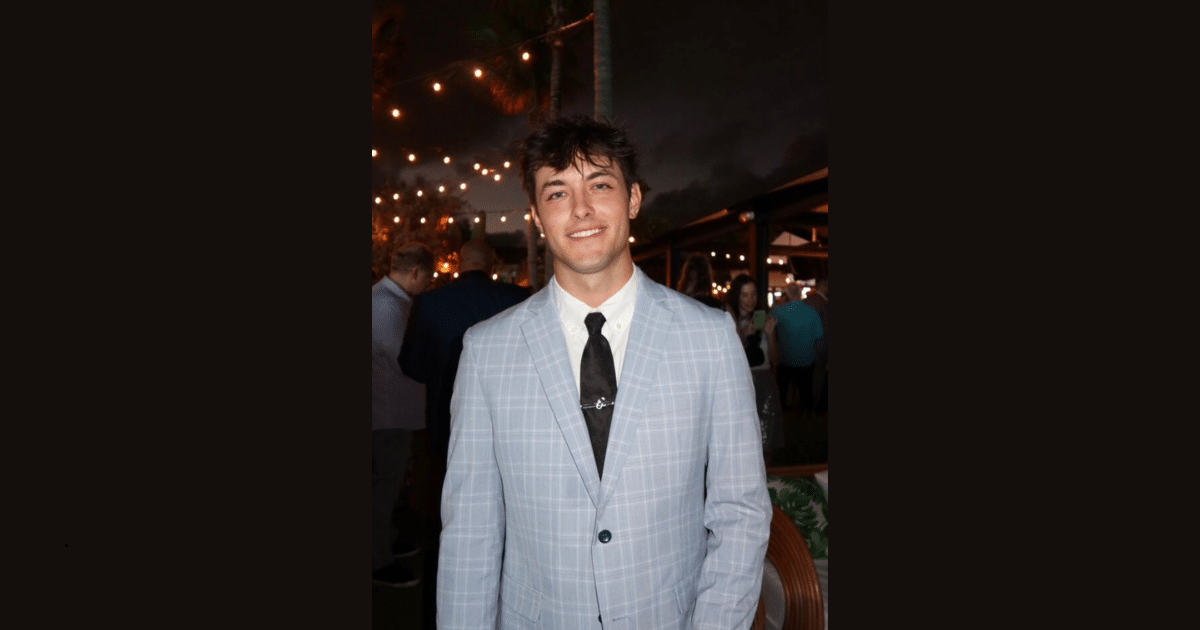
Today, Griffin is the general partner and co-founder of Animal Capital, a venture fund built on the thesis that creators with real audience trust can spot consumer demand before traditional VCs can. He holds approximately 15 million followers across TikTok, Instagram, and YouTube, among other platforms, and advises Churchill Downs and the Breeders’ Cup on modernizing horse racing for younger audiences. He is also building a 60-acre farm in the Midwest, which he intends to turn into a horse rehabilitation facility.
“I’ve never stopped working at it,” Griffin says. “I think a lot of people get lazy and content, especially when they’re blowing up, and then they forget to be relatable and honest.”
Millions of Followers and No Exit Plan
Griffin arrived at TikTok in 2019 as a nursing student in small-town Illinois, documenting his daily life. When COVID hit, the Sway House became one of the most-watched content machines in the country, and the attention pulled in brands that didn’t fully understand the platform they were paying to reach. Early conversations with companies like Reebok and with Walmart’s distributors made Griffin realize something the industry would spend years catching up to: brands didn’t know what TikTok was, and creators who did were sitting on knowledge worth more than a one-time fee.
“TMZ was picking it up, real news outlets started to pick it up,” Griffin recalls of the Sway House’s peak. “At that point, we’re like, ‘We need to build IP; we need to make a business out of this.’”
The group launched a management agency to represent themselves and then sold it. Brand deals at the time weren’t yet lucrative enough to sustain the ambition. So in 2021, at 21 years old, Griffin co-founded Animal Capital alongside three partners aged 18, 22, and 25.
Six Months of Homework Before the First Room
Animal Capital’s founding was not the celebrity venture play that critics of creator-backed funds often describe. Griffin arrived at it through a credentialing process, spending six months on Clubhouse every day, talking to founders and CEOs, explaining what TikTok could do for their businesses, before anyone in serious finance had a reason to take his calls.
“It took six months of every single day talking for hours to get there,” Griffin says of eventually walking into rooms with figures like Kevin O’Leary and the Winklevoss twins.
He is clear-eyed about why that preparation mattered and about what happens when creators skip it. “99% of the time they don’t work,” Griffin says of creator-backed funds broadly, “because they’re not authentic. The creator’s not engaged. They didn’t even know what a venture capital fund was. They don’t know any of the terms.”
He makes the distinction plainly: “Does opening a venture capital fund make sense for a TikToker that’s dancing shirtless on TikTok every day? No.”

What the Job Actually Looks Like
Griffin’s day-to-day role at Animal Capital is narrower and more operational than the “creator investor” title implies. He functions as the fund’s final filter on consumer and social viability. When Animal Capital finds a company it likes, he is the last person they consult before committing: his job is to assess whether the product has the potential to travel online and how it should be positioned.
“I’m just like the safety net,” he says. “I’m like the final guy that they talk to if there’s an investment they really like, but they want to know if it’ll actually perform well.”
Beyond the fund, he runs between 10 and 15 advisory engagements per year, working through content strategy, branding, and long-term platform positioning for early-stage companies. He points to an early engagement with Whop, the digital products marketplace, as representative. When the company was new and its concept was hard to explain, Griffin told them the solution. “Just make it simple,” he says. “They’ve told me that’s made them millions and millions of dollars.”
He tests product concepts the same way he tests content: by posting and watching. “There’s nothing easier than putting up an Instagram story and seeing how the engagement is to tell me whether or not a product is going to resonate with my audience,” Griffin says.
His audience’s commercial range has limits that he knows clearly. Lifestyle, food, and clothing translate well. Science-heavy content is harder to move. For Colossal Biosciences, the genetic de-extinction company in Animal Capital’s portfolio, his approach is to lead with story rather than science. “We’re looking to bring back the dodo bird,” he says, “and that gets people to be like, ‘What?'”
Cash Is Easy, Equity Is the Bet
Griffin’s philosophy on brand deals has shifted since his early days on TikTok. For established mass-market brands, he takes the fee. For companies at an earlier stage, he pushes for ownership. “If it’s Walmart or Target, you just take the money and run,” he says.
For smaller companies where the audience fit is right, the calculus changes. A prebiotic egg company approached him around the time he started building his farm. He could have taken $10,000 to $15,000 for a promotional series. Instead, the structure he describes would have traded a content series documenting raising chickens on his property for 3% equity in the business, potentially worth six figures as the company scales. “I’ve had five or six of those that have happened to me over the last five years,” Griffin says.
The logic underneath is straightforward. “Consumers are getting smarter,” he says. “They know when something’s a shill. They know when something’s authentic.”
Horse Racing and the Next Underdeveloped Story
Griffin’s current frontier is horse racing, a sport he describes as commercially layered and underserved by modern media. He holds a minority ownership stake in Sandman, an Arkansas Derby and Kentucky Derby contender, and advises Churchill Downs and the Breeders’ Cup on reaching younger audiences. His attraction to the sport follows a logic he applies to every new venture.

“As a creator, there are not a lot of things that don’t have stories that are untold,” Griffin says of horse racing’s appeal. “So that’s really good for me.”
Horse racing has also accelerated his own professional development. Competing at the sport’s highest levels alongside billionaires and Fortune 500 executives has functioned as an accelerated business education. “Horse venture capital prepared me for the sharks that were in horse racing,” he says, “because these big businessmen are no joke.”
The Next Serious Test
Seven years into a creator career, Griffin is precise about what his longevity required: daily output, constant reinvention, and a willingness to absorb public failure without stepping back from the platform. “I failed in public so many times,” he says. “Everything I do is, like, everyone’s watching.”
He does not expect creator-led venture capital to become a dominant force in the industry. The grit required and the pull of easier revenue streams will keep the category niche. But he believes founders who take social media seriously from the beginning will continue to outperform those who treat it as secondary. “The ones that are taking it seriously are the ones who are winning,” Griffin says.
His advice for the next wave of entrepreneurs is built on what the last six years taught him through bad investments, public setbacks, and the slow credentialing process of earning access to rooms he wasn’t born into.
“Don’t be afraid to fail,” he says, “because it’s going to happen a lot.” And then, more plainly: “Get ready to lose.”
Subscribe to Our Newsletter
Check Out Our Podcast