





Technology
FoodSocial: Building A Community Where Creators, Brands, And Home Cooks Thrive Together

What happens when a creator who built one of the early food blogs sets out to improve how recipes, brands, and audiences connect online?
For Bill Staley, the answer is FoodSocial, a Pittsburgh-based platform designed to bring food creators, brands, and home cooks into one shared community. As the company’s co-founder and CEO, Bill is no stranger to content, commerce, and creativity. Long before the “creator economy” became a buzzword, he and his wife, Hayley, turned their “Primal Palate” food blog into a multi-product business, complete with bestselling cookbooks and an organic spice line.
For Bill, that experience revealed a structural gap in the digital food ecosystem. “We were using our influence to make recipes that would showcase our own products and drive our own product sales,” Bill recalls. “You have lots of folks who are creators and lots who are brands, but the crossover between the two is actually very minimal.”
That gap between creativity and commerce became the foundation for FoodSocial. Launched in 2020 by Bill, Hayley, and Tony Ryan, a veteran finance and technology executive based in Boulder, the platform aims to restore the sense of connection and ownership that creators have steadily lost to algorithm-driven social feeds.
Tony, who previously held CFO roles at several tech firms, including Voci Technologies and AVOXI, was drawn to the project’s mix of software and storytelling. “My official title has been Uncle Tony,” he laughs. “I’ve always loved how we could take principles from tech and apply them to food; things like filtering by dietary type or ingredient as a building block. That’s how we started thinking about FoodSocial.”
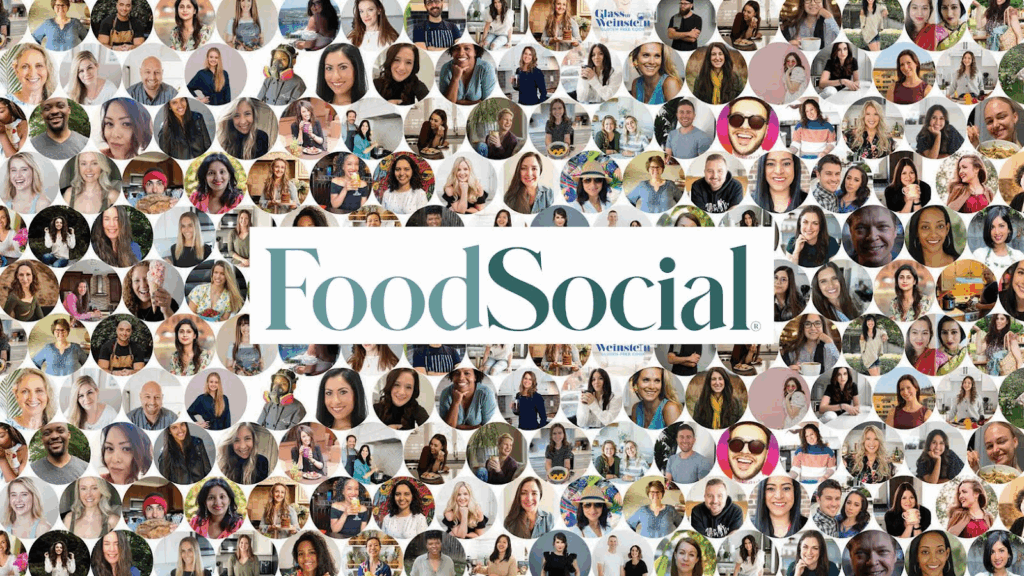
Solving for Connection in the Creator Economy
At its core, FoodSocial was designed to give creators ownership and visibility. “Most people are saving recipes as screenshots in their phones,” Bill explains. “That personal connection is being lost because big platforms are serving more ads and more AI content. The direct relationship between creator and follower is getting diluted.”
FoodSocial addresses that problem by offering a dedicated home for recipe creators, a space where their content isn’t buried by algorithmic feeds. The platform hosts recipes, meal plans, and shoppable posts, while also enabling direct collaboration between brands and creators.
“It’s a community where creators work alongside brands,” Bill says. “Many brands don’t have that available elsewhere. Most platforms only connect them to creators on a one-to-one basis. What we’re building is communal.”
Tony adds that the idea of community isn’t just branding; it’s structurally embedded into how the product works. “We designed FoodSocial so that the ingredient is the core building block,” he says. “By doing that, we can filter by diet, calculate nutrition, and link to brands in a natural way. It’s both a tech solution and a social one.”
Building a Platform Without Borders
Today, FoodSocial functions as a hybrid between a creator platform, a social marketplace, and a digital recipe hub. Anyone can join: creators upload recipes, home cooks browse and shop ingredients, and brands integrate their products directly into those recipes.
“Food in its essence is communal,” Bill notes. “There’s a reason dining tables seat many people. We’re meant to enjoy food together.”
The company recently extended that philosophy beyond its own app with a new integration inside Shopify’s Shop app, bringing more than 10,000 creator-generated recipes to hundreds of millions of consumers. “Shop asked if we wanted to build a recipe integration,” Bill explains. “Now users can search, shop, and cook directly through the Shop app. It’s a complete loop, from discovery to dinner.”
For creators, the integration represents reach and recognition. “They love it,” Bill says. “The most exciting thing for them is opportunity; being at the frontier of what’s next, expanding how they reach their audience and build their businesses.”
Rethinking Creator Ownership and Monetization
FoodSocial’s model diverges from traditional recipe platforms that rely solely on ads or traffic. Bill and Tony structured it so that both creators and brands share in the value they create.
Tony explains: “The recipe is the creator’s intellectual property (IP). Old blogging was all about SEO (Search Engine Optimization) and clicks, but now people ask AI for summaries instead of visiting websites. Our goal is to make sure the creator can monetize that IP anywhere it appears.”
The company offers several revenue streams. Brands can join on a tiered subscription, gaining access to marketing visibility and contextual product placement inside recipes. They can also participate in campaigns and activations, where dozens of creators develop recipes featuring a brand’s product, generating up to 100 new recipes per campaign. “It’s a community activation, not a one-off deal,” Bill says.
FoodSocial marketplace is built on Shopify, where more than 200 brands list 4,500 products that can be purchased directly or through shoppable recipes. “The home cook drives that engine,” Bill says. “They can browse products, shop through recipes, or buy on Shop. And, in the future, there’s potential for creators to monetize directly from their audiences, similar to Patreon or Substack.”
The Art of Partnerships
While many social platforms talk about authentic content, FoodSocial treats it as a design principle. “Engagement is always driven by authenticity,” Bill says. “You can’t engineer it, but you can engineer the conditions for it.”
According to him, those conditions involve aligning incentives between creators and brands so that sponsorships feel genuine rather than transactional. “When creators feel that brands truly support them, the collaboration becomes natural,” he says. “Followers can tell when someone actually uses a product in their kitchen versus when it’s just a sponsored post.”
FoodSocial’s campaigns often culminate in virtual “wrap parties” that bring creators and brands together for open conversation. “We livestream those to Instagram, YouTube, and LinkedIn,” Bill explains. “Creators share what they loved about a product, brands listen – it’s real dialogue.”
A clear example of that approach was “Spring Into Flavor,” FoodSocial’s Spring 2025 activation co-sponsored by U.S. Wellness Meats and Profanity Jam. Before recipe development began, both brands met FoodSocial’s creator community through virtual “Happy Hour” calls and Slack discussions to share their origin stories and missions.
That context paid off: according to the company, creators published 68 new recipes and generated 220 pieces of user-generated content, which reached an estimated 288,000 engagements across social platforms.
The campaign culminated in live shopping events on Instagram, YouTube, FoodSocial Market, and the Shop app, where brands spoke directly to consumers and creators demonstrated their recipes in real time, resulting in a 2.5× sales uplift, according to FoodSocial’s data.
The Future of Food Creation
Bill sees two major forces shaping the future: artificial intelligence and platform gatekeeping. “Creators will have to reconcile how AI fits into their work,” he says. “AI has positioned itself as a shortcut for creativity, but we’re about human-generated content and personal connection.”
For FoodSocial, that means using AI only to support creators, never to replace them. “Every tech company is thinking about AI,” Bill says. “We’re positioning ourselves to leverage it in ways that help creators and don’t compete with them.”
He also sees the company’s mission as a counterweight to the algorithmic isolation of mainstream social media. “Food connects all of us,” he says. “What we’re building is about helping creators, brands, and consumers stay connected through something universal.”
Expanding the Recipe
As 2025 draws to a close, FoodSocial is focused on deepening its Shop integration and preparing for its biggest annual event: the “Recipe Rumble,” a Super Bowl-season campaign that unites brands and creators around game-day recipes.
“It’s our biggest activation of the year,” Bill says. “We bring in multiple brands and dozens of creators to make new recipes together.”
Beyond that, the team plans to enhance interactions between home cooks, brands, and creators. “The home cook is a key part of our community,” Tony notes. “We’re expanding that relationship, making it more social, more authentic.”
For Bill, it all circles back to community, not as a buzzword, but as a guiding philosophy. “I care deeply about the creators and brands that are part of our community,” he says. “Everyone’s trying to ‘build community’ these days, but for us, it’s real. We’re all in this together.”
He adds, “People say content is king, but if that’s true, then community should be queen. And maybe the queen should be more powerful, too.”