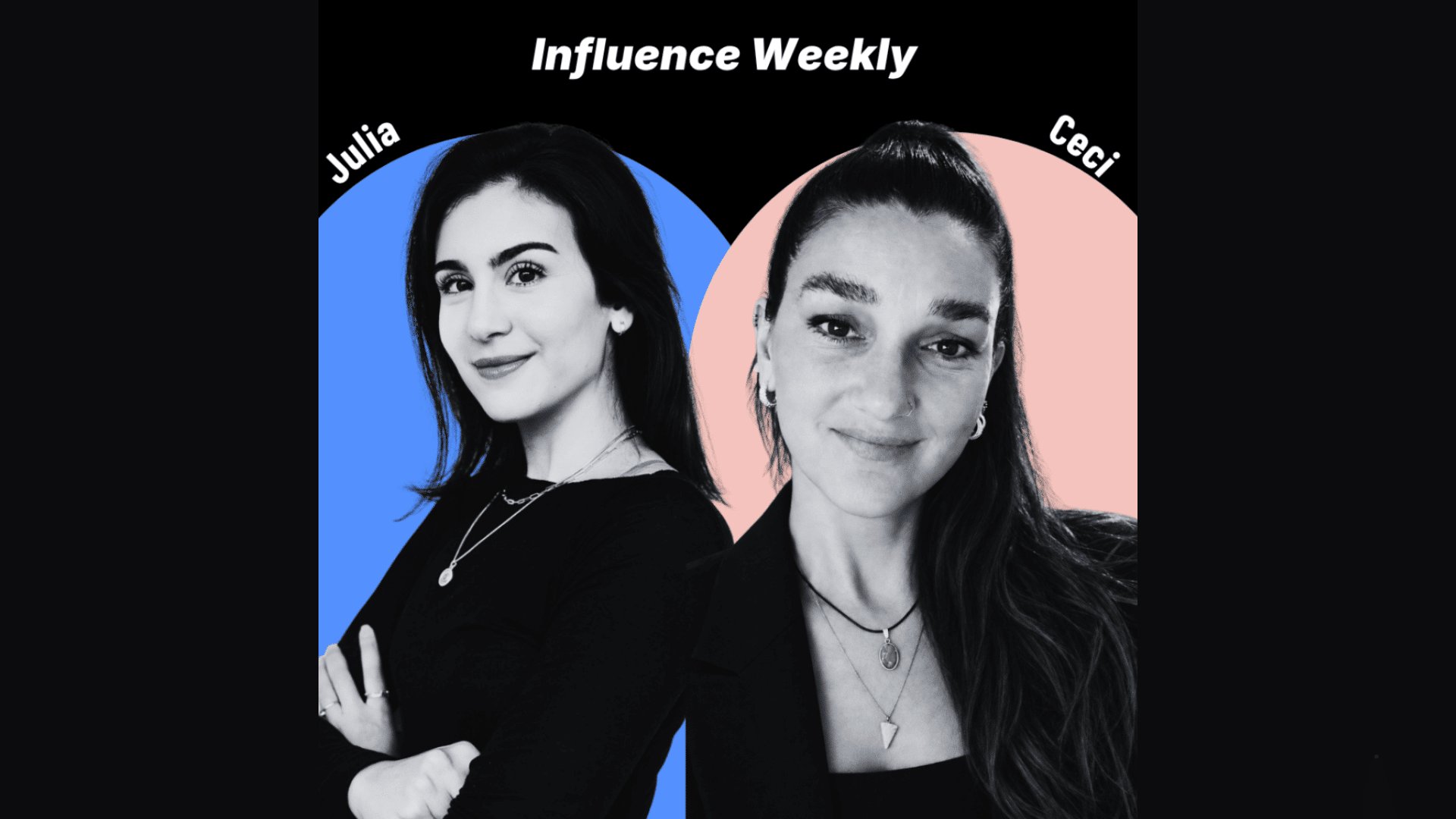
Every creator deal invoice lands as one number. Julia Salume says it should be three.
The Head of Influencer and UGC at Moburst sat down with Net Influencer Senior Editor Ceci Carloni to explain why brands consistently misprice creator partnerships, and what a marketer can change before the next campaign brief goes out. Julia was named to the PMW International Powerlist 2026. She has spent the past several years building influencer measurement frameworks and playbooks across global markets, previously serving as Influencer Relations Lead at Restream.
The conversation covered creator pricing, usage rights, measurement, and how internal team silos turn good deals into expensive ones.
1. One Invoice for Three Separate Products
The typical creator deal bundles three distinct cost components into a single line item. Julia breaks them down as production, distribution, and usage rights. Each can be priced and negotiated separately. Almost no one does.
Production covers the content creation side: cameras, gear, editing time, rental space, travel. Distribution is the audience. When a creator posts to their social channels, they are lending their platform and the trust they have built with their following. Usage rights give the brand legal permission to run that content as paid media on its own channels.
“The influencer deal, when it’s pricey, it really bundles up different deliverables that normally are just taken for granted,” Julia says.
The distinction has practical consequences. A brand hiring a UGC creator to produce content without posting owns the production and usage, with no distribution cost. A brand partnering with a streamer who has millions of followers for a live integration is paying almost entirely for distribution. Most brands don’t think in these terms until they’re in a renegotiation they’ve already lost.
2. Creator Prices Rose Because Creators No Longer Need the Money
The average creator deal jumped from approximately $3,000 in 2019 to $7,400 in 2025. The driver is not creator opportunism.
According to Julia, top creators have built independent revenue streams, product lines, courses, and platforms that didn’t exist in pre-pandemic Influencer Marketing. Brand advertising is no longer their primary income. “If they can make a living by just promoting what they build and trust, how much does someone else need to pay to poke this bubble?”
Selective posting has also become rational. Creators who over-index on brand deals see measurable audience erosion. “Influencers that do a lot of ads, the engagement drops, and by consequence, the amount of offers drops and the audience drops.” So they limit spots and scarcity follows.
“At the end of the day, you can buy attention, but you cannot buy the trust. And they know that,” Julia says.
3. Usage Rights Are Always the First Cut and the Most Expensive Regret
When a campaign budget feels high, usage rights is the first line item to go. Julia says it is also the most reliable source of regret.
“It’s always the first one to get dropped on a deal to try to make things cheaper. But this definitely can come back and bite you,” she says.
The moment a post goes live and performs, the leverage reverses. The creator can see the metrics. They know the brand wants the content. “The influencer knows that you want their video because it’s performing well, and they can charge you whatever they want.” Julia cited one case where a creator billed $200 per day for usage rights after a brand returned asking to boost a post that had taken off.
The timing cost compounds the money cost. Boosting content during the organic momentum window is more effective than boosting it after. Every hour spent renegotiating is an hour the ad isn’t running. For brands that can’t afford upfront usage rights, Julia offers a contractual fix: include a clause at signing that locks in the monthly usage rate, activatable later upon brand confirmation. “It costs you nothing; it protects both sides of the negotiation.”
4. Brands Buy Deliverables. They Expect Results.
Most creator marketing disputes, in Julia’s framing, trace back to a single category error.
“The deliverables are not the results. The results are a consequence of the deliverables,” she says. An organic post is, by definition, unpredictable. A creator with years of experience cannot forecast how a given video will perform. “Can you give me any assurance of how many likes you’re gonna get? You can’t.”
She quotes a former manager: “Influencer Marketing is not a sausage factory. You don’t press a button and know what’s coming out.” The only structure where results are a legitimate purchase is a performance deal, where payment ties to views or conversions. In every other deal, the brand is buying the content, the distribution, and the rights. What the algorithm does next belongs to no one’s invoice.
For conversion-focused campaigns, Julia recommends budgeting for paid media before the deal closes. On a $10,000 campaign, she holds at least 20% as a boosting reserve. “If I pay for the usage rights and I don’t have budget to boost, I pay for nothing.”
5. Follower Count Is the Wrong Denominator
Pricing the distribution line based on follower count has become unreliable. Julia traces the problem to how platforms changed distribution logic around 2022.
Before, content was distributed to a percentage of a creator’s following. Platforms then shifted to keyword- and content-based delivery. A creator with 1,000 followers can now reach 100,000 views on a single video. Calculating engagement against followers in that environment produces numbers above 100%. “What does this even mean? How can we be more than 100% engaged?”
The correct denominator is reach. “From the people who viewed your content, how many people are engaging with it? That’s how I would evaluate,” Julia says. A small creator with genuine reach into a specific interest community is often a more effective conversion partner than a large account with wide but shallow distribution. Brands that anchor pricing to follower count routinely overpay for size and underpay for reach.
6. Internal Silos Turn Timing Into the Real Problem
Even when usage rights are negotiated correctly, they often go unused at the critical moment. Julia notes that the failure is usually internal.
Influencer teams and paid media teams operate in separate systems. By the time a post goes live and organic momentum builds, the paid media team doesn’t know what rights exist, can’t access the asset in HD, and loses 48 hours on logistics before the boosting window closes. “The paid media is getting their assets only for creative, but they don’t realize that a creator or an influencer is also an asset,” Julia says.
Her fix at Moburst is an automated bridge. When she tags a video as live in Airtable, an automation generates an Asana task and emails the entire paid media team with usage details and the asset. “No one can say that I didn’t tell them.”
7. What to Change in the Next Negotiation
Julia’s framework for a brand marketer heading into a creator deal starts at the outreach stage. Request itemized quotes from the start. Specify production cost, cost for posting on the creator’s channels, and cost for usage rights as three separate line items. “If they come back with one rate, ask them to outline. If they don’t know how to outline, I’ll take this as a little bit of a red flag. Because it goes back to: they don’t know their value.”
On pricing: usage rights typically run 20% to 30% of the production cost per month. A six-month or 12-month usage window compounds quickly. Build it into the initial budget, not the revision.
On contracts: add the usage rate clause at signing, even without immediate activation. Lock in the monthly price. An additional invoice activates it later. The clause creates optionality at no upfront cost and protects both sides from the post-performance renegotiation.
Creator pricing confusion is not a money problem. It is a categorization problem. Brands are treating a three-part invoice as if it represented a single purchase, and cutting the most valuable piece when budgets tighten. The ones that separate production, distribution, and usage as negotiating decisions, and reserve media budget for amplification before launch, are the ones positioned to capture momentum when a post breaks through.
“I hope it helped people understand a little bit more about how to see that blended price for what it really is,” Julia says.
Dragomir is a Serbian freelance blog writer and translator. He is passionate about covering insightful stories and exploring topics such as influencer marketing, the creator economy, technology, business, and cyber fraud.












Every creator deal invoice lands as one number. Julia Salume says it should be three.
The Head of Influencer and UGC at Moburst sat down with Net Influencer Senior Editor Ceci Carloni to explain why brands consistently misprice creator partnerships, and what a marketer can change before the next campaign brief goes out. Julia was named to the PMW International Powerlist 2026. She has spent the past several years building influencer measurement frameworks and playbooks across global markets, previously serving as Influencer Relations Lead at Restream.
The conversation covered creator pricing, usage rights, measurement, and how internal team silos turn good deals into expensive ones.
1. One Invoice for Three Separate Products
The typical creator deal bundles three distinct cost components into a single line item. Julia breaks them down as production, distribution, and usage rights. Each can be priced and negotiated separately. Almost no one does.
Production covers the content creation side: cameras, gear, editing time, rental space, travel. Distribution is the audience. When a creator posts to their social channels, they are lending their platform and the trust they have built with their following. Usage rights give the brand legal permission to run that content as paid media on its own channels.
“The influencer deal, when it’s pricey, it really bundles up different deliverables that normally are just taken for granted,” Julia says.
The distinction has practical consequences. A brand hiring a UGC creator to produce content without posting owns the production and usage, with no distribution cost. A brand partnering with a streamer who has millions of followers for a live integration is paying almost entirely for distribution. Most brands don’t think in these terms until they’re in a renegotiation they’ve already lost.
2. Creator Prices Rose Because Creators No Longer Need the Money
The average creator deal jumped from approximately $3,000 in 2019 to $7,400 in 2025. The driver is not creator opportunism.
According to Julia, top creators have built independent revenue streams, product lines, courses, and platforms that didn’t exist in pre-pandemic Influencer Marketing. Brand advertising is no longer their primary income. “If they can make a living by just promoting what they build and trust, how much does someone else need to pay to poke this bubble?”
Selective posting has also become rational. Creators who over-index on brand deals see measurable audience erosion. “Influencers that do a lot of ads, the engagement drops, and by consequence, the amount of offers drops and the audience drops.” So they limit spots and scarcity follows.
“At the end of the day, you can buy attention, but you cannot buy the trust. And they know that,” Julia says.
3. Usage Rights Are Always the First Cut and the Most Expensive Regret
When a campaign budget feels high, usage rights is the first line item to go. Julia says it is also the most reliable source of regret.
“It’s always the first one to get dropped on a deal to try to make things cheaper. But this definitely can come back and bite you,” she says.
The moment a post goes live and performs, the leverage reverses. The creator can see the metrics. They know the brand wants the content. “The influencer knows that you want their video because it’s performing well, and they can charge you whatever they want.” Julia cited one case where a creator billed $200 per day for usage rights after a brand returned asking to boost a post that had taken off.
The timing cost compounds the money cost. Boosting content during the organic momentum window is more effective than boosting it after. Every hour spent renegotiating is an hour the ad isn’t running. For brands that can’t afford upfront usage rights, Julia offers a contractual fix: include a clause at signing that locks in the monthly usage rate, activatable later upon brand confirmation. “It costs you nothing; it protects both sides of the negotiation.”
4. Brands Buy Deliverables. They Expect Results.
Most creator marketing disputes, in Julia’s framing, trace back to a single category error.
“The deliverables are not the results. The results are a consequence of the deliverables,” she says. An organic post is, by definition, unpredictable. A creator with years of experience cannot forecast how a given video will perform. “Can you give me any assurance of how many likes you’re gonna get? You can’t.”
She quotes a former manager: “Influencer Marketing is not a sausage factory. You don’t press a button and know what’s coming out.” The only structure where results are a legitimate purchase is a performance deal, where payment ties to views or conversions. In every other deal, the brand is buying the content, the distribution, and the rights. What the algorithm does next belongs to no one’s invoice.
For conversion-focused campaigns, Julia recommends budgeting for paid media before the deal closes. On a $10,000 campaign, she holds at least 20% as a boosting reserve. “If I pay for the usage rights and I don’t have budget to boost, I pay for nothing.”
5. Follower Count Is the Wrong Denominator
Pricing the distribution line based on follower count has become unreliable. Julia traces the problem to how platforms changed distribution logic around 2022.
Before, content was distributed to a percentage of a creator’s following. Platforms then shifted to keyword- and content-based delivery. A creator with 1,000 followers can now reach 100,000 views on a single video. Calculating engagement against followers in that environment produces numbers above 100%. “What does this even mean? How can we be more than 100% engaged?”
The correct denominator is reach. “From the people who viewed your content, how many people are engaging with it? That’s how I would evaluate,” Julia says. A small creator with genuine reach into a specific interest community is often a more effective conversion partner than a large account with wide but shallow distribution. Brands that anchor pricing to follower count routinely overpay for size and underpay for reach.
6. Internal Silos Turn Timing Into the Real Problem
Even when usage rights are negotiated correctly, they often go unused at the critical moment. Julia notes that the failure is usually internal.
Influencer teams and paid media teams operate in separate systems. By the time a post goes live and organic momentum builds, the paid media team doesn’t know what rights exist, can’t access the asset in HD, and loses 48 hours on logistics before the boosting window closes. “The paid media is getting their assets only for creative, but they don’t realize that a creator or an influencer is also an asset,” Julia says.
Her fix at Moburst is an automated bridge. When she tags a video as live in Airtable, an automation generates an Asana task and emails the entire paid media team with usage details and the asset. “No one can say that I didn’t tell them.”
7. What to Change in the Next Negotiation
Julia’s framework for a brand marketer heading into a creator deal starts at the outreach stage. Request itemized quotes from the start. Specify production cost, cost for posting on the creator’s channels, and cost for usage rights as three separate line items. “If they come back with one rate, ask them to outline. If they don’t know how to outline, I’ll take this as a little bit of a red flag. Because it goes back to: they don’t know their value.”
On pricing: usage rights typically run 20% to 30% of the production cost per month. A six-month or 12-month usage window compounds quickly. Build it into the initial budget, not the revision.
On contracts: add the usage rate clause at signing, even without immediate activation. Lock in the monthly price. An additional invoice activates it later. The clause creates optionality at no upfront cost and protects both sides from the post-performance renegotiation.
Creator pricing confusion is not a money problem. It is a categorization problem. Brands are treating a three-part invoice as if it represented a single purchase, and cutting the most valuable piece when budgets tighten. The ones that separate production, distribution, and usage as negotiating decisions, and reserve media budget for amplification before launch, are the ones positioned to capture momentum when a post breaks through.
“I hope it helped people understand a little bit more about how to see that blended price for what it really is,” Julia says.
Listen to the full conversation on “The Big Three” podcast.
Subscribe to Our Newsletter
Check Out Our Podcast