








Technology
Betting On The ‘Illegible’: How Spice Capital Funds The Next Wave Of Creator Economy Infrastructure

For Maya Bakhai, venture capital is less about pattern-matching and more about finding what she calls “the illegible,” i.e., ideas that sound improbable until they become inevitable. As the founding partner of Spice Capital, the New York-based early-stage fund she launched in 2021, Maya invests in companies building the next generation of tools powering the creator economy.
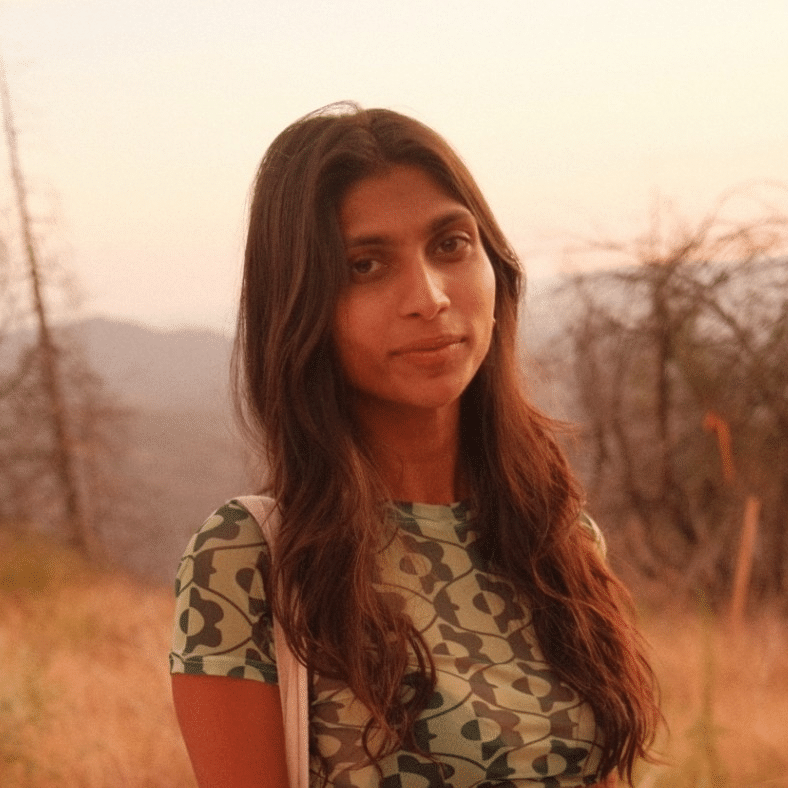
“Everything sounds crazy at first until it’s inevitable,” she says. “You need someone whose whole strategy is to fund things that right now look like science fiction, but five years from now, it’s very obvious.”
Before founding Spice Capital, Maya spent five years at 35V (“Thirty Five Ventures”), the firm founded by NBA player Kevin Durant and business partner Rich Kleiman, helping expand their investment portfolio into pre-seed and pre-IPO technology startups. That experience, she says, exposed her to “the best of the best” and gave her a front-row seat to how brand power and pedigree influence innovation.
“I realized 90% of what people were investing in had nothing to do with whether the business was good,” she recalls. “It was all based on brand name; if somebody went to Stanford or worked at Facebook, they would get funded.”
Building Spice Capital
Maya founded Spice Capital to challenge that bias and back founders who might not fit Silicon Valley’s traditional mold, but demonstrate strong “founder-market fit.”
She reports that her firm, backed by prominent investors including Marc Andreessen, Chris Dixon, Alexis Ohanian, and Arielle Zuckerberg, has since built a portfolio of 60 startups across technology, media, and consumer sectors.
The fund’s early-stage focus allows it to be the “first believer” in entrepreneurs whose ideas may not yet fit conventional frameworks. “I wanted to build a firm that funds people who are brilliant on merit, even if nobody wants to give them that first chance,” she says.
Maya began testing her thesis by investing her own salary during the pandemic. “I moved in with my parents, had no expenses, and said, ‘My whole paycheck I’m going to use to invest and prove myself.’ ” Those early personal bets (roughly 30 small-ticket investments) formed the foundation for what became Spice Capital.
A Thesis on the Creator Economy
At the center of Spice Capital’s portfolio sits a belief that the creator economy represents the new small-business class.
“The creator economy is actually the modern version of a small-business owner,” Maya explains. “Twenty years ago, if you wanted to be entrepreneurial, you’d open a physical store. Today, you can sit at your computer, build a newsletter, and reach millions.”
She divides the industry’s timeline into phases: V1 was the rise of platforms – YouTube, Facebook, Instagram – that democratized distribution. V2, she says, is the wave of creators transforming audiences into businesses. “All those people who built an audience have now become business owners,” she says. “They’re digitally native, but the tools serving them aren’t.”
That gap has defined Spice Capital’s investment strategy. “QuickBooks isn’t going to work for our generation, who grew up on Robinhood,” Maya notes. “They might not understand P&L statements, but they’re making $30,000 from a brand deal. So who’s creating software for them?”
Infrastructure Over Individual Fame
Spice Capital focuses on infrastructure rather than individual creators, preferring scalable platforms to single-person brands. “You can invest in the OnlyFans creator, or you can invest in OnlyFans,” Maya says. “That takes a cut of every creator.”
Her reasoning is practical: “If the entire company is around one person, it’s risky,” she explains. “They might burn out. I prefer a main operator whose full-time mission is to build a $10 billion business.”
One of Spice Capital’s flagship investments, beehiiv, reflects that thinking. The startup provides an end-to-end system for running email newsletters, combining analytics, ad marketplaces, and monetization tools. “Every creator shifting from influencer to business owner is going to need an email strategy,” Maya says. “Email is the only platform where you own your audience.”
Other investments explore new monetization models; micro-payments for individual pieces of content, crypto-based creator tokens, and fintech services for creators handling irregular income. “We’re always thinking about whether this is a new economy, what are the financial products that need to exist around it?”
The Investment Lens
Spice Capital’s decision framework centers on three pillars: team, TAM (Total Addressable Market), and Traction.
When it comes to the Team, “We look for founder-market fit,” Maya says. “Have they lived the problem they’re solving?” She cites beehiiv’s founder (Tyler Denk), the former CTO of Morning Brew, who “built a newsletter company that sold for $75 million. He already knew what worked.”
As for the TAM, “If the market is too niche, it doesn’t make sense for venture capital,” she explains. “You’re giving up half your ownership; the opportunity should be big enough to be worth it.”
For Traction, early validation is key. “If you’re launching a payments tool for creators, can you show 100 creators who’ve already signed up? Even pre-orders count,” she says. “That’s the proof I’m looking for.”
This discipline helps the firm identify scalable ideas amid an ecosystem where only a fraction of creators achieve financial sustainability. “In the creator industry, one person will do well, and 99 will fail,” Maya says. “So your business model has to withstand that churn.”
Spice’s portfolio companies often favor subscription-based revenue over transaction fees. “If most creators don’t make money, your percentage of their revenue is zero,” Maya notes. “Subscription gives you stability, no matter their performance.”
Gaps in the Market
Despite the explosion of venture funding for digital media and creator tools, Maya believes physical-product brands remain underfunded. “There’s not enough capital to fund physical things at day zero,” she says. “Everyone says they’re funding infrastructure, but the missing piece is the products themselves.”
One of her favorite examples is Hurray’s Girl Beer, a Los Angeles-based brand targeting women consumers. “They’re about to launch in Walmart and Trader Joe’s, but to get there, they struggled to find early capital,” she says. “If someone created a fund focused on day-zero consumer product goods that know how to leverage TikTok or Instagram, that would be a huge opportunity.”
She also points to the rise of women entrepreneurs in creator-led commerce. “Women will control more money than men in the U.S. over the next decade,” she says. “There’s a big opportunity around women entering traditionally male-dominated sectors, and men evolving into categories that were once considered feminine.”
Another emerging area: medical and cosmetic tourism. “People always went to Türkiye for hair transplants or to Korea for skin care, but now social media has made it mainstream,” Maya says. “Over a million people went to Korea last year for cosmetic tourism, spending around $3,000 each. That’s a massive global business.”
Navigating the Downside of Hype
For all the optimism around creators as entrepreneurs, Maya is candid about the myths.
“There’s a misnomer that building a business is easy,” she says. “People see overnight success on TikTok, but overnight success really takes 10 years.” She warns that the growing flood of competition, stating that “every niche now has 100 people competing where before there were two.”
Her advice to founders is simple: “Don’t copy other people. If you copy, you can be copied. What makes you different is your edge.”
Fundraising as a Founder
While Spice Capital invests in founders, Maya has had to become one herself.
“I knew how to invest, but I had to learn how to pitch myself,” she says. “I had to become a creator; make videos, go on podcasts, speak on panels. It’s very hard to say, ‘Give me millions of dollars and trust me,’ but that skill helps me develop empathy for other founders going through the same thing.”
That perspective, she adds, keeps her grounded in the realities of building. “Many of the marketing firms ignored the creator economy for too long. Now they’re paying ten times more to the same creators they could have partnered with earlier. The companies that take creators seriously from day one will win.”
The Future
As 2025 winds down, Maya is turning her analytical lens inward.
“This year, my priority is thinking about Spice Capital’s own creator strategy – how we’re marketing ourselves for the next five years of growth,” she says. Next year, she plans to expand the firm’s reach, especially beyond Silicon Valley.
“I’m excited to look for people who don’t come from traditional backgrounds,” she says. “Half the world lives in rural areas. Who’s building products for them? Some of the largest companies in the U.S. serve that audience: Walmart and Home Depot. What’s the next generation of those businesses?”
For Maya, the guiding principle remains unchanged. “If you really feel like you’re building something unique and no one else understands you,” she concludes, “I would love to give you a chance.”
Subscribe to Our Newsletter
Check Out Our Podcast