Follower count set the price on creator deals for a decade. Then platforms stopped showing people what they followed, and the metric stopped making sense.
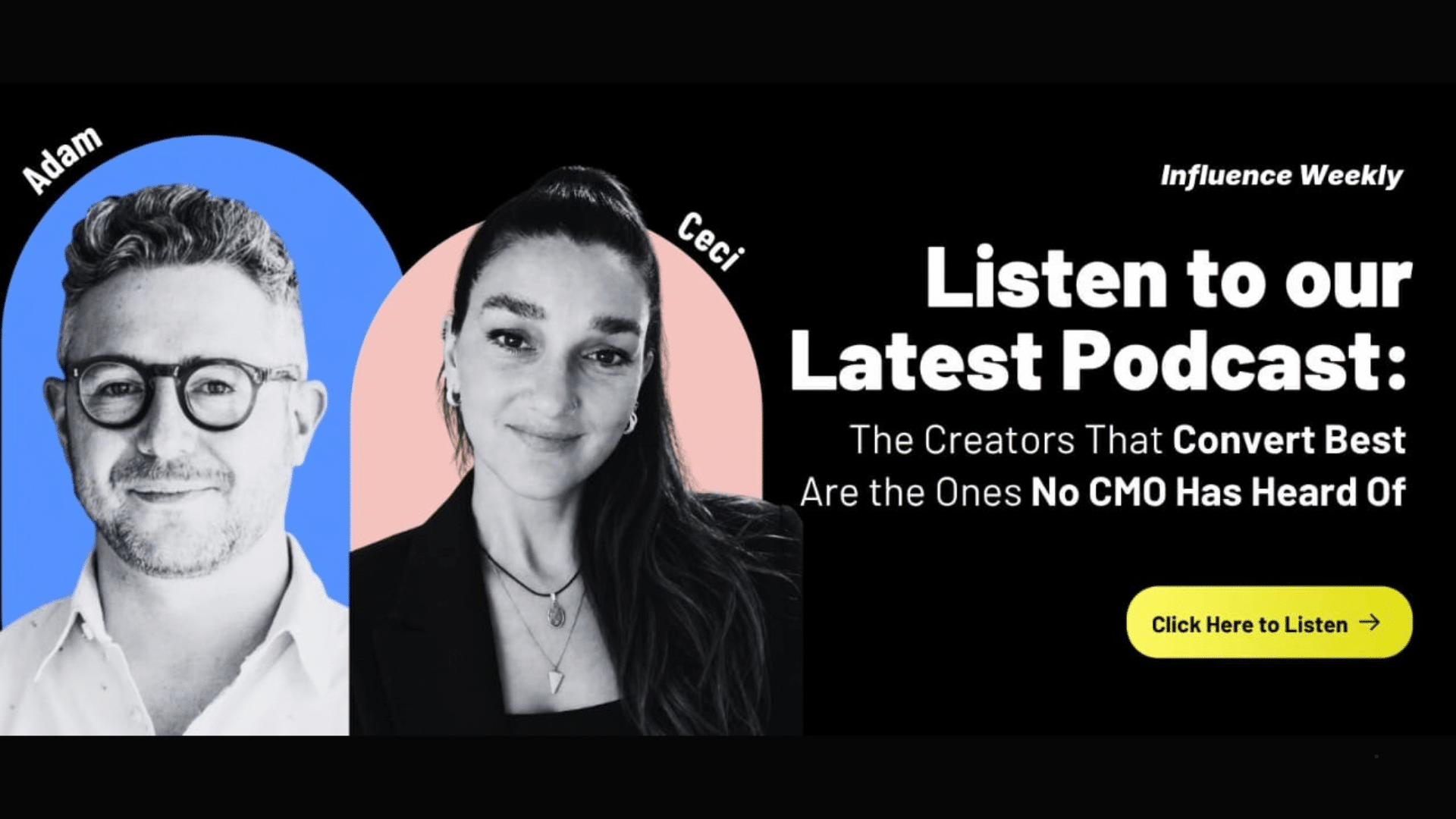
Adam Harris, co-founder of Gaggl and former Global Head of the Brand Partnership Studio at Twitch, sat down with Net Influencer Senior Editor Ceci Carloni to discuss what broke the follower-count model, what micro-creator engagement data actually shows, and what brands still waiting on the sidelines should do next.
Adam spent more than seven years at Twitch, where he built the Brand Partnership Studio from three employees to more than 80 across 17 markets, growing global branded content revenue from eight figures to high nine figures. He now co-leads Gaggl, a creator-hosted live TV platform that makes programming interactive and distributes it through creators.
1. Platforms Moved From Followers to Interests. The Pricing Model Didn’t Follow.
The shift happened gradually, then all at once.
Early social platforms served users a curated feed of people they followed. As attention metrics became more sophisticated, platforms moved to algorithm-driven content based on demonstrated interest. Watching, rewatching, and stopping mid-scroll tells a platform more than a one-time follow. “A follower is ‘I click on somebody at a certain point in time,’” Adam explained. “You’re not necessarily seeing things or people that you follow.”
Adam cited a study he attributed to Sprout Social indicating that 70% of video views now come from non-followers. The platform is serving content to audiences who never subscribed, based on behavioral signals accumulated over time.
Twitch surfaced the problem early. On a live platform, what matters is concurrent viewership at a given moment, not total follower count. Adam was navigating this gap with CMOs as early as 2016. “That’s the first time I had to have that debate.”
2. Brands Raised Three Objections. All Three Still Surface.
The resistance Adam encountered at Twitch wasn’t unique to gaming or live streaming.
The first objection was name recognition. Brand executives defaulted to MrBeast and KSI as creators they could reference in a presentation and treated everything outside that list as uncharted territory. They knew they should be in the space but couldn’t move past the names they already knew.
The second was direct ROI. “How many sales will it drive?” was the consistent challenge. The question applied conversion-metric logic to a channel that operates differently across the funnel.
The third was brand control. Handing equity to an independent creator felt different from running a scripted campaign. As Adam described the prevailing mindset: “my beautifully curated brand.” That objection has softened as the creator economy matured, but it resurfaces.
3. Gaggl’s Data: Smaller Creators Generate Five Times the Engagement
Gaggl runs micro and macro creators on the same content. That gives Adam direct A/B comparison data.
“Without doubt, the smaller creators have five times the engagement of larger creators,” he said, citing Gaggl’s internal campaign results. In smaller communities, the creator knows audience members by name, responds to comments in real time, and adjusts based on what’s appearing in chat. On a mega account, a brand message moves through at speed and disappears.
The limitation is reach. Micro-creator networks cannot match a single large creator’s distribution numbers without significant coordination. Adam’s view is practical: the two formats occupy different points in the funnel. Larger creators drive awareness. Smaller ones drive consideration and conversion.
HelloFresh, he argued, has the combination working. The meal delivery company runs large creators for broad awareness, then deploys micro and affiliate creator executions to demonstrate product utility at closer range. “It’s a really nice balance,” Adam said.
4. The Micro-Creator Story Was Correct Before. The Market Wasn’t Ready.
The case for smaller accounts isn’t new. The infrastructure to act on it is.
Adam compared early micro-creator efforts to QR codes and Vine: technologies that arrived before surrounding conditions were ready to support them. Vine was replaced by TikTok once the format had a platform. QR codes became standard once COVID made digital-physical interaction essential. “I think it was real before,” Adam said. “I just think it was too early.”
Three changes converged to shift the conditions. Nano and micro-creators now account for approximately 60% of the total Creator Economy by volume, Adam estimated, giving the supply side genuine scale. Consumer trust in institutions is low, driving audiences toward smaller communities and identifiable voices. Platforms built for these communities, including Reddit, Discord, Patreon, and OnlyFans, have normalized seeking out specific, trusted sources.
“Where are brands gonna get their trust from?” Adam asked.
5. Vetting Real Audiences Requires Art as Much as Science
Gaggl’s creator network numbers 1,500, according to Adam. Screening them requires machine learning and human judgment working together.
The platform monitors engagement quality, not just volume. If viewership is high but chat activity doesn’t match, the data flags potential manipulation. Emote spam is low-value. Real-time reactions to content, visible through digital chat logs, indicate a community that’s actually present. “Human beings reaching human beings” is the standard Gaggl’s vetting system is built to confirm, in Adam’s description.
The human layer runs alongside the automated one. Gaggl assigns staff to maintain direct relationships with creators across the network, tracking what integrations they will and won’t take, what causes matter to them, and where a brand would fit without friction. “Only humans can really do that,” Adam said.
6. A Crawl-Walk-Run Framework Converts Skeptical Brands Into Repeat Buyers
When brands come in nervous, the starting point is the same across every category: small test, then expand.
A typical Gaggl test begins with five micro-creators and two larger ones, Adam described. The objective isn’t immediate optimization. It’s familiarity: how brand assets transfer in a live environment, how audiences react, what the integration feels like from the inside. Brands Adam named as having moved through this sequence include Cash App, L’Oréal, Netflix, and Fremantle.
“Start small,” he said. Internal buy-in is often the harder sell. The crawl phase serves that function as much as it produces data.
Once a brand has run the initial test, the walk phase expands the creator roster. By that point, internal advocates typically exist who can defend the budget line and explain what the format actually is. The first-phase data does the work that persuasion couldn’t.
7. Sports Leagues Are Already There. Brands Should Be Watching.
Adam’s closing example isn’t a prediction. It describes something already in the market.
The NFL, FIFA, and the NBA are building creator programs, licensing content to individuals and using them as distribution channels for games, highlights, and fan experiences. These are among the most rights-protective media organizations in the world. They ran the risk calculation and decided the engagement upside from micro-communities outweighed the control they give up.
“If sport is doing it, which is the most rights-protective and protected media industry in the world, there’s something here,” Adam said. Creators are now being given access to commentate on soccer matches in real time. A decade ago, that wouldn’t have been a conversation.
The lesson is about what data-driven, legally cautious institutions test when the engagement case becomes hard to ignore.
Adam’s final advice for brand marketers still weighing the decision is a single word: test. Not as a hedge, but as a framework. The infrastructure exists, the communities are real, and measurement has improved. “It starts to operate very much like marketing that you’re familiar with,” he said. “But it feels scary.”
Dragomir is a Serbian freelance blog writer and translator. He is passionate about covering insightful stories and exploring topics such as influencer marketing, the creator economy, technology, business, and cyber fraud.














Follower count set the price on creator deals for a decade. Then platforms stopped showing people what they followed, and the metric stopped making sense.
Adam Harris, co-founder of Gaggl and former Global Head of the Brand Partnership Studio at Twitch, sat down with Net Influencer Senior Editor Ceci Carloni to discuss what broke the follower-count model, what micro-creator engagement data actually shows, and what brands still waiting on the sidelines should do next.
Adam spent more than seven years at Twitch, where he built the Brand Partnership Studio from three employees to more than 80 across 17 markets, growing global branded content revenue from eight figures to high nine figures. He now co-leads Gaggl, a creator-hosted live TV platform that makes programming interactive and distributes it through creators.
1. Platforms Moved From Followers to Interests. The Pricing Model Didn’t Follow.
The shift happened gradually, then all at once.
Early social platforms served users a curated feed of people they followed. As attention metrics became more sophisticated, platforms moved to algorithm-driven content based on demonstrated interest. Watching, rewatching, and stopping mid-scroll tells a platform more than a one-time follow. “A follower is ‘I click on somebody at a certain point in time,’” Adam explained. “You’re not necessarily seeing things or people that you follow.”
Adam cited a study he attributed to Sprout Social indicating that 70% of video views now come from non-followers. The platform is serving content to audiences who never subscribed, based on behavioral signals accumulated over time.
Twitch surfaced the problem early. On a live platform, what matters is concurrent viewership at a given moment, not total follower count. Adam was navigating this gap with CMOs as early as 2016. “That’s the first time I had to have that debate.”
2. Brands Raised Three Objections. All Three Still Surface.
The resistance Adam encountered at Twitch wasn’t unique to gaming or live streaming.
The first objection was name recognition. Brand executives defaulted to MrBeast and KSI as creators they could reference in a presentation and treated everything outside that list as uncharted territory. They knew they should be in the space but couldn’t move past the names they already knew.
The second was direct ROI. “How many sales will it drive?” was the consistent challenge. The question applied conversion-metric logic to a channel that operates differently across the funnel.
The third was brand control. Handing equity to an independent creator felt different from running a scripted campaign. As Adam described the prevailing mindset: “my beautifully curated brand.” That objection has softened as the creator economy matured, but it resurfaces.
3. Gaggl’s Data: Smaller Creators Generate Five Times the Engagement
Gaggl runs micro and macro creators on the same content. That gives Adam direct A/B comparison data.
“Without doubt, the smaller creators have five times the engagement of larger creators,” he said, citing Gaggl’s internal campaign results. In smaller communities, the creator knows audience members by name, responds to comments in real time, and adjusts based on what’s appearing in chat. On a mega account, a brand message moves through at speed and disappears.
The limitation is reach. Micro-creator networks cannot match a single large creator’s distribution numbers without significant coordination. Adam’s view is practical: the two formats occupy different points in the funnel. Larger creators drive awareness. Smaller ones drive consideration and conversion.
HelloFresh, he argued, has the combination working. The meal delivery company runs large creators for broad awareness, then deploys micro and affiliate creator executions to demonstrate product utility at closer range. “It’s a really nice balance,” Adam said.
4. The Micro-Creator Story Was Correct Before. The Market Wasn’t Ready.
The case for smaller accounts isn’t new. The infrastructure to act on it is.
Adam compared early micro-creator efforts to QR codes and Vine: technologies that arrived before surrounding conditions were ready to support them. Vine was replaced by TikTok once the format had a platform. QR codes became standard once COVID made digital-physical interaction essential. “I think it was real before,” Adam said. “I just think it was too early.”
Three changes converged to shift the conditions. Nano and micro-creators now account for approximately 60% of the total Creator Economy by volume, Adam estimated, giving the supply side genuine scale. Consumer trust in institutions is low, driving audiences toward smaller communities and identifiable voices. Platforms built for these communities, including Reddit, Discord, Patreon, and OnlyFans, have normalized seeking out specific, trusted sources.
“Where are brands gonna get their trust from?” Adam asked.
5. Vetting Real Audiences Requires Art as Much as Science
Gaggl’s creator network numbers 1,500, according to Adam. Screening them requires machine learning and human judgment working together.
The platform monitors engagement quality, not just volume. If viewership is high but chat activity doesn’t match, the data flags potential manipulation. Emote spam is low-value. Real-time reactions to content, visible through digital chat logs, indicate a community that’s actually present. “Human beings reaching human beings” is the standard Gaggl’s vetting system is built to confirm, in Adam’s description.
The human layer runs alongside the automated one. Gaggl assigns staff to maintain direct relationships with creators across the network, tracking what integrations they will and won’t take, what causes matter to them, and where a brand would fit without friction. “Only humans can really do that,” Adam said.
6. A Crawl-Walk-Run Framework Converts Skeptical Brands Into Repeat Buyers
When brands come in nervous, the starting point is the same across every category: small test, then expand.
A typical Gaggl test begins with five micro-creators and two larger ones, Adam described. The objective isn’t immediate optimization. It’s familiarity: how brand assets transfer in a live environment, how audiences react, what the integration feels like from the inside. Brands Adam named as having moved through this sequence include Cash App, L’Oréal, Netflix, and Fremantle.
“Start small,” he said. Internal buy-in is often the harder sell. The crawl phase serves that function as much as it produces data.
Once a brand has run the initial test, the walk phase expands the creator roster. By that point, internal advocates typically exist who can defend the budget line and explain what the format actually is. The first-phase data does the work that persuasion couldn’t.
7. Sports Leagues Are Already There. Brands Should Be Watching.
Adam’s closing example isn’t a prediction. It describes something already in the market.
The NFL, FIFA, and the NBA are building creator programs, licensing content to individuals and using them as distribution channels for games, highlights, and fan experiences. These are among the most rights-protective media organizations in the world. They ran the risk calculation and decided the engagement upside from micro-communities outweighed the control they give up.
“If sport is doing it, which is the most rights-protective and protected media industry in the world, there’s something here,” Adam said. Creators are now being given access to commentate on soccer matches in real time. A decade ago, that wouldn’t have been a conversation.
The lesson is about what data-driven, legally cautious institutions test when the engagement case becomes hard to ignore.
Adam’s final advice for brand marketers still weighing the decision is a single word: test. Not as a hedge, but as a framework. The infrastructure exists, the communities are real, and measurement has improved. “It starts to operate very much like marketing that you’re familiar with,” he said. “But it feels scary.”
Listen to the full conversation on “The Big Three” podcast.
Subscribe to Our Newsletter
Check Out Our Podcast