





Agency
Komodo Ran Peppermayo’s Three-City Creator Events as One Job, From Venue to Casting to Content

Peppermayo wanted three creator events in Sydney, London and Los Angeles inside just over three weeks, each tied to its city and all of them recognizably Peppermayo. Komodo, the agency that ran all three, puts the result at 10.4 million views. Co-founder Joe Ellyatt argues such nights work only when the event, the creators and the content are planned as one job from the pitch onward.
That single-job model is how Komodo won all three cities. The relationship began with Nick Seymour, the co-founder who has run Komodo’s Sydney office for more than seven years. Once Peppermayo learned the agency also operated in London and Los Angeles and could run influencer and content work alongside the events, it handed all three markets to one point of contact.
That combination is Komodo’s pitch. Joe and three co-founders started the London-based agency in 2017 to run creator trips, and it opened Los Angeles and Sydney offices early for brands that wanted an agency they trusted plus expertise on the ground. It now runs Influencer Marketing, experiential, content and social divisions, built on letting creators tell a brand’s story through their own lens.
“What stays the same is the brand, and the process is global. But the experience is as local as possible,” Joe says.
That split between a fixed brand and local execution shapes most of what Joe describes, starting with what Peppermayo needed from each market.
Peppermayo Gave Each Market a Different Job
In Australia, Joe says, the brief was a creator event that would re-establish Peppermayo as one of the category’s leaders. In the UK, the brand was relaunching after opening a new European distribution center, so the London night had to tell audiences it was back and could deliver faster. The U.S., Peppermayo’s fastest-growing market and one of its biggest by Joe’s account, called for a deeper presence and a larger creator network.
“They wanted to make a splash and establish the fact that they are global,” Joe says. “There aren’t many other brands who could pull off three epic events in three weeks in three totally different markets.”
Three objectives under one brand gave the nights’ differences a commercial reason, and Joe’s answer was to let each city set the scene.
Each City Set the Scene for Its Night
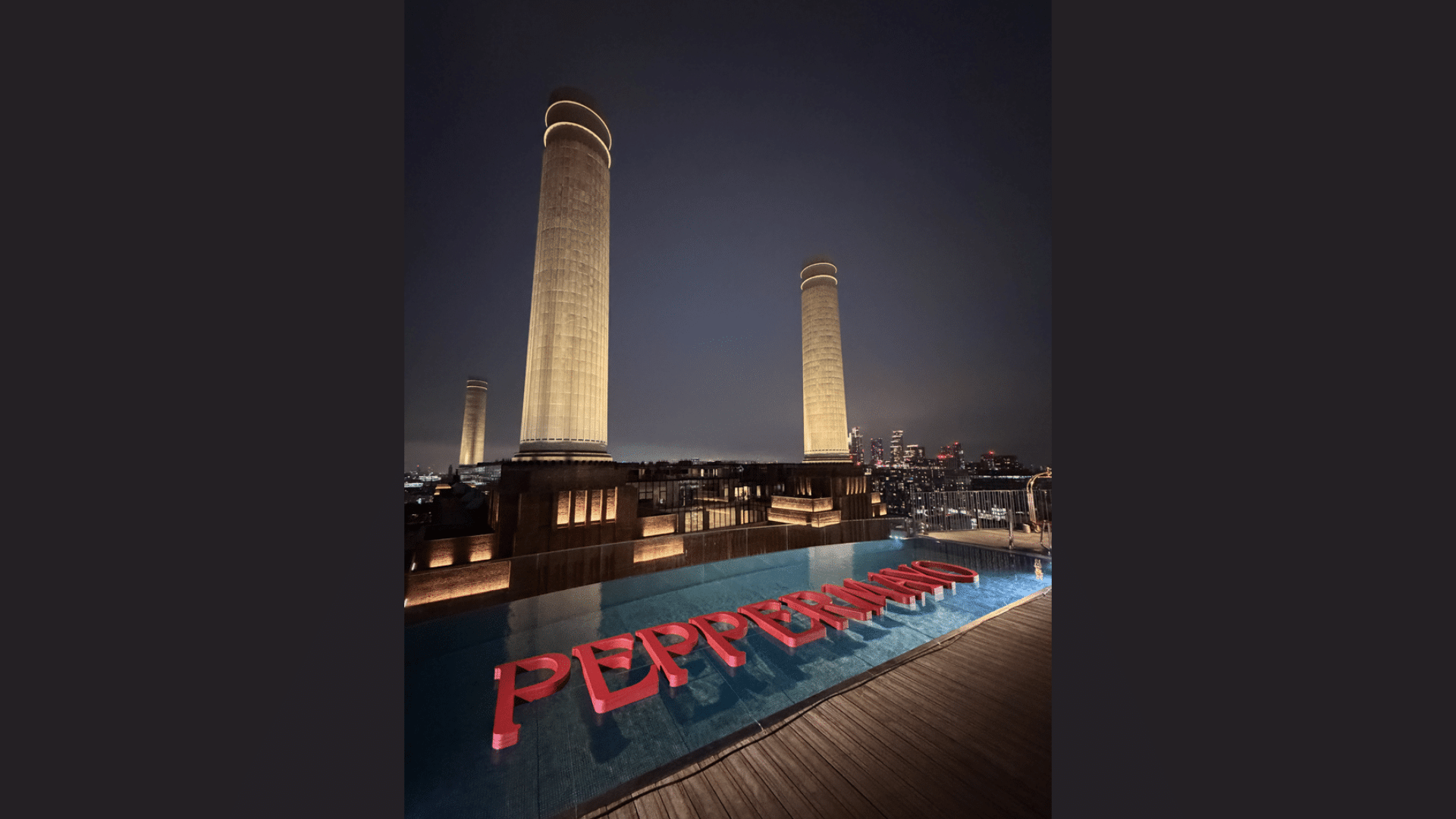
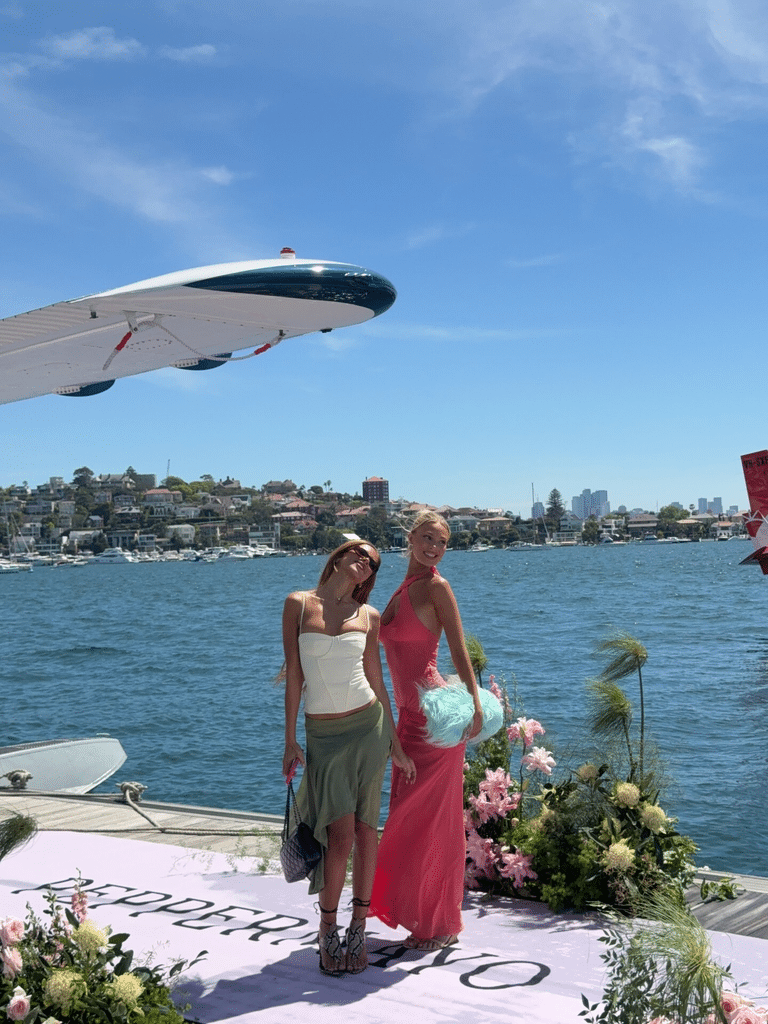
Sydney was heading into summer, so Komodo flew creators across the harbor by seaplane to a pontoon summer party. London, entering a “gloomy October,” got a Peppermayo “premiere” at JOIA, a rooftop overlooking Battersea Power Station, timed to film season. Los Angeles leaned into classic Hollywood at The Spare Room, the retro bowling alley inside the Roosevelt Hotel.
The aim, Joe explains, was to make each night unmistakably that city without simply labeling it “Peppermayo London.” In the UK capital, that meant passing on the obvious Big Ben skyline in favor of the lit-up power station behind a rooftop pool with Peppermayo’s name on it. “You know where you are, and you know what the brand is,” he says.
What held constant, according to Joe, was Peppermayo as the hero, a night that flows from one stage to the next and something guests want to share. The venue carried the local identity, which left the branding free to stay the same in all three rooms.

The Guest Journey Is Designed for the Feed
That shareable element is planned from the guest’s first step. “Gone are the days of creating an event and then adapting it to put on social afterwards,” Joe says. “You’ve really got to think how this is going to translate to social from the beginning.” It starts with what makes a guest take out a phone on arrival, such as Sydney’s seaplane landing.
The nights then run in stages so guests do more than stand around, with activities Joe pitches as fun but not too gimmicky. Sydney had marble racing for racing season, London remote-control mini helicopters, and Los Angeles the bowling. Small personalized moments sit alongside the big ones, such as a London scribble booth that sent guests their video on the spot. “When you can get a personalized element into an activation, people are going to get their phones out and create that content with it,” Joe notes.
The design stops short of the posts. With 80 to 100 creators in a room, by Joe’s estimate, Komodo builds the setting and leaves the content to them. “Creators know their audience better than anybody. They know what resonates,” he argues.
He sees heavily scripted briefs, once common on trips abroad, as mostly a thing of the past. “Brands are now a bit more savvy and understand that their job is to make an incredible experience and the creators’ job is to make incredible content,” Joe says.
Casting Starts With the Venue Search
That freedom puts the weight on who is in the room, and local teams led casting in each city. In London, Joe says, the aim was to broaden Peppermayo’s creator community with up-and-coming names who had not worked with every brand and could become paid partners or ambassadors. In Australia, bigger ambassador-style creators were paired with newer ones who could bring fresh audiences.
Joe argues a brand needs both sizes. An all-micro list builds community and a more engaged audience, he says, but a brand entering a new market gains from a macro creator leading the content, for reach and credibility, and because other creators see who attended and want in next time. Neither tier works as a one-off. “It’s all about longevity. The audiences know when things are not authentic anymore,” he says.
His main practical lesson is to cast alongside the venue search, since getting more than 100 people to an event means clearing each name with the brand and planning for dropouts on the night. “You can put on an incredible event, but you need the right people in the room to bring it to life,” Joe says.
He puts ideal lead time at two and a half to three months, against Peppermayo’s one-month turnaround, noting that the best venues book up early around Christmas and Halloween.
Content Planning Starts at the Pitch
The same front-loading applies to content. Komodo starts it at the proposal stage, with mood boards shared before the venue is confirmed. After the site visit, the team maps the content moments, from the step-and-repeat to the Battersea backshot to the entertainment that will feature in the wrap-up video.
The payoff is speed. Komodo sent content from the London event to Peppermayo’s team that evening and delivered the hero edit the next morning. According to Komodo’s Instagram, London alone produced more than 500 stills and 20 videos for social, paid, email and web. Joe singles out the wrap-up videos, particularly Sydney’s, as especially powerful.
Joe says the cost was roughly on par with a large-scale, in-depth campaign shoot. In London, a daytime street-style campaign shoot fed into the evening. “The event is bringing everything to life, and it’s making it tangible; it’s making it real,” he says.
From the brand, he asks for a clear vision, fast approvals, and one person who knows what they want from the content, the influencers and the in-person experience. That brand-side owner mirrors Komodo’s single point of contact, so each side of the job runs through one decision-maker.
Komodo Sees Social-First Events as Its Next Push
Joe measures the result in market awareness. “People in the UK now know that Peppermayo is back and delivers faster,” he says. He adds that the U.S. presence is more established and that each market now has a list of up-and-coming creators. The two companies are discussing further projects.
For brands entering a new market, Joe recommends the sequence Peppermayo started in London, with a larger event for awareness and relationships first and curated trips and in-depth creator work after, run with teams on the ground. “Don’t just try and copy and paste,” he says.
He reports 88% year-on-year growth within Komodo’s experiential division since 2024, which he reads as demand for in-person experiences designed for social, including from brands that exist only online. “It’s adding that credibility that you can’t fake and making sure it’s part of the ecosystem,” Joe says. “You can’t just have one piece of the puzzle without the rest of them flowing through each other.”
Subscribe to Our Newsletter
Check Out Our Podcast