




Agency
Agency Work Pays Off When Brands Set KPIs Upfront and Trust the Experts, Says HelloFranses!’s New Influence Lead

Speed is the first thing Raf Pieroni names when he compares HelloFranses!, the agency he joined this fall to lead its influence offering, with the larger shops he came from. A brand hiring an agency, he argues, is paying for expertise and a dedicated team that works as an extension of its own. The arrangement works when KPIs are agreed before launch, and the brand trusts the people it hired.
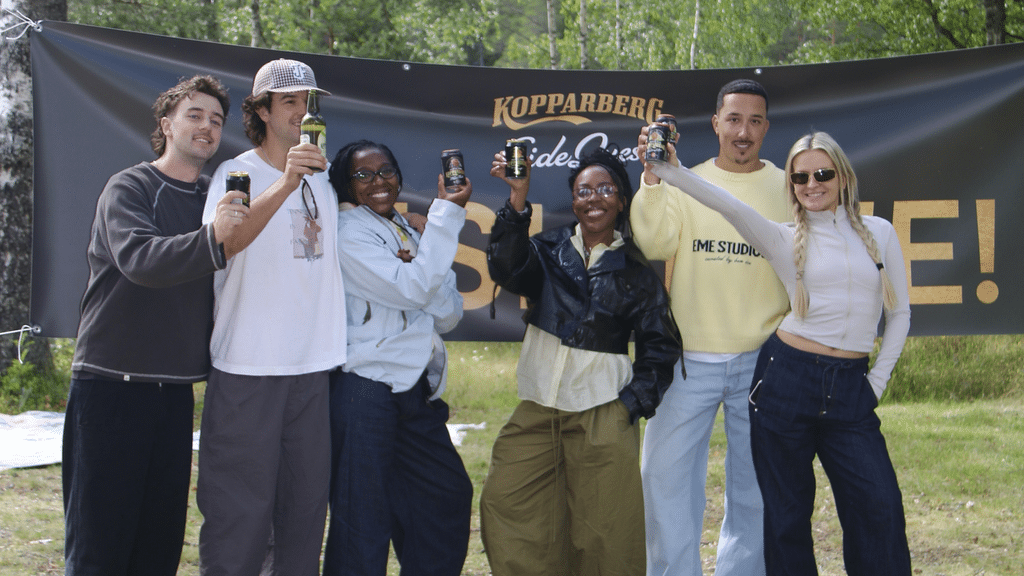
Raf joins from Billion Dollar Boy, where he was Influence Director until October, and Ogilvy, where he ran B2B and B2C influencer work for clients including IBM and EY. W Group launched HelloFranses! in London in May 2025 as its specialist social and influencer agency, and its clients range from Aston Martin and Hublot to Formula One and Kopparberg. Raf leads the team in London, and he says growth in North America and APAC is a work in progress, with more news to come.
That specialism, as Raf describes it, works close to a one-stop shop. A social team, some of it hired from large social-only agencies, sits alongside a growing influence team and a talent management arm, and Raf brought in Tim Thursfield, a former Ogilvy colleague, as account director. “It’s really a fully integrated service where we can really become a disruptive player in the industry,” he says.
Integration is one part of the case Raf makes for the agency. Pace is the other. “It operates quicker,” he says of a younger agency set against the big players. “That’s a fact.”
Big Agencies Slow Down as Processes Pile Up
Raf does not treat slowness at larger agencies as an inevitable cost of scale. “In many cases, when you grow, you get more cooks in the kitchen,” he notes.
The newest cooks tend to bring their own recipes. “There’s almost this expectation that if you’re in leadership and you’re joining a new place, you need to build up a new process,” Raf says. Some arrivals do need to tear down what exists, in his view, but the expectation means processes stack up until staff lose track of what they are doing.
He cites a colleague at a larger agency whose pitch for a university program waited a long time for an answer, which turned out to be no. A smaller agency works differently. “In a smaller reality, you can feel there’s more excitement; there’s more of a test-and-learn approach,” Raf says.
When something fails at HelloFranses!, the team tries another approach, and he takes accountability first. The case for that pace rests on the client side, where he often finds small teams with little time.
Brands Are Paying for an Extension of Their Team
“They’re paying for knowledge because in many cases brands have in-house teams, but they’re small in-house teams,” Raf says. An agency supplies a dedicated team that builds strategy as an extension of the brand, which frees the client to work on wider global strategy.
The expertise shows up at every stage of a campaign, as Raf breaks it down. It produces stronger negotiation with talent, a clearer grasp of KPIs and benchmarks, content tracking that ends in a wrap-up report, and proposals for how to expand the campaign next time.
Briefs arrive in many forms, as Raf describes them, from a one-line request from a CMO who wants to go viral to a detailed deck. “That’s where we come in, and we dissect that concept, we break it down, we make it digestible and actionable,” he says.
Some brands send detailed briefs as decks of 50-plus pages, which Raf reads as commitment. Either way, the agency turns what arrives into work a brand’s small in-house team often has no capacity for.
He sees no consistent trend toward larger in-house teams. Large corporations have made cuts, and while many brands, L’Oréal among them, have invested heavily in influence, Raf calls the picture consistent with the macroeconomic environment.
KPIs Get Agreed Before the First Post
One part of that expertise is agreeing KPIs with the client before creators post, a practice Raf expects of any agency doing good influence work. The simplest method is benchmarking a creator against their usual results, such as a 4.5% engagement rate in his example, and against best practice on the platform.
Lower-funnel KPIs tie to very specific outcomes, such as footfall in particular stores or click-through to a set page. In one setup Raf describes, the agency works with a paid media team on tracking links to Amazon, testing how results split between influencer, paid media and search.
Skipping that agreement catches up with agencies at the end. “The agencies that don’t will see the results when they present the wrap-up reports,” Raf warns, because clients question why a campaign fell short of what they expected.
Bottom-of-funnel campaigns are more straightforward to measure, Raf explains, because they are tied to numbers. B2B work often aims to shift perception of a brand that is little known or trails a competitor in social mentions. For that, Raf recommends adding a brand lift study to the campaign, with a controlled group asked specific questions about the content and the brand inside it.
The KPIs also decide which numbers a brand should not chase. If the goal is awareness, Raf argues, sales should not be the focus, and if the goal is sales, views and impressions matter less. Full-funnel campaigns can be done, he adds, but they need different blocks, each tailored to specific KPIs.
Brands Need Budget, an Approver and Trust
KPIs also close the list of questions Raf would put to an agency if he were the brand in a pitch. He would open with which tools it uses, such as end-to-end influencer management platforms, then ask who is on the team, whether they know the sector, and what the timelines are. That timeline question is where his case for speed meets the client’s checklist.
The brand has homework too. “You need to have budget,” Raf says. Even with the agency working as an extension of the team, the client needs a person on its own side. “From a brand side, there needs to be someone that has some time carved out to approve,” he adds.
The last condition is trust, and it is also the one change Raf would ask brand teams to make heading into the new year. “Trusting the experts a little bit more,” Raf answers. It follows from what he says brands are paying for in the first place.
Integration Tightens Over the Next Five Years
Raf expects the relationship to grow closer. Five years out, he sees a more integrated ecosystem, with AI shortening turnaround times, though quicker does not necessarily mean better quality. In one example he gives, an AI-written suggestion proposes Jason Momoa, listed with 4.5 million followers, for a campaign with a 30k budget.
Some brands may bring agencies inside their ecosystem almost as part of their team, he expects. Creators are moving closer too. HelloFranses! already brings talent in to review briefs, and it is organizing workshops that put clients and influencers in the same room.
The thread through his view is a shared scoreboard, with an agency that moves quickly, agrees on targets upfront, and works inside the client’s team.
“At the end of the day, if you think about it, the result is shared,” Raf says. “We’re all trying to get to the same goal, which is effectiveness.”
Subscribe to Our Newsletter
Check Out Our Podcast