Creators and influencers accounted for 50% of recent product discovery on social media among U.S. consumers aged 18 to 34, compared with 34% for brand-led social content, according to a new report from social-first creative agency Born Social and research firm The Mix Global.
The report, “Brand Built Different,” draws on a survey of 2,019 U.S. adults aged 18 to 34 and 13 in-depth interviews with creators and consumers. The discovery figures come from the 331 respondents who had discovered something new on social media. Callum McCahon, chief strategy officer at Born Social and Croud, and Olivia Wedderburn, head of influence at Born Social, wrote the report.
The authors argue that creators, comments, communities, search, algorithms and AI now sit between brands and the people they want to reach, and that each of these shapes how a brand is found and interpreted. The report calls the result the “headless” brand.
Consumers Report Content Overload
The survey found that 63% of respondents say more content competes for their attention than they can keep up with, and 64% say they see so many similar-looking brand posts that the posts start to blend together.
Marketers report a similar pattern. Citing a 2026 WARC and TikTok study, the report says 88% of marketers have increased their creative output since adopting generative AI, while 45% say the quality of that output has improved substantially. Marketers named over-reliance on generic styles (40%) and a lack of originality (32%) as the biggest limitations. The report also cites 2025 data from Graphite.io indicating that more content published online is now generated by AI than written by humans.
To measure which brand assets hold attention, the report draws on a 2020 Ipsos study. Ads featuring sonic brand cues were 8.53 times more likely to be high performers on branded attention, and ads featuring characters were 6.01 times more likely. Celebrities registered 2.84 times, while a logo on its own registered 1.17 times.
AI and Social Platforms Enter the Search Process
According to a 2025 TikTok Marketing Science study conducted by WARC and cited in the report, 60% of U.S. Gen Z searchers use an AI search platform every week. The same research found that 86% of Gen Z searchers use TikTok to search at least weekly, compared with 90% who use Google. Among millennials, the weekly TikTok search figure is 64%. The report also cites 2024 Meta data showing that 50% of Instagram content is AI-recommended.
The Mix Global summarizes the shift by saying discovery and consideration “have collapsed into each other.”
The report finds that large language models (LLMs) rarely rely on a brand’s own description of itself. Citing McKinsey data from 2025, it says 5% to 10% of LLM brand queries cite the brand’s own website.
Query phrasing also changes results across models. In an example sourced to BrandCI, reframing a query from “running shoes” to “marathon trainers” moved Hoka from fourth to first on ChatGPT and from fifth to third on Claude, while it dropped from fourth to sixth on Gemini.
How Brands Select and Brief Creators
The report includes commentary from Jordan Wisbey, head of agency partnerships at TikTok, on how marketers choose creators. “Roughly 67% of marketers still name follower count as their main criterion for selecting TikTok creators, but they’re buying access, not influence,” Wisbey said.
Born Social also reviewed 20 shortlisted entries in the Social & Creator category at the 2026 Cannes Lions festival. According to the agency, three presented anything commercially consequential, while the rest led with reach and impressions.
On the consumer side, 45% of respondents said they do not mind that social media is a place where they are being sold to, and 68% said they prefer branded content that does not feel like an ad. “I have more empathy for individual humans,” one consumer told The Mix Global.
The research identifies what The Mix Global calls a “say-do gap,” in which brands promise creators creative freedom and then withdraw it during approvals. The report also faults creator programs that run only at the bottom of the funnel through affiliate-heavy, discount-driven work.
“I feel a lot of brands, even in their brief, will start it with, ‘Of course, you have full creative freedom.’ And then on day 27, when I’m posting it, it’s like, okay, I’ve edited this six times, and this has nothing to do with what I originally pitched,” said Celeste, a content creator interviewed by The Mix Global.
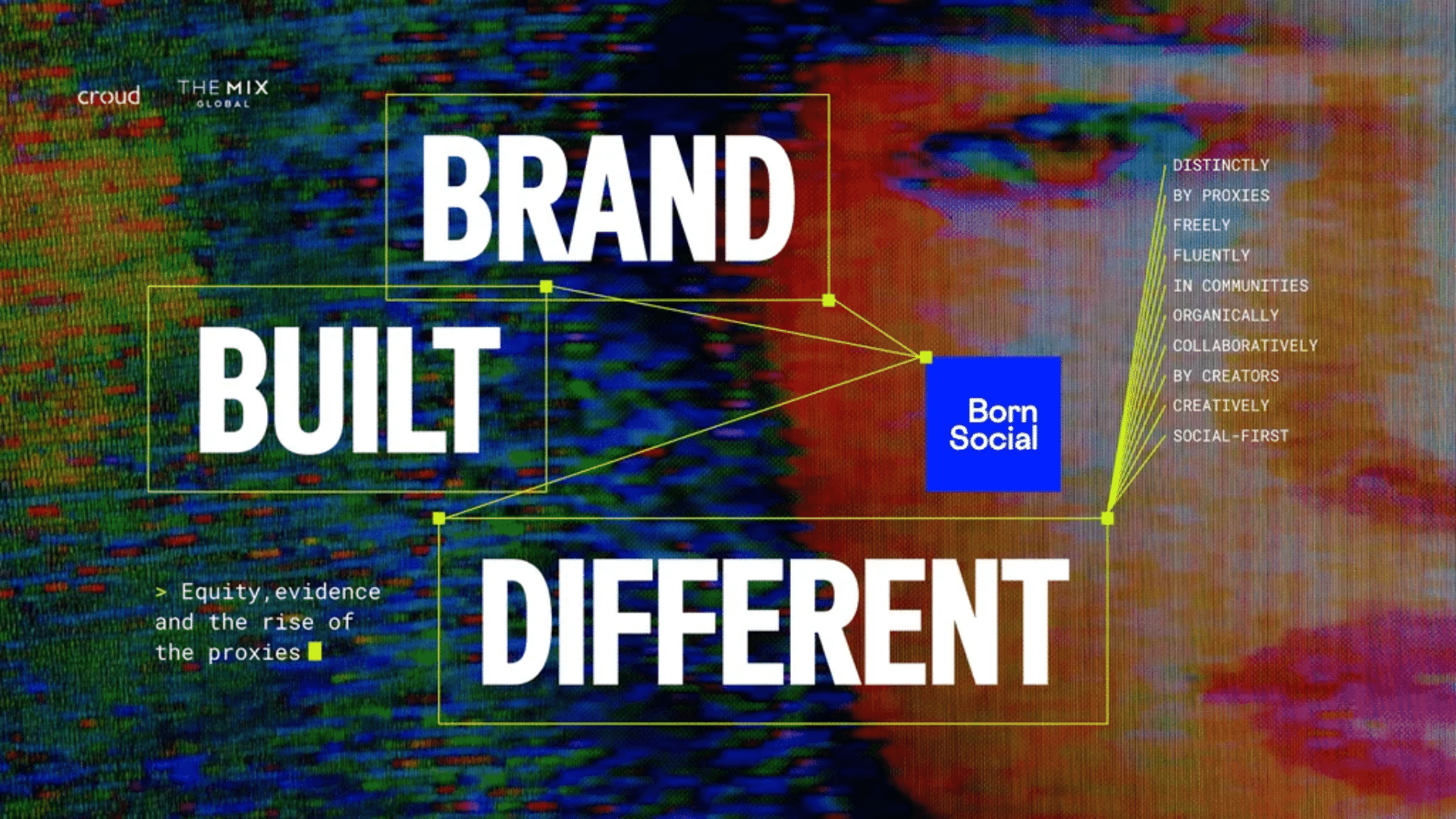
Image source: Born Social The full report is availablehere
Dragomir is a Serbian freelance blog writer and translator. He is passionate about covering insightful stories and exploring topics such as influencer marketing, the creator economy, technology, business, and cyber fraud.











Creators and influencers accounted for 50% of recent product discovery on social media among U.S. consumers aged 18 to 34, compared with 34% for brand-led social content, according to a new report from social-first creative agency Born Social and research firm The Mix Global.
The report, “Brand Built Different,” draws on a survey of 2,019 U.S. adults aged 18 to 34 and 13 in-depth interviews with creators and consumers. The discovery figures come from the 331 respondents who had discovered something new on social media. Callum McCahon, chief strategy officer at Born Social and Croud, and Olivia Wedderburn, head of influence at Born Social, wrote the report.
The authors argue that creators, comments, communities, search, algorithms and AI now sit between brands and the people they want to reach, and that each of these shapes how a brand is found and interpreted. The report calls the result the “headless” brand.
Consumers Report Content Overload
The survey found that 63% of respondents say more content competes for their attention than they can keep up with, and 64% say they see so many similar-looking brand posts that the posts start to blend together.
Marketers report a similar pattern. Citing a 2026 WARC and TikTok study, the report says 88% of marketers have increased their creative output since adopting generative AI, while 45% say the quality of that output has improved substantially. Marketers named over-reliance on generic styles (40%) and a lack of originality (32%) as the biggest limitations. The report also cites 2025 data from Graphite.io indicating that more content published online is now generated by AI than written by humans.
To measure which brand assets hold attention, the report draws on a 2020 Ipsos study. Ads featuring sonic brand cues were 8.53 times more likely to be high performers on branded attention, and ads featuring characters were 6.01 times more likely. Celebrities registered 2.84 times, while a logo on its own registered 1.17 times.
AI and Social Platforms Enter the Search Process
According to a 2025 TikTok Marketing Science study conducted by WARC and cited in the report, 60% of U.S. Gen Z searchers use an AI search platform every week. The same research found that 86% of Gen Z searchers use TikTok to search at least weekly, compared with 90% who use Google. Among millennials, the weekly TikTok search figure is 64%. The report also cites 2024 Meta data showing that 50% of Instagram content is AI-recommended.
The Mix Global summarizes the shift by saying discovery and consideration “have collapsed into each other.”
The report finds that large language models (LLMs) rarely rely on a brand’s own description of itself. Citing McKinsey data from 2025, it says 5% to 10% of LLM brand queries cite the brand’s own website.
Query phrasing also changes results across models. In an example sourced to BrandCI, reframing a query from “running shoes” to “marathon trainers” moved Hoka from fourth to first on ChatGPT and from fifth to third on Claude, while it dropped from fourth to sixth on Gemini.
How Brands Select and Brief Creators
The report includes commentary from Jordan Wisbey, head of agency partnerships at TikTok, on how marketers choose creators. “Roughly 67% of marketers still name follower count as their main criterion for selecting TikTok creators, but they’re buying access, not influence,” Wisbey said.
Born Social also reviewed 20 shortlisted entries in the Social & Creator category at the 2026 Cannes Lions festival. According to the agency, three presented anything commercially consequential, while the rest led with reach and impressions.
On the consumer side, 45% of respondents said they do not mind that social media is a place where they are being sold to, and 68% said they prefer branded content that does not feel like an ad. “I have more empathy for individual humans,” one consumer told The Mix Global.
The research identifies what The Mix Global calls a “say-do gap,” in which brands promise creators creative freedom and then withdraw it during approvals. The report also faults creator programs that run only at the bottom of the funnel through affiliate-heavy, discount-driven work.
“I feel a lot of brands, even in their brief, will start it with, ‘Of course, you have full creative freedom.’ And then on day 27, when I’m posting it, it’s like, okay, I’ve edited this six times, and this has nothing to do with what I originally pitched,” said Celeste, a content creator interviewed by The Mix Global.
Image source: Born Social
The full report is available here
Subscribe to Our Newsletter
Check Out Our Podcast