

Platform
YouTube Rolls Out Labels for AI-Generated Music

YouTube Music has begun rolling out labels that identify songs created primarily with generative AI, including tracks where AI generated the composition or vocals. YouTube said the feature will expand to the main YouTube app.
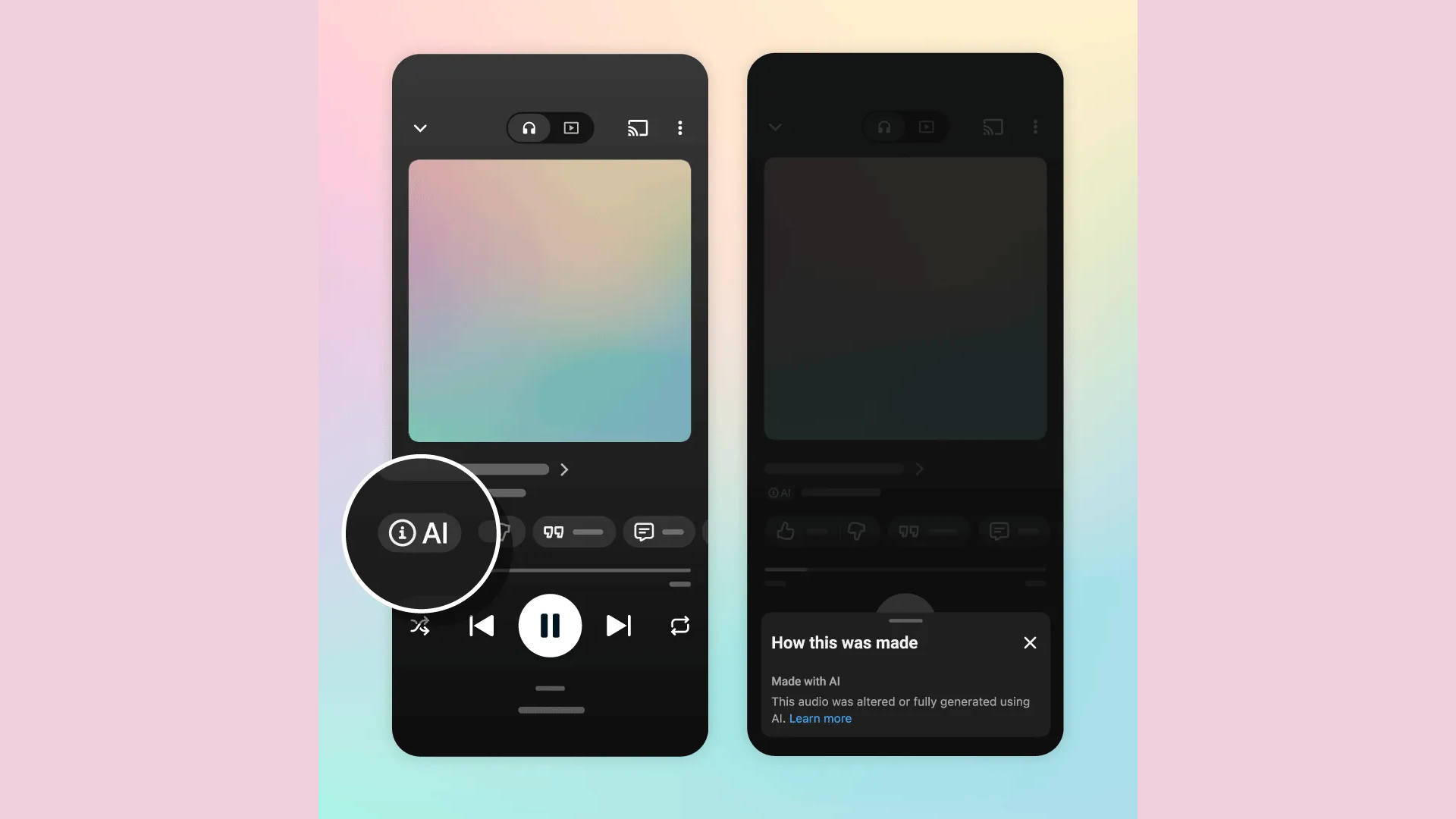
The label appears directly on the player page, and tapping it opens a menu with more detail on AI’s role in the track. YouTube said it built the system in partnership with music labels and its own detection tools, applying labeling principles it already uses elsewhere on the platform. According to the company’s help documentation, music partners can tag releases as “Fully Gen AI,” “Partly Gen AI,” or “No Gen AI,” with the last category covering tracks that use tools like pitch correction but no generative elements.
The company is pairing disclosure with its broader “How this content was made” framework, which already flags video content that has been meaningfully altered or synthetically generated. A “Made with AI” label can appear either because a creator discloses it through YouTube Studio, because the video was built with YouTube’s own generative tools such as Dream Screen, or because the file carries Content Credentials (C2PA) metadata marking it as fully AI-made. Undisclosed content can still be labeled automatically if YouTube determines the risk of viewer harm warrants it.
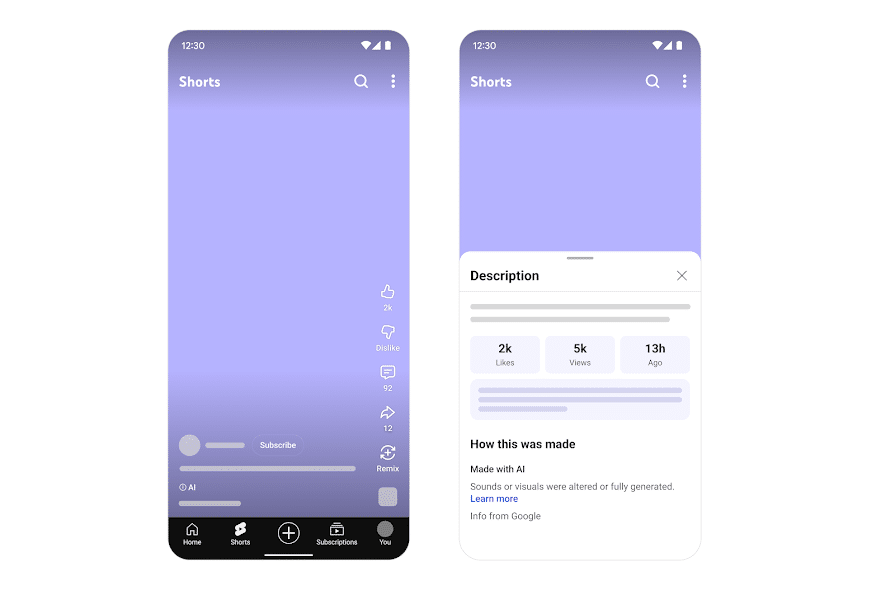
Image source: YouTube
YouTube’s approach stops short of the restrictions some competitors have adopted, according to TechCrunch. Deezer, which said in July it receives nearly 90,000 fully AI-generated tracks a day, excludes detected AI content from algorithmic recommendations and editorial playlists and withholds royalties tied to fraudulent streams. TIDAL labels fully AI-generated recordings, lets listeners disable them, and excludes them from royalty attribution. Apple Music has said it will introduce “Made With AI” labels later this year as part of its AI Transparency Tags, while Spotify already labels AI tracks alongside a spam filter aimed at the same content. YouTube’s labels inform listeners without making AI involvement a barrier to monetization, and the platform continues to run its own generative tool, Dream Track, which lets select creators produce songs using AI-generated versions of participating artists’ voices.
The labeling push follows YouTube’s disclosure in March that it paid the music industry more than $8 billion over the 12 months ending June 2025, part of a strategy Global Head of Music Lyor Cohen outlined around visual storytelling, artist development, and AI tools. Cohen said at the time that YouTube was expanding its Content ID system to add likeness detection, citing CEO Neal Mohan’s framing of AI as “a tool for expression, not a replacement.”
The transparency question sits close to where creators themselves land on AI. A survey of nearly 1,800 creators released by Uppbeat in August found the community split almost evenly on whether AI has improved or worsened their creative outlook. The survey also found that 93.3% of respondents said it matters that platforms clearly state their stance on AI versus human-made work. The same survey found that, of creators who said they feel uneasy about heavy AI use in others’ work, nearly half use AI themselves.
Subscribe to Our Newsletter
Check Out Our Podcast