





Platform
Meta One Subscription Service Launches With Paid Discovery Benefits, Scheduling, and AI Tools for Creators

Meta has launched Meta One, a tiered subscription service covering Instagram, Facebook, WhatsApp, and Meta AI that ranges from $2.99 per month for individual app upgrades to $499 per month for high-capacity creator and business accounts.
The company announced the rollout at an event in New York on September 14, bringing more than 50 features live globally across its platform family. Core apps and everyday Meta AI remain free; paid tiers unlock higher AI usage limits, publishing tools, analytics, team access, and paid discovery benefits. Meta says more than 15 million accounts have signed up for subscriptions or trials across its earlier single-product plans.
The Tier Structure
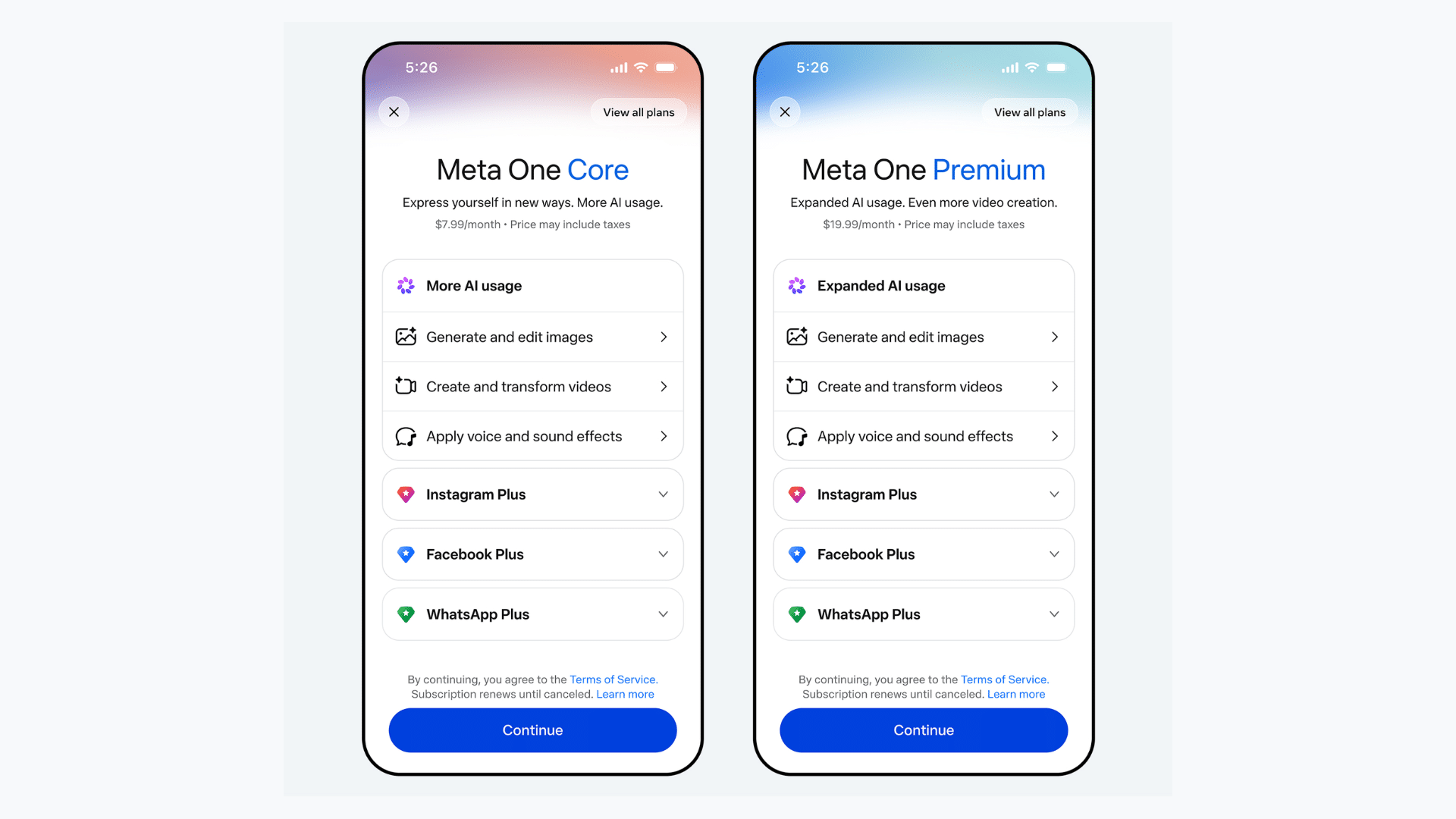
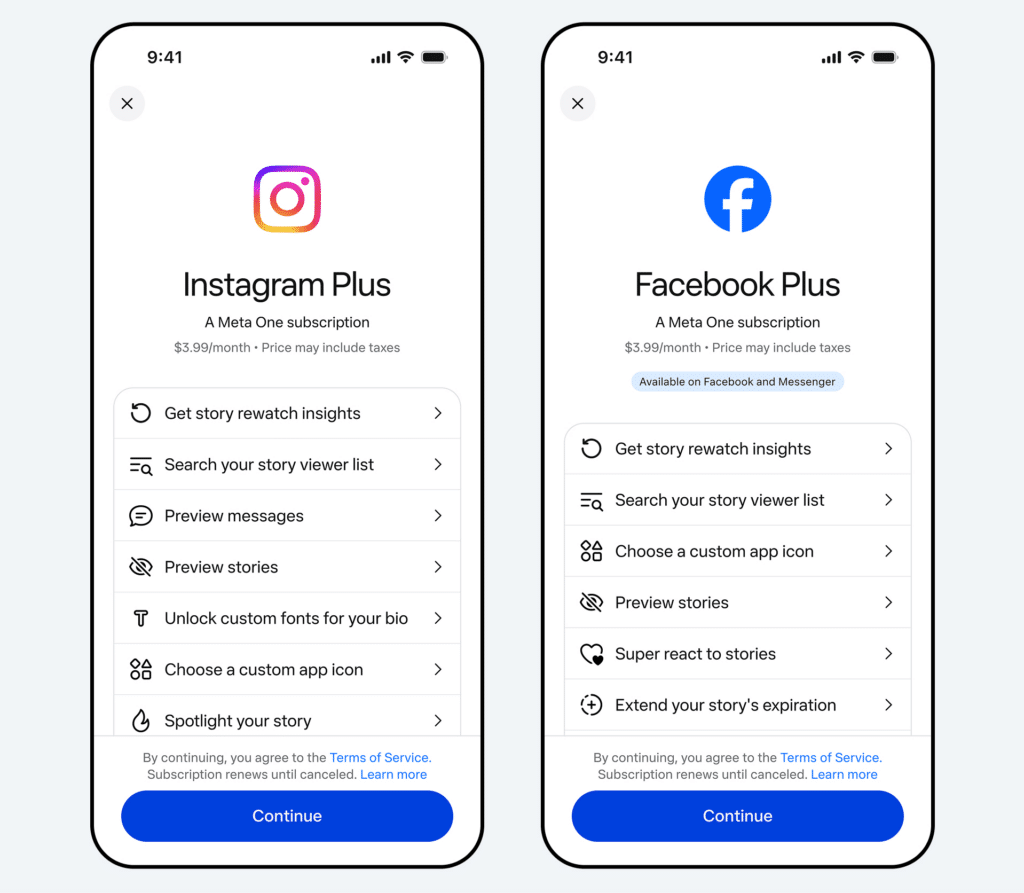
Individual app plans for Instagram, Facebook, and WhatsApp range from $2.99 to $3.99 per month. Consumer bundles (“Core” at $7.99 and “Premium” at $19.99) layer in expanded Meta AI image and video generation powered by Muse models.
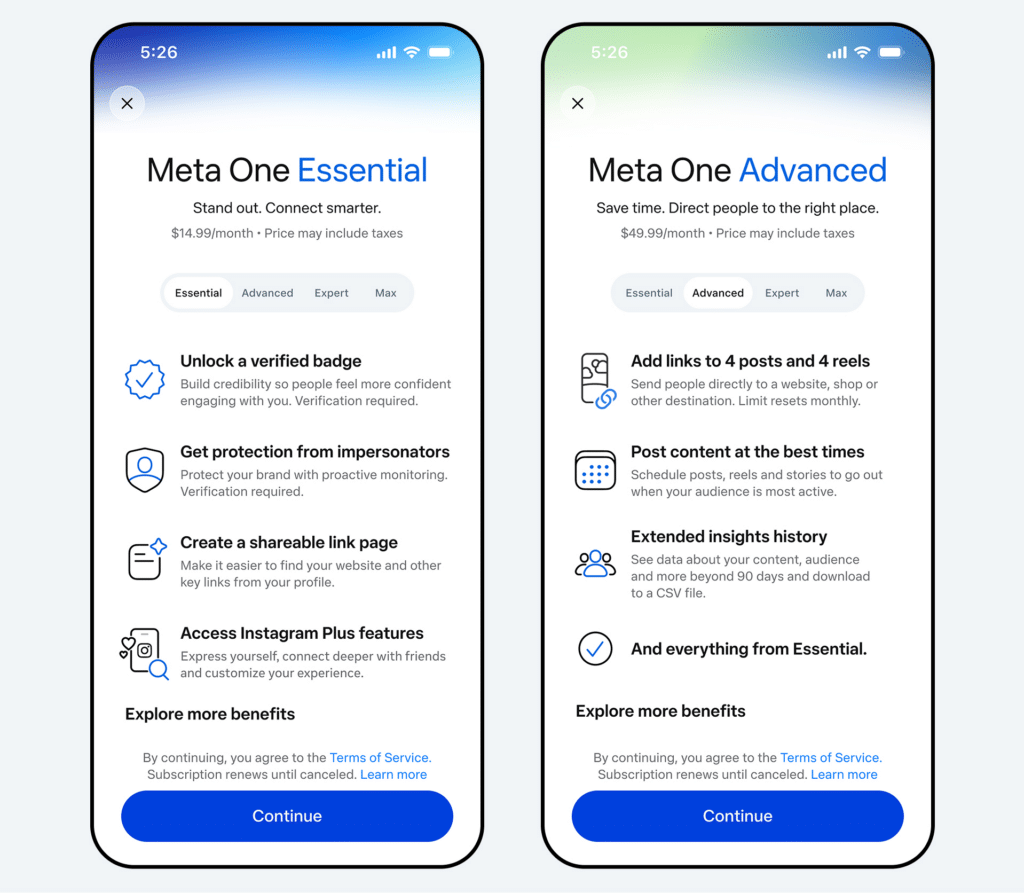
The professional tiers carry the most operational weight. “Essential,” starting at $14.99 per month, includes an enhanced profile, verified badge, impersonation protection for eligible accounts, a verified WhatsApp Business channel, and access to Meta Business Agent for customer inquiries. “Essential” also absorbs the benefits currently sold separately through Meta Verified, so eligible creators already paying for that program would not need a second subscription.
“Advanced,” at $49.99 per month, is the workflow tier: scheduling Instagram posts and Reels up to a year ahead, Stories up to 30 days out, bulk uploads, password-free team delegation, limited clickable links in post captions and Reels, competitive insights, exportable analytics, and notifications when another account reposts original content. “Expert” at $149 per month and “Max” at $499 per month scale allowances and support capacity. The latter includes unlimited requests for human support and the option to phone a Meta representative.
Professional plan pricing may apply per profile. A creator seeking Advanced-level capabilities on both Instagram and Facebook would begin at roughly $100 per month before advertising. In early testing, Meta says more than half of bundled-plan subscribers engaged with both AI and expression features, with Restyle and voice effects among the leading reasons people subscribed.
What Creators Gain
The feature that drew the clearest early enthusiasm from creators, according to Mashable, is password-free delegation. Dara Denney, a creator and advertiser who spoke at the launch event, described the labor it addresses: “Sometimes just one sponsor post takes about an hour to actually deploy. The thing that [Meta One] has really provided the most value for me is my time.” She said the feature let an assistant publish a forgotten sponsored post and prepare accompanying Stories without receiving account credentials.
Isaiah Barnes, the creator behind “Velocious Visuals,” pointed to competitive data as a production tool: “A lot of my clients are in different niches, so it helps me figure out what’s trending in their area. It makes the content creation process more intentional.”
Meta One consolidates functions creators have typically managed across external tools, including social-management platforms, analytics dashboards, link-in-bio products, and AI subscriptions, into its native apps. The company also plans an Edits Plus tier that will add cloud storage and an AI assistant for Instagram performance analysis.
Paid Discovery and the Platform’s Structural Shift
The most consequential and least-detailed feature in Meta One is discovery. Subscribers receive higher search placement on Instagram and Facebook; Facebook subscribers also gain additional feed visibility, a more prominent follow button, and automated follow invitations sent to people who engage with their posts.
At the launch event, a journalist asked whether these benefits could disadvantage creators who cannot afford subscriptions. Mashable raised the question more directly: whether the additional visibility will stay optional or become an operational necessity for creators trying to grow on increasingly crowded platforms.
Meta executive Helen Ma responded: “We are very committed to keeping the experience for creators free. There are many more people on teams that are building the free experiences for creators than the people that are working on subscriptions.”
The stated commitment does not resolve a question embedded in how Meta’s feeds were designed. Meta built its distribution to spread reach across as many creators as possible, a choice that prevented any single account from gaining enough leverage to bargain with the platform. That architecture kept distribution power centralized while making creators interchangeable as a supply source. What creators accumulated through years of producing for that system was something practitioners in the industry have come to call algorithmic capital: the ranking trust and audience relationship the platform’s recommendation engine scores post by post. Meta One now introduces a mechanism for creators to pay for better placement in the same system, a structural shift from a model where reach was allocated on engagement signals alone.
Meta has not disclosed how much paid placement alters search ranking, follow conversion, or organic reach in practice. Creators cannot calculate a return before committing, and Ma’s assurance about free tools stops short of quantifying what unsubscribed accounts stand to lose.
The concern compounds for multi-platform operators and agencies managing multiple client profiles, where per-profile charges multiply across a roster.
Meta’s rival TikTok introduced TikTok One in March 2025, consolidating TikTok’s creator marketplace and creative challenge systems and positioning organic content performance as a pre-test for paid campaigns. Where TikTok One targets the brand collaboration layer, Meta One addresses the individual operating stack. Both signal the same direction: platform tools that were once incidental to publishing are becoming a recurring cost.
Meta first signaled this expansion in January 2026, telling TechCrunch that paid tiers were coming separately from Meta Verified, citing Snapchat Plus, then at 16 million subscribers, as evidence of demand. The 15 million figure now reported includes trials, a distinction the announcement does not appear to separate. Whether those accounts convert and whether the paid discovery tier generates backlash or acceptance will determine if Meta One becomes standard infrastructure or the platform’s first real confrontation with the creators it built its feeds around.
Subscribe to Our Newsletter
Check Out Our Podcast