





Platform
YouTube’s Trust & Safety Chief Details Three Categories of Content Barred From Monetization

YouTube has spelled out, in specific terms, the types of content that cannot be monetized under a category the platform previously grouped together as “inauthentic content.”
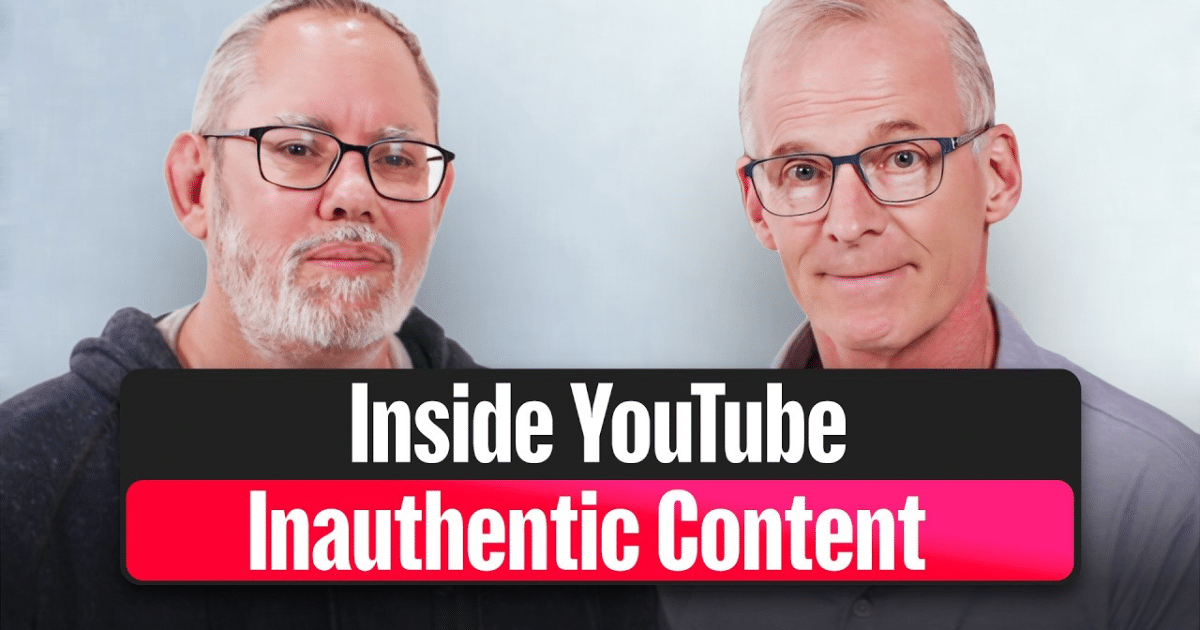
Matt Halprin, YouTube’s VP of Trust & Safety, broke the category into three parts in a recent interview on the “Creator Insider” video with YouTube Creator Liaison Rene Ritchie: generic, repetitive, or template-based content; off-putting or distressing content; and AI personas discussing sensitive topics such as finance, legal issues, or health care.
Halprin was explicit that the update changes no underlying policy. “I’m not here today to announce any kind of a new policy,” he said. “I’m here just to try to break it down a little more in detail to help creators understand what we allow and don’t allow as it relates to YPP.” He said the prior catchall term, “inauthentic content,” was not particularly useful to creators trying to understand the rules, and that YouTube built the three-part breakdown in response to that feedback.
The first category covers mass-produced videos built from templates with little variation between uploads, including tutorial videos that reproduce content already saturating the platform rather than offering something original. The second targets content designed to be emotionally manipulative or distressing purely to generate views, such as videos depicting an animal in apparent distress that is then rescued. The third addresses AI-generated personas, which Halprin said can be acceptable generally, but not when used to discuss finance, legal matters, or medical and health care topics.
Halprin emphasized that the rules apply to YouTube Partner Program (YPP) eligibility, not to Community Guidelines, which govern what can appear on the platform at all. YPP evaluations look at a channel’s overall content and behavior rather than individual videos, he said, and are unaffected by how many times a video has been flagged, whether by one viewer, many, or the platform’s automated detection. He also said the policy applies regardless of whether AI, CGI, or no additional tools were used to produce the content, and that creators suspended from YPP have 21 days to appeal and can reapply after 90 days.
The clarification comes as YouTube’s Shorts feed has drawn scrutiny for the volume of AI-generated and mass-produced content reaching viewers. Video editing platform Kapwing’s analysis of the top 100 trending channels in multiple countries found that AI-generated videos made up 21% of the first 500 Shorts shown to a new account, with a further 33% classified as “brainrot” content, low-quality, compulsive material often AI-assisted. Kapwing’s research identified individual AI-slop channels drawing billions of views and estimated annual revenue of more than $4 million apiece, underscoring the monetization incentive Halprin’s remarks are aimed at curbing.
Subscribe to Our Newsletter
Check Out Our Podcast