Creator burnout has a structural cause. Most creators spend more time managing their business than building it, and the tools designed to help them have not closed that gap. POP.STORE thinks it has a fix.
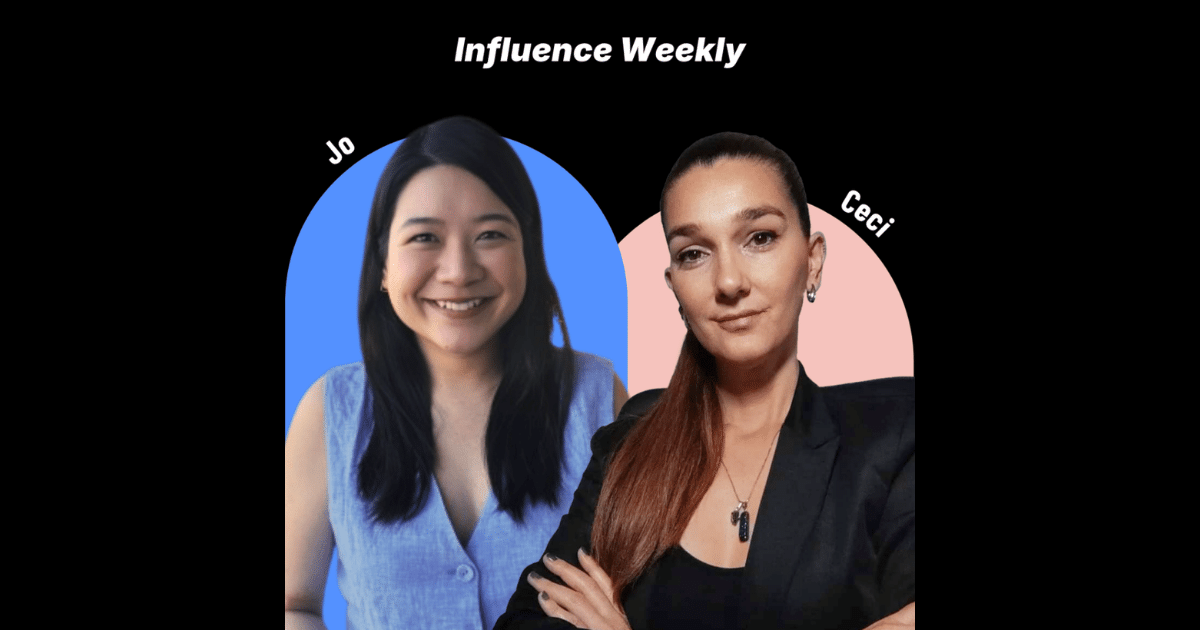
Jo Wong, Chief Revenue Officer and General Manager of POP.STORE, sat down with Net Influencer Senior Editor Ceci Carloni to discuss the company’s agentic AI platform, ECHO-ME, and what POP.STORE’s title sponsorship of VidCon Anaheim 2026 says about where the Creator Economy is heading. Jo brings a background in management consulting at BCG, private equity at Permira and Temasek, and a stint co-founding an emerging market education platform, before joining CommentSold, the Permira-backed live commerce company that operates POP.STORE.
The conversation covered the maturation of creator business thinking, where the Shopify comparison holds and where it breaks, and what the economy looks like when agentic AI becomes standard operating infrastructure.
1. Creators Are Finally Thinking Like CEOs, but the Infrastructure Has Not Caught Up
The mindset shift started in the last two or three years. Before that, brand deals were the North Star.
“Brand deals were king,” Jo said, adding that the norm was: “I must work with the biggest, sexiest brands in the industry. That’s how I’m going to build my entire platform. I’m chasing follower number, and I’m chasing my brand deals.”
That framing is losing ground. Creators are now asking questions that sound more like board meetings than content calendars. Jo said she regularly hears creators ask how to own their audience, build recurring revenue, and run something that does not evaporate when a brand relationship ends.
The challenge is that the tools have not kept pace with the ambition. Most creators still operate across disconnected systems, managing DMs, brand pitches, audience analytics, and content production without anything that ties them together.
2. POP.STORE Is Not the Shopify for Creators. It Wants to Own the Whole Cycle
The Shopify comparison is useful up to a point. Jo respects it and uses it often, but she is clear about where it breaks down.
“Shopify is the perfect bottom of the funnel,” she said. “It’s like I have a product to sell. It’s where people go to transact, and they do it so well.”
POP.STORE’s ambition is broader. The platform is designed to cover content creation, audience engagement, social traffic, and conversion inside a single system. The logic is that creators do not think in funnel stages. “For them, everything is part of their job,” Jo noted. A platform that only addresses one stage of that job is not enough.
The Shopify parallel still holds in one important way. Jo sees the Creator Economy today, where e-commerce was before Shopify, when building a business required a physical storefront. The infrastructure problem is real. The platform race to solve it is on.
3. ECHO-ME’s Five Agents Are Built Around What Creators Hate Most
Before ECHO-ME, a creator’s day looked like this: hours responding to DMs and comments, manually identifying followers who might convert, scheduling content, and searching a flooded inbox for buried brand deals. Jo describes creators as spending “80% of the time responding to DMs, checking emails, trying to negotiate brand deals, like everything except creating.”
ECHO-ME runs five agents in the background while the creator focuses on content. A social engagement agent handles comments and DMs in the creator’s own voice, either drafting responses for review or running on full automation. A comment-to-DM agent identifies purchase intent in public comments and routes those followers to the right destination link. An auto-selling agent analyzes the full follower base and segments audiences by intent level. A deal monitoring agent scans inboxes for brand partnership requests and surfaces only those that meet preset criteria. A fifth agent, built specifically for real estate operators, handles the mechanics of that vertical.
One creator who has been using ECHO-ME for more than a year told Jo he saves at least two hours a day. “Those two hours are now going to his business, negotiating better deals,” Jo said. Or, she added, just going to the gym.
4. VidCon’s 15-Year Arc Set the Stage for POP.STORE’s Biggest Launch
POP.STORE attended VidCon in 2024 without title sponsorship. The conversations Jo had on that floor shaped the decision to go bigger in 2026.
“Every conversation I had kept iterating that they were really hungry,” Jo said. Creators at various stages of their journey, from someone launching a children’s book to someone who had grown quickly and did not know how to scale, came back to the same ask: better tools and clearer paths to build.
The 15th anniversary timing sharpened the case. Jo saw VidCon’s own editorial shift toward systems, infrastructure, and tangible education as a natural match for what POP.STORE wanted to say. “It’s not a fan meetup,” she said. “It’s truly a giant community event where people learn how to build businesses.”
The flagship activation is a keynote featuring Jon Youshaei moderating a fireside chat with POP.STORE’s CEO, followed by a live ECHO-ME demo. The expo floor activation, branded Galactic Mission Control, devotes a corner to each of ECHO-ME’s five agents, including interactive challenges designed to put the technology to a visible, real-time test.
5. Real Estate Agents and the Rise of the Non-Traditional Creator
One of the two panels Jo is leading at VidCon focuses not on lifestyle creators but on real estate agents who have built social media audiences to close high-value deals.
“Real estate agents are truly influencers in their own right,” she said. The panel is the first time the category will be featured at VidCon, and Jo sees it as a preview of a broader shift.
The definition of creator has already expanded far beyond its original scope. Jo counts coaches, financial advisors, and founders among POP.STORE’s current user base, and she argues that the structural logic is the same across all of them. “You have to become a creator because, be it a founder, a coach, you could be a physiotherapist, either way, you have to draw business to you, and you have to use social media.”
Real estate makes the case sharply. The transaction values are high. The trust required to close them is significant. The fact that agents are building that trust through social content at scale, and converting it into closed sales, is the model Jo believes most industries will eventually follow.
6. Virality Is Not a Business
If Jo is making one argument at VidCon, it is this: chasing views is not the same as building something durable.
“Virality is truly not a business,” she said. Attention matters, but it is not the primary asset. A sustainable creator business runs on owned relationships, recurring community engagement, and systems that work independently of any single viral moment.
The gap between the “creator CEO” framing that has become standard industry shorthand and the actual infrastructure needed to support it is where most creators are stuck. “There’s still a gap between aspiration and eventually getting creators there,” Jo said, “because there’s still that gap in infrastructure and operating systems.”
POP.STORE’s pitch is that closing that gap requires more than a content scheduling tool or a payments layer. It requires a platform that handles the full operating surface of a creator business.
7. Agentic AI Expands the Creator Economy. It Does Not Replace the Creator
One concern Jo regularly encounters is that AI will erode the authenticity that makes creators effective. Her counter is that the opposite is more likely.
When administrative work no longer consumes most of a creator’s day, they have more time for content quality, community depth, and original creative output. Better content, more precisely tailored to specific audiences, accelerates the trust cycle that drives social commerce. “The most successful creators won’t just be the viral ones,” Jo said. “It’s actually who has the right system, the right infrastructure to help them grow and scale in a smart way.”
The broader effect, in Jo’s view, is a lower barrier to entering the Creator Economy overall. More people can build side businesses when they are not facing hours of administrative overhead on top of a full day. According to Jo, POP.STORE already counts more than 20,000 creators on the platform. The question for the industry is how many more enter the market once the infrastructure gap is genuinely closed.
Listen to the full conversation on “The Big Three” podcast.
David Adler is an entrepreneur and freelance blog post writer who enjoys writing about business, entrepreneurship, travel and the influencer marketing space.












Creator burnout has a structural cause. Most creators spend more time managing their business than building it, and the tools designed to help them have not closed that gap. POP.STORE thinks it has a fix.
Jo Wong, Chief Revenue Officer and General Manager of POP.STORE, sat down with Net Influencer Senior Editor Ceci Carloni to discuss the company’s agentic AI platform, ECHO-ME, and what POP.STORE’s title sponsorship of VidCon Anaheim 2026 says about where the Creator Economy is heading. Jo brings a background in management consulting at BCG, private equity at Permira and Temasek, and a stint co-founding an emerging market education platform, before joining CommentSold, the Permira-backed live commerce company that operates POP.STORE.
The conversation covered the maturation of creator business thinking, where the Shopify comparison holds and where it breaks, and what the economy looks like when agentic AI becomes standard operating infrastructure.
1. Creators Are Finally Thinking Like CEOs, but the Infrastructure Has Not Caught Up
The mindset shift started in the last two or three years. Before that, brand deals were the North Star.
“Brand deals were king,” Jo said, adding that the norm was: “I must work with the biggest, sexiest brands in the industry. That’s how I’m going to build my entire platform. I’m chasing follower number, and I’m chasing my brand deals.”
That framing is losing ground. Creators are now asking questions that sound more like board meetings than content calendars. Jo said she regularly hears creators ask how to own their audience, build recurring revenue, and run something that does not evaporate when a brand relationship ends.
The challenge is that the tools have not kept pace with the ambition. Most creators still operate across disconnected systems, managing DMs, brand pitches, audience analytics, and content production without anything that ties them together.
2. POP.STORE Is Not the Shopify for Creators. It Wants to Own the Whole Cycle
The Shopify comparison is useful up to a point. Jo respects it and uses it often, but she is clear about where it breaks down.
“Shopify is the perfect bottom of the funnel,” she said. “It’s like I have a product to sell. It’s where people go to transact, and they do it so well.”
POP.STORE’s ambition is broader. The platform is designed to cover content creation, audience engagement, social traffic, and conversion inside a single system. The logic is that creators do not think in funnel stages. “For them, everything is part of their job,” Jo noted. A platform that only addresses one stage of that job is not enough.
The Shopify parallel still holds in one important way. Jo sees the Creator Economy today, where e-commerce was before Shopify, when building a business required a physical storefront. The infrastructure problem is real. The platform race to solve it is on.
3. ECHO-ME’s Five Agents Are Built Around What Creators Hate Most
Before ECHO-ME, a creator’s day looked like this: hours responding to DMs and comments, manually identifying followers who might convert, scheduling content, and searching a flooded inbox for buried brand deals. Jo describes creators as spending “80% of the time responding to DMs, checking emails, trying to negotiate brand deals, like everything except creating.”
ECHO-ME runs five agents in the background while the creator focuses on content. A social engagement agent handles comments and DMs in the creator’s own voice, either drafting responses for review or running on full automation. A comment-to-DM agent identifies purchase intent in public comments and routes those followers to the right destination link. An auto-selling agent analyzes the full follower base and segments audiences by intent level. A deal monitoring agent scans inboxes for brand partnership requests and surfaces only those that meet preset criteria. A fifth agent, built specifically for real estate operators, handles the mechanics of that vertical.
One creator who has been using ECHO-ME for more than a year told Jo he saves at least two hours a day. “Those two hours are now going to his business, negotiating better deals,” Jo said. Or, she added, just going to the gym.
4. VidCon’s 15-Year Arc Set the Stage for POP.STORE’s Biggest Launch
POP.STORE attended VidCon in 2024 without title sponsorship. The conversations Jo had on that floor shaped the decision to go bigger in 2026.
“Every conversation I had kept iterating that they were really hungry,” Jo said. Creators at various stages of their journey, from someone launching a children’s book to someone who had grown quickly and did not know how to scale, came back to the same ask: better tools and clearer paths to build.
The 15th anniversary timing sharpened the case. Jo saw VidCon’s own editorial shift toward systems, infrastructure, and tangible education as a natural match for what POP.STORE wanted to say. “It’s not a fan meetup,” she said. “It’s truly a giant community event where people learn how to build businesses.”
The flagship activation is a keynote featuring Jon Youshaei moderating a fireside chat with POP.STORE’s CEO, followed by a live ECHO-ME demo. The expo floor activation, branded Galactic Mission Control, devotes a corner to each of ECHO-ME’s five agents, including interactive challenges designed to put the technology to a visible, real-time test.
5. Real Estate Agents and the Rise of the Non-Traditional Creator
One of the two panels Jo is leading at VidCon focuses not on lifestyle creators but on real estate agents who have built social media audiences to close high-value deals.
“Real estate agents are truly influencers in their own right,” she said. The panel is the first time the category will be featured at VidCon, and Jo sees it as a preview of a broader shift.
The definition of creator has already expanded far beyond its original scope. Jo counts coaches, financial advisors, and founders among POP.STORE’s current user base, and she argues that the structural logic is the same across all of them. “You have to become a creator because, be it a founder, a coach, you could be a physiotherapist, either way, you have to draw business to you, and you have to use social media.”
Real estate makes the case sharply. The transaction values are high. The trust required to close them is significant. The fact that agents are building that trust through social content at scale, and converting it into closed sales, is the model Jo believes most industries will eventually follow.
6. Virality Is Not a Business
If Jo is making one argument at VidCon, it is this: chasing views is not the same as building something durable.
“Virality is truly not a business,” she said. Attention matters, but it is not the primary asset. A sustainable creator business runs on owned relationships, recurring community engagement, and systems that work independently of any single viral moment.
The gap between the “creator CEO” framing that has become standard industry shorthand and the actual infrastructure needed to support it is where most creators are stuck. “There’s still a gap between aspiration and eventually getting creators there,” Jo said, “because there’s still that gap in infrastructure and operating systems.”
POP.STORE’s pitch is that closing that gap requires more than a content scheduling tool or a payments layer. It requires a platform that handles the full operating surface of a creator business.
7. Agentic AI Expands the Creator Economy. It Does Not Replace the Creator
One concern Jo regularly encounters is that AI will erode the authenticity that makes creators effective. Her counter is that the opposite is more likely.
When administrative work no longer consumes most of a creator’s day, they have more time for content quality, community depth, and original creative output. Better content, more precisely tailored to specific audiences, accelerates the trust cycle that drives social commerce. “The most successful creators won’t just be the viral ones,” Jo said. “It’s actually who has the right system, the right infrastructure to help them grow and scale in a smart way.”
The broader effect, in Jo’s view, is a lower barrier to entering the Creator Economy overall. More people can build side businesses when they are not facing hours of administrative overhead on top of a full day. According to Jo, POP.STORE already counts more than 20,000 creators on the platform. The question for the industry is how many more enter the market once the infrastructure gap is genuinely closed.
Listen to the full conversation on “The Big Three” podcast.
Subscribe to Our Newsletter
Check Out Our Podcast