

Platform
TheFlow Founder Michael Hanuschik On Designing A Healthy Ecosystem For The Creator Economy

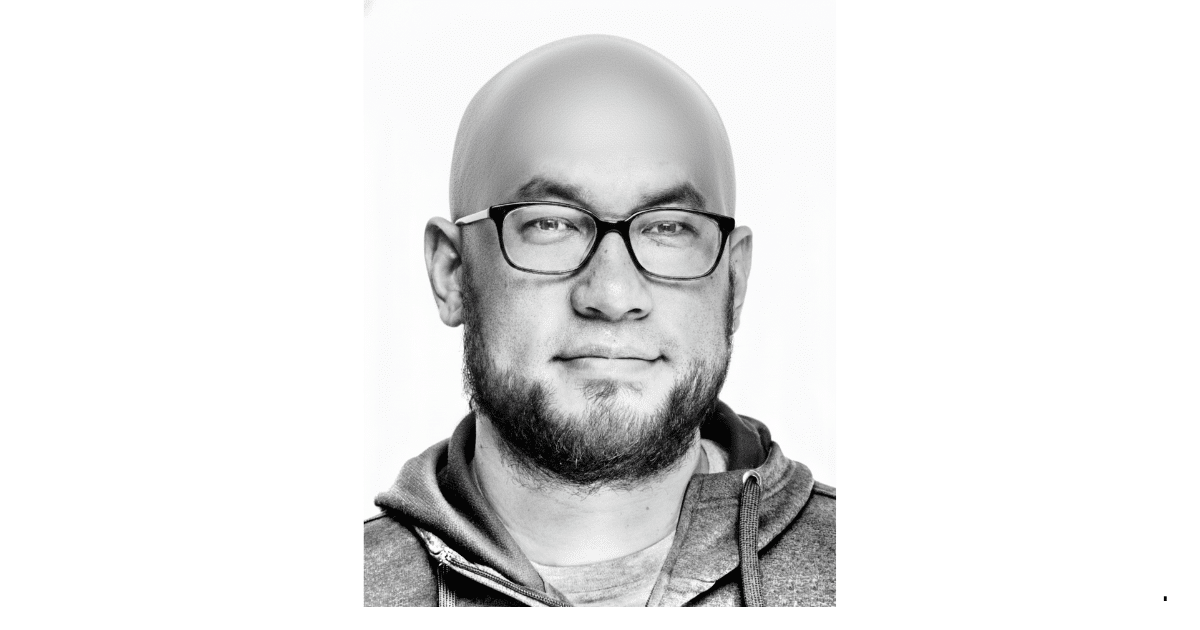
Michael Hanuschik believes that for digital platforms to be healthy ecosystems, the creators must receive the majority of the value. The Flow Cooperative is reimagining the creator economy around that premise, not by chasing attention, but by designing an environment where creators and audiences can remain healthy.
Founded in 2023 and headquartered in Sunnyvale, California, The Flow is a creator-owned music and social media ecosystem built around the idea that digital environments shape human behavior as powerfully as natural ones. Michael, founder and CEO, is building TheFlow to correct what he sees as a structural failure in the creator economy, particularly in music, by rebuilding the incentives that determine how creators get paid, how audiences participate, and how platforms profit.
“I look at what we’re doing with social media and the creator economy as a health initiative,” Michael says. “Right now, it’s driven purely by profit, and that has pushed the system into a place that is parasitic. It extracts value from the ecosystem without giving anything back.”
The Flow’s launch comes at a moment when creators command unprecedented cultural and economic influence, yet the vast majority still struggle to earn a living wage. According to Michael, fewer than 1% of creators generate meaningful income on existing platforms. The rest operate within systems optimized for scale, advertising, and shareholder returns, not for creator sustainability.
His response is not to tweak features or add new monetization tools. It is to redesign the environment itself.

From Surgical Robotics to Social Systems
Before founding The Flow, Michael spent more than a decade in surgical robotics, including 14 years at Intuitive Surgical, where he led product and design across multiple generations of the da Vinci surgical system. The work required building technology that was not only complex but also safe; systems in which mistakes could cost lives.
“That experience teaches you discipline,” he says. “You make a claim, and then you have to prove it. If you’re wrong, people get hurt.”
After Intuitive, Michael served as Chief Product Officer at autonomous-vehicle startups and later founded Proclaim Health, an automated oral-care company focused on preventive healthcare. Across those roles, a consistent theme emerged: design environments that support healthy outcomes.
That thinking crystallized during a personal project unrelated to technology. While researching the world’s tallest trees, Michael noticed that the tallest redwoods were not genetically different from shorter ones. What changed was the environment – access to water, fog, nutrients, and protection.
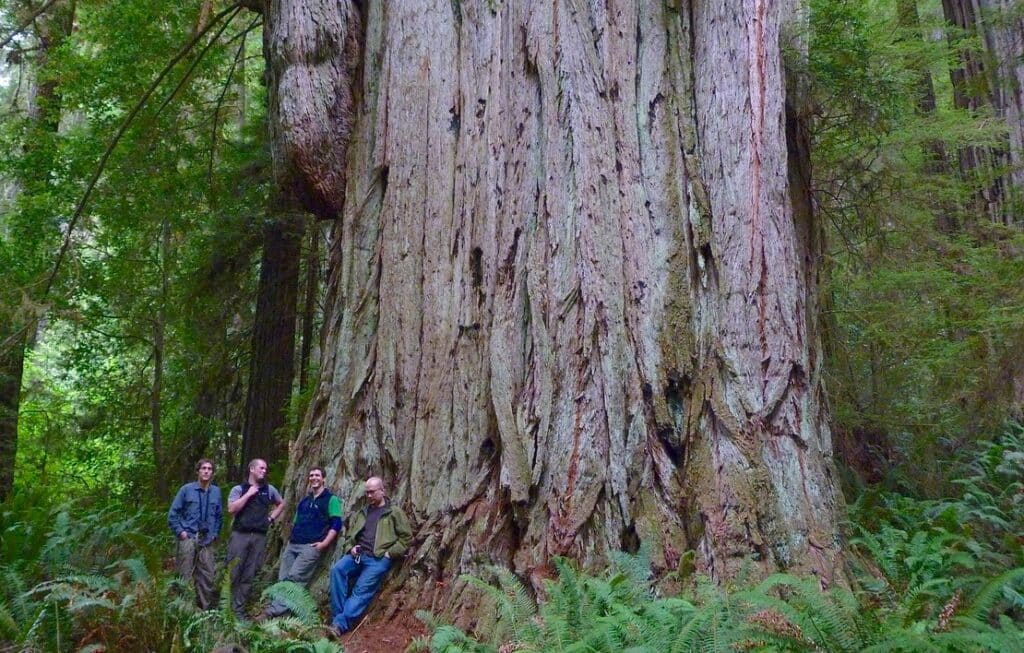
“When it comes to potential and growth, the environment is way more important than the individual,” he says. “If the environment is sick, it doesn’t matter how good the individual is.”
The insight became foundational to his view of digital platforms.
Identifying the Core Failure in the Music Economy
Michael’s entry into music began with conversations in Nashville. He asked professional musicians where they hoped their careers would lead.
“They all said the same thing,” he recalls. “‘I just want to make enough money to keep playing music with my friends.’ And these are some of the best musicians in the world.”
The numbers did not add up for Michael. Despite a global music industry generating tens of billions of dollars annually, many full-time musicians reported earning around $40,000 in a good year. He began studying the economics behind streaming, distribution, and promotion.
The conclusion was blunt. “Musicians have never made money because they’ve never owned the companies that distribute their work,” he says.
Michael notes that most streaming platforms operate on a pro-rata model, pooling subscription revenue and distributing it based on total streams, which concentrates payouts among top artists and major labels. Discovery, streaming, and monetization happen across separate platforms, each extracting value at every step.
“The system is extraordinarily complicated,” Michael says. “And if you strip it down, the simplest statement is this: musicians can’t make a living.”
Designing an Ecosystem, Not a Feature Set
The Flow is structured as a California cooperative corporation. Creators are not just users; they are owners, governed by a one-member-one-vote model. No individual may own more than 5% of the company – a restriction set forth in its bylaws.
That ownership structure shapes every design decision.
Rather than relying on advertising, The Flow operates through three interconnected revenue streams:
- Paid Attention Streaming, where a subscriber’s fee is distributed directly to the artists they actually listen to, based on listening time.
- Direct Downloads, allowing artists to sell music outright and control pricing, including “sell before you stream” releases.
- Backstage Pass Subscriptions, where fans subscribe directly to artists for exclusive content and connection.
According to Michael, an artist needs roughly 3,600 subscribers at a minimum monthly rate to earn more than $100,000 per year. “You don’t need millions of people,” he says. “You need a real community.”
The Flow does not sell user data, run ads, or allow bots or AI-generated music. Those restrictions are not marketing claims, but structural constraints embedded into the platform’s governance.
“I don’t care about mission statements,” Michael says. “Show me your money statement. Tell me how you make money, and I’ll tell you how you behave.”
Re-Engineering Incentives for Healthy Human Behavior
Beyond monetization, Michael believes modern social platforms are actively shaping unhealthy behavior by rewarding outrage, virality, and emotional extremes, as those signals drive engagement.
The Flow attempts to invert that logic.
In addition to traditional likes, users can assign a limited number of daily Flowji’s, values tied to human traits such as creativity, wisdom, or kindness. Content that receives these signals is promoted algorithmically.
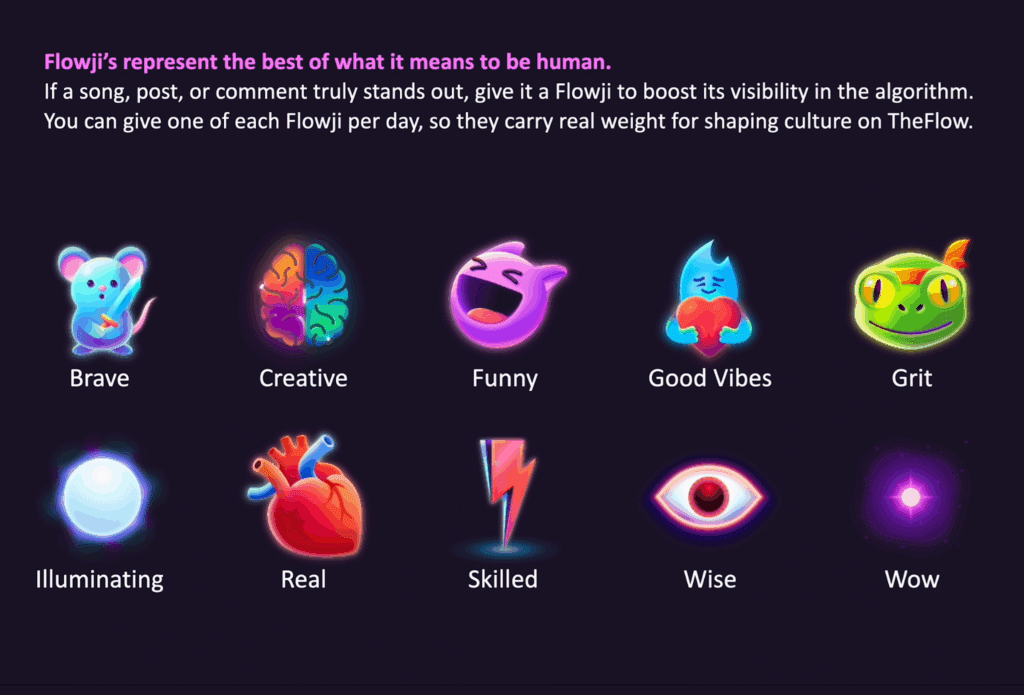
“We’re not powered by artificial intelligence. We’re powered by human intelligence,” Michael says. “Emotional intelligence. Collective intelligence. Ecosystem intelligence.”
The platform is invite-only, with identity verification built into onboarding to prevent bots at scale. Even growth mechanics are designed to reinforce alignment: creators who bring other creators into the ecosystem can earn back platform fees, redistributing value horizontally rather than upward.
Michael argues that large platforms cannot replicate these mechanics without undermining their own business models. Transparency around algorithms, limitations on ownership, and a ban on AI-generated content directly conflict with shareholder obligations.
“Large platforms cannot adopt this structure,” he says. “If they did, it would break their businesses.”
A Broader Vision Beyond Music
While music is the starting point, Michael sees The Flow as infrastructure for the entire creator economy, including education, journalism, and other forms of cultural production.
“This is really about story technology,” he says. “How stories spread. How they shape belief. How they shape health.”
He describes current platforms as very often reinforcing anxiety, helplessness, and division. Healthier systems, by contrast, spread through resonance rather than outrage.
The Flow’s long-term ambition is to support a deeper connection rather than a constant presence. Even the app’s opening flow is designed to prompt reflection, not compulsion, according to Michael.
“We don’t make money by keeping people online all the time,” he says. “We make money through deep engagement and real connection.”
Betting on Fair Economics For Creators
Michael is careful not to frame The Flow as inevitable. He acknowledges that many well-intentioned platforms have failed before. The difference, he argues, lies in aligning culture, economics, and governance from the start.
“A story only survives if reality supports it,” he says. “If creators actually make money here, that story spreads. If they don’t, it dies.”
His bet is that the extreme imbalance in the current creator economy will catalyze migration toward more mutually beneficial structures and systems in which participants benefit together rather than extracting from one another.
“When trust collapses, loyalty disappears,” he says. “As soon as something better shows up, people move.”
Choosing Healthier Stories
When defining long-term success, Michael does not mention market share or valuation. He talks instead about collective agency.
“I hope we get to see ourselves as part of one thing,” he says. “An empowered collective where the wealth stays inside the system, and we get to decide what future we’re building.”
For Michael, the work is less about platforms than about choice. Technology, he argues, is not inherently harmful; outcomes are shaped by environments, which are designed by humans.
“In any situation, two stories can be equally true,” he says. “You get to choose which one you live in. If we choose healthier stories – and build places where those stories can actually survive – that changes everything.”
Photo source: TheFlow
Subscribe to Our Newsletter
Check Out Our Podcast