The micro-influencer pitch has been around for over a decade. Brands kept buying reach anyway. Kristen Wiley thinks the algorithm just changed the math for good.
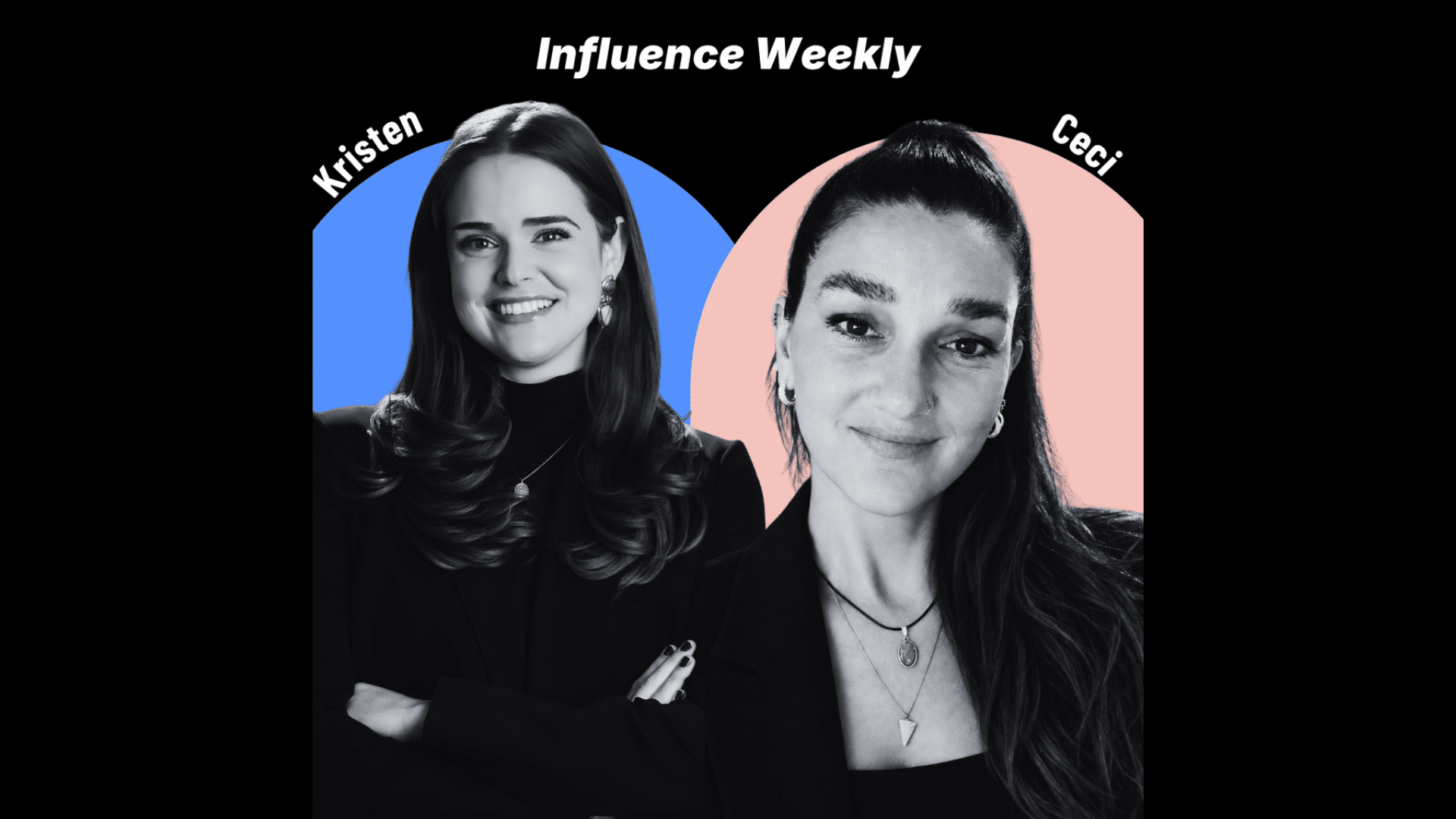
The founder and CEO of Statusphere sat down with Net Influencer Senior Editor Ceci Carloni to discuss why follower count stopped predicting campaign outcomes, how platforms like Google and Meta capture attribution they didn’t generate, and what measurement framework brands actually need. Kristen has spent 15 years on both sides of Influencer Marketing, starting as a blogger in 2010 and later working on the agency side. She built Statusphere in 2018 to give brands a way to run micro-influencer campaigns at scale.
The conversation covered the algorithm shift that decoupled reach from follower count, the pricing logic that makes a 100-person audience more valuable than a million-person one in the right context, and the trust metric the industry has been circling without producing.
1. The TikTok Algorithm Made Follower Count Irrelevant
Pre-TikTok, content reached your followers. Distribution flowed through the connections a creator had already built, which meant audience size roughly predicted reach.
“With TikTok, you had the For You page come out,” Kristen says. She cites a figure she tracks: 90 to 95 percent of all TikTok views now happen on the For You page, not on follower feeds. That structural change broke the relationship between audience size and reach. A creator with 500 followers could go viral on strong content. A creator with 500,000 could post to silence.
Kristen traces the advantage of smaller creators further back than the algorithm shift. When she started her blog in 2010, smaller creators already drew more engaged audiences. “If you only have a few thousand followers, they like to know you more,” she says. “It’s relationship-driven content versus aspirational content.” The algorithm made what was already true operationally significant.
2. Brands Are Moving from Buying Attention to Earning Trust
Follower count mattered when attention was the scarce resource. It is no longer.
“We’re moving from an attention-based economy to a trust-based economy,” Kristen says. The question that now determines whether an audience acts on a recommendation is not how many people saw it. It is whether the person who delivered it had credibility with them.
The AI discovery layer makes this more consequential. Platforms have introduced AI-powered recommendation tools that surface products, Kristen argues, and the sources those systems weight most heavily will be the ones that have built real credibility with their audiences. “The creators are also the sources in that scenario too,” she notes, adding that posting history that reflects a real relationship becomes discoverability.
3. One Thousand Micro-Influencers Can Equal One Macro Account
The objection to micro-influencer campaigns has been consistent for a decade. Ten small creators don’t reach what one large one can.
Kristen’s answer isn’t to argue the math, but to solve the operational constraint. “Enterprise brands, you can’t just get 10 of these small creators posting,” she says. “They went to the macro influencers because they just have insane reach.” Statusphere was built to let brands run campaigns with hundreds of micro-influencers without the operational overhead of managing each relationship manually.
In aggregate, properly matched smaller creators can reach a comparable total audience as a single macro account, at higher trust signals and lower cost per post, Kristen argues. “The brands that are winning are understanding how to leverage micros, mid-tier and macros for different parts of their strategy,” she says.
4. Social Search and AI Discovery Changed the Influencer Brief
The channel shift predates most brands’ awareness of it.
Statusphere built campaign optimization for social search in 2022, Kristen says, among the first platforms to do so by her account. The underlying behavior: 74% of Gen Z and more than half of millennials now search on social platforms rather than Google, she cites. That made creators the primary discovery channel for the demographic most brands are targeting.
The AI layer extends the same logic. When platforms like MetaMuse recommend products, the recommendation draws on trust signals accumulated through creator content, Kristen argues. Brands with more creator volume have more of those signals. “Between the algorithms shifting and then on top of it, with trust becoming so important, that’s when micro influencers are becoming a core part of strategy,” she says.
5. Creator Pricing Follows Value, Not Follower Count
Rate cards are the wrong tool for the problem, according to Kristen.
“I have seen creators with a million followers do a collaboration for product exchange alone,” she says. “And I’ve seen creators with a thousand followers get paid ten thousand, twenty thousand dollars.” The driver isn’t audience size. It’s the value of the transaction the creator is positioned to influence.
Her example: a brand acquiring lawyers as customers might pay significantly for a creator with 100 engaged lawyer followers if a single converted client is worth $50,000. The same audience size is worth far less for a $30 lipstick. “There is no normal,” she says. “What I like to call it is a value exchange.”
She also argues against pure performance-based pricing. When customers encounter multiple brand touchpoints before buying and last-click attribution gives the final channel the credit, creators who drove earlier purchase intent go unpaid. “Creators will be incentivized to just try to sell, sell, sell,” she says. Her preferred structure: a flat rate for content creation, with affiliate upside for attributed sales on top.
6. Google and Meta Capture Attribution That Belongs to Creators
A consumer discovers a product through a creator. They Google it a week later and buy. Google logs the conversion.
“Google and Meta have done such a phenomenal job of getting marketers drunk on their last click attribution,” Kristen says. That model, she adds, consistently assigns credit to the ad channel rather than the trust channel that built the purchase intent.
The downstream effect shows up in budget decisions. “If you turn off your creator marketing, your bottom of the funnel gets way less effective,” she says. The creator spend doesn’t appear in the conversion report, but its absence does.
Kristen reframes the creator’s contribution through customer journey math. Converting a customer now requires 15 to 20 brand touchpoints, up from seven, by figures she cites. A creator post, in her framing, doesn’t count as one touchpoint. “If you see a creator post, it’s kind of like five trust points,” she says, “especially if she looks like you and she’s in the same life stage as you.”
7. The Industry Needs a Trust Score. Nobody Has Built One Yet.
Asked to name the single metric the industry should converge on, Kristen rejects the premise.
“I don’t think there really can be one number,” she says. What she’d build instead is a trust score, or a match score, measuring how well a creator’s audience trusts them and how closely their content aligns with a specific brand and objective.
She identifies three metrics she’d retire. Follower count is the obvious one. Impressions is the second. “Instagram and TikTok have taken the impressions out,” she notes; platforms still reporting the figure are likely deriving it from a formula that doesn’t reflect actual performance. Earned media value gets a qualified critique: useful for internal benchmarking if the formula is applied consistently, unreliable for cross-platform comparison because no two platforms calculate it the same way.
Statusphere is working toward a trust and match score, Kristen says. “If people focus more on that trust or match score and less on the overall follower count, they’d be in a much better spot with a lot of their campaigns,” she says.
Dragomir is a Serbian freelance blog writer and translator. He is passionate about covering insightful stories and exploring topics such as influencer marketing, the creator economy, technology, business, and cyber fraud.















The micro-influencer pitch has been around for over a decade. Brands kept buying reach anyway. Kristen Wiley thinks the algorithm just changed the math for good.
The founder and CEO of Statusphere sat down with Net Influencer Senior Editor Ceci Carloni to discuss why follower count stopped predicting campaign outcomes, how platforms like Google and Meta capture attribution they didn’t generate, and what measurement framework brands actually need. Kristen has spent 15 years on both sides of Influencer Marketing, starting as a blogger in 2010 and later working on the agency side. She built Statusphere in 2018 to give brands a way to run micro-influencer campaigns at scale.
The conversation covered the algorithm shift that decoupled reach from follower count, the pricing logic that makes a 100-person audience more valuable than a million-person one in the right context, and the trust metric the industry has been circling without producing.
1. The TikTok Algorithm Made Follower Count Irrelevant
Pre-TikTok, content reached your followers. Distribution flowed through the connections a creator had already built, which meant audience size roughly predicted reach.
“With TikTok, you had the For You page come out,” Kristen says. She cites a figure she tracks: 90 to 95 percent of all TikTok views now happen on the For You page, not on follower feeds. That structural change broke the relationship between audience size and reach. A creator with 500 followers could go viral on strong content. A creator with 500,000 could post to silence.
Kristen traces the advantage of smaller creators further back than the algorithm shift. When she started her blog in 2010, smaller creators already drew more engaged audiences. “If you only have a few thousand followers, they like to know you more,” she says. “It’s relationship-driven content versus aspirational content.” The algorithm made what was already true operationally significant.
2. Brands Are Moving from Buying Attention to Earning Trust
Follower count mattered when attention was the scarce resource. It is no longer.
“We’re moving from an attention-based economy to a trust-based economy,” Kristen says. The question that now determines whether an audience acts on a recommendation is not how many people saw it. It is whether the person who delivered it had credibility with them.
The AI discovery layer makes this more consequential. Platforms have introduced AI-powered recommendation tools that surface products, Kristen argues, and the sources those systems weight most heavily will be the ones that have built real credibility with their audiences. “The creators are also the sources in that scenario too,” she notes, adding that posting history that reflects a real relationship becomes discoverability.
3. One Thousand Micro-Influencers Can Equal One Macro Account
The objection to micro-influencer campaigns has been consistent for a decade. Ten small creators don’t reach what one large one can.
Kristen’s answer isn’t to argue the math, but to solve the operational constraint. “Enterprise brands, you can’t just get 10 of these small creators posting,” she says. “They went to the macro influencers because they just have insane reach.” Statusphere was built to let brands run campaigns with hundreds of micro-influencers without the operational overhead of managing each relationship manually.
In aggregate, properly matched smaller creators can reach a comparable total audience as a single macro account, at higher trust signals and lower cost per post, Kristen argues. “The brands that are winning are understanding how to leverage micros, mid-tier and macros for different parts of their strategy,” she says.
4. Social Search and AI Discovery Changed the Influencer Brief
The channel shift predates most brands’ awareness of it.
Statusphere built campaign optimization for social search in 2022, Kristen says, among the first platforms to do so by her account. The underlying behavior: 74% of Gen Z and more than half of millennials now search on social platforms rather than Google, she cites. That made creators the primary discovery channel for the demographic most brands are targeting.
The AI layer extends the same logic. When platforms like MetaMuse recommend products, the recommendation draws on trust signals accumulated through creator content, Kristen argues. Brands with more creator volume have more of those signals. “Between the algorithms shifting and then on top of it, with trust becoming so important, that’s when micro influencers are becoming a core part of strategy,” she says.
5. Creator Pricing Follows Value, Not Follower Count
Rate cards are the wrong tool for the problem, according to Kristen.
“I have seen creators with a million followers do a collaboration for product exchange alone,” she says. “And I’ve seen creators with a thousand followers get paid ten thousand, twenty thousand dollars.” The driver isn’t audience size. It’s the value of the transaction the creator is positioned to influence.
Her example: a brand acquiring lawyers as customers might pay significantly for a creator with 100 engaged lawyer followers if a single converted client is worth $50,000. The same audience size is worth far less for a $30 lipstick. “There is no normal,” she says. “What I like to call it is a value exchange.”
She also argues against pure performance-based pricing. When customers encounter multiple brand touchpoints before buying and last-click attribution gives the final channel the credit, creators who drove earlier purchase intent go unpaid. “Creators will be incentivized to just try to sell, sell, sell,” she says. Her preferred structure: a flat rate for content creation, with affiliate upside for attributed sales on top.
6. Google and Meta Capture Attribution That Belongs to Creators
A consumer discovers a product through a creator. They Google it a week later and buy. Google logs the conversion.
“Google and Meta have done such a phenomenal job of getting marketers drunk on their last click attribution,” Kristen says. That model, she adds, consistently assigns credit to the ad channel rather than the trust channel that built the purchase intent.
The downstream effect shows up in budget decisions. “If you turn off your creator marketing, your bottom of the funnel gets way less effective,” she says. The creator spend doesn’t appear in the conversion report, but its absence does.
Kristen reframes the creator’s contribution through customer journey math. Converting a customer now requires 15 to 20 brand touchpoints, up from seven, by figures she cites. A creator post, in her framing, doesn’t count as one touchpoint. “If you see a creator post, it’s kind of like five trust points,” she says, “especially if she looks like you and she’s in the same life stage as you.”
7. The Industry Needs a Trust Score. Nobody Has Built One Yet.
Asked to name the single metric the industry should converge on, Kristen rejects the premise.
“I don’t think there really can be one number,” she says. What she’d build instead is a trust score, or a match score, measuring how well a creator’s audience trusts them and how closely their content aligns with a specific brand and objective.
She identifies three metrics she’d retire. Follower count is the obvious one. Impressions is the second. “Instagram and TikTok have taken the impressions out,” she notes; platforms still reporting the figure are likely deriving it from a formula that doesn’t reflect actual performance. Earned media value gets a qualified critique: useful for internal benchmarking if the formula is applied consistently, unreliable for cross-platform comparison because no two platforms calculate it the same way.
Statusphere is working toward a trust and match score, Kristen says. “If people focus more on that trust or match score and less on the overall follower count, they’d be in a much better spot with a lot of their campaigns,” she says.
Listen to the full conversation on “The Big Three” podcast.
Subscribe to Our Newsletter
Check Out Our Podcast