


Strategy
Shake Content’s Dani Markovits: Founders Who Ignore LinkedIn Are Ceding Their Best Acquisition Channel

B2B marketing has a trust problem. Paid acquisition costs are rising, AI is flooding every channel with indistinguishable content, and the polished company page is producing diminishing returns. Dani Markovits watched this unfold from inside LinkedIn for four years. Now he is on the other side, helping founders fix it.
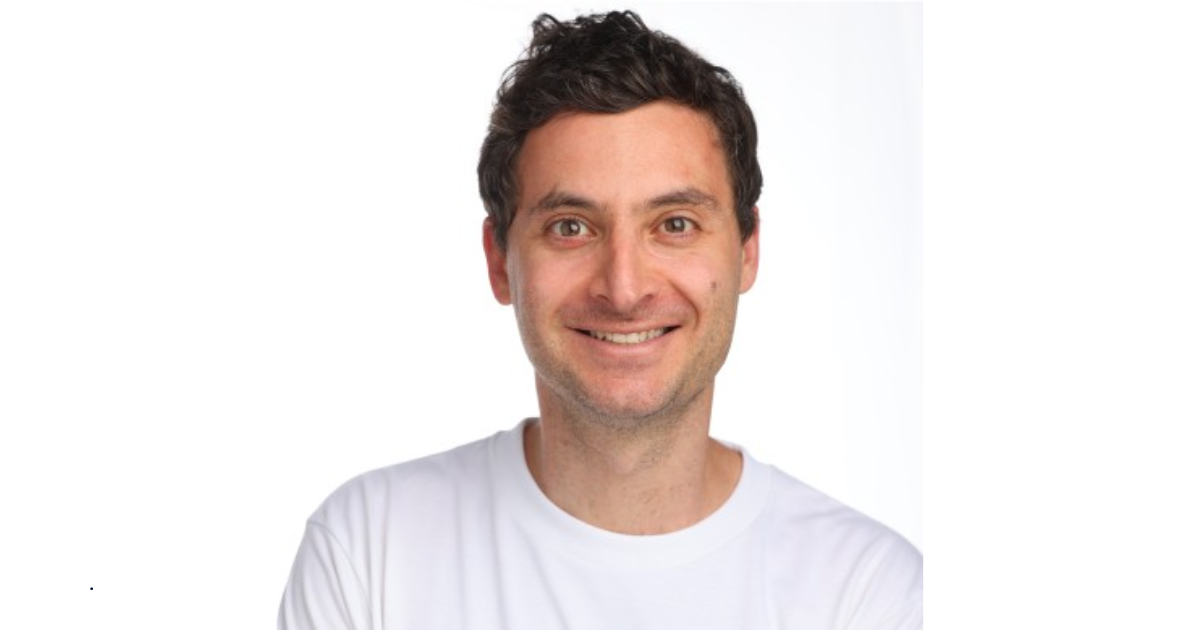
Dani joined Shake Content as Chief Commercial Officer in October 2025, following four years building LinkedIn’s creator and community team across Europe and the Middle East, where he managed a portfolio of more than 500 high-profile executives, founders, and athletes, including F1 driver Lewis Hamilton. The London-based agency, co-founded by Harry Williams and James Farnfield, operates on a single thesis: the founder’s voice is the most powerful acquisition channel a B2B company has, and most founders are not using it.
“The content that performs best and drives the most impact is being told by the individual, not from the logos or the company pages,” Dani says.
Shake works primarily with B2B software and fintech founders, though it has recently expanded into professional services and sports, including professional footballers. It focuses exclusively on LinkedIn, a deliberate constraint in a market crowded with generalist agencies.
“Most agencies here in the UK do a bit of everything,” he notes. “We know what we do best. We believe completely in LinkedIn.”
Why Founders Are B2B’s Best Marketing Asset
The shift from brand-driven to individual-driven content is not, Dani argues, a social media trend. It reflects a structural change in how B2B buying decisions get made.
“People want to hear from the face,” he says. “From the people taking the decisions.” In B2B sales cycles that require anywhere from seven to ten touchpoints before a buyer commits, the founder who shows up consistently with a genuine perspective becomes the most cost-efficient form of top-of-mind awareness available.
Dani draws a direct line between founder visibility and commercial outcomes. “Founder-led marketing is probably one of the best channels to drive visibility and be top of mind,” he explains. “It lets people inside your world who are not ready to buy. But in a year, whenever they want a solution similar to what you offer, they remember.”
The argument for founders specifically, rather than employees or marketing teams, centers on earned credibility. Founders are building products, taking risks, and developing hands-on expertise in ways that are difficult to replicate. “People want to hear from founders because they’re in the trenches,” Dani says. “They are getting their hands dirty.”

LinkedIn Increasingly Rewards Demonstrated Expertise
Over the past several years, LinkedIn has gradually become a platform where professional credibility and subject-matter expertise appear to play a larger role in how content travels across the network. For founders and operators sharing insights from their own experience, that shift has created new opportunities to reach relevant audiences.
Dani observes that posts grounded in real-world knowledge often gain traction even without the kind of early engagement signals that typically drive visibility on other platforms. Instead of relying solely on likes and comments in the first few minutes after publishing, content that reflects a poster’s professional authority and perspective can continue circulating as it resonates with LinkedIn’s professional community.
“It’s important what you’re saying, but it’s equally important, or even more important, who said it,” Dani explains. He describes the emerging logic as an evaluation of accumulated professional signals: career history, connections, industry affiliations, and the consistency of a person’s published expertise over time.
In Dani’s view, the change matters because the old model was gameable. Engagement pods and coordinated early reactions could artificially boost reach regardless of content quality. The new signals, he argues, are far harder to manufacture.
“Lived experiences, your stories, your expertise, that’s much harder to fake,” he says. “Anyone can create the same content with AI tools. Anyone can say anything. But that is much harder to replicate.”
For founders, this represents a structural tailwind. Their professional context gives them an inherent credibility signal that most content creators cannot replicate. The challenge is consistently putting it to use.
The Long Game: Content Compounds, but Attribution Is Slow
The most common misconception Dani encounters when founders approach Shake is the expectation of short-term, directly attributable results. The agency positions its work as a long-term strategy from the first conversation, and alignment on that point is a prerequisite for taking on a client.
“If someone comes to us and says, ‘In a month I want 10 clients, can you promise that?’ it happens,” he says. “That is the most important thing to address.”
Dani describes the actual dynamic as compounding. A founder who posts consistently for months may find that investors respond to outreach faster, that press introductions land better, or that a potential client mentions their content at an industry event. None of these outcomes trace back to a single post. Together, they represent a measurable shift in how that founder is perceived.
“The biggest wins,” Dani says, “are when clients go to the offline world, and everyone at events tells them, ‘I’ve been loving your content, I’ve seen your face always.’ That translation from digital to offline is more important to us than 20 more likes than a month ago.”
That dynamic makes founder-led marketing difficult to evaluate with the same frameworks used for paid media. Shake positions itself for clients who accept that framing from the start. Those who do not, in Dani’s view, are not the right fit.
What Founder-Led Marketing Actually Looks Like
Shake’s process begins with understanding the founder’s objectives, voice, and capacity for involvement. The agency describes its work not as ghostwriting, but as a collaborative content system that requires the founder to remain actively engaged.
“We help the founders tell their stories,” Dani says. “So there has to be a level of involvement and disposition for this to work. We want to find the right clients, not all the clients.”
The content framework Shake recommends balances expertise and opinion content, company and industry updates, and selective personal context. The last category is often the most debated. Dani advocates for a platform that allows humanity without abandoning professional substance.
“LinkedIn is a professional platform, and it should stay professional,” he says. “But that doesn’t mean hiding the person. The personal and the professional are intersecting, especially after COVID. You want to see that the person on the other side has problems and passions. But you don’t want to see only selfies and vacations.”
The agency is also observing a broader cultural shift on the platform toward humor and levity. “LinkedIn is becoming more unhinged, less formal, which is good if done properly,” Dani says. He cites well-crafted industry memes as an example: content that signals insider knowledge while creating engagement without sacrificing credibility.
The Creator Economy Is Just the Economy
One of the more striking claims Dani makes is that the boundary between B2B professionals and content creators is becoming functionally irrelevant.
“Who is a creator?” he asks. “Anyone who shares their ideas, puts them out there, and has a voice, in a way, is a creator.” He applies the logic broadly: a founder creating content on LinkedIn is generating value from that content, whether or not it directly monetizes. A hairdresser who builds an online following is simultaneously a service provider and a creator.
“The Creator Economy is becoming the economy,” he says. “Content is now a driver of getting clients across industries. That is going to continue.”
This framing has direct implications for how Shake positions its work. Founder-led marketing is not a trend the agency is riding. In Dani’s experience, it is the direction the entire commercial ecosystem is heading, with LinkedIn as its most consequential current venue.
“LinkedIn is the only platform where you can get in front of the decision makers, in front of the big executives,” he says. “That is one of the most important promises of the work we do.”
Invisible Founders Are a Liability
Dani expects founder visibility to shift from a competitive differentiator to a baseline expectation. The choice, as he frames it, is not whether founders engage, but how.
He points to a recent viral moment involving a major fast food chain’s CEO, widely criticized as stilted and inauthentic, as evidence that visibility without strategy can backfire. “You don’t need to force anything,” he says. “That doesn’t mean every founder has to be an influencer or do video. Maybe the format can be different. But every founder has something to say, and I think they should be saying it.”
For Shake, the growth path runs alongside the trend. As more B2B founders recognize that a consistent LinkedIn presence drives commercial outcomes across the funnel, demand for structured, founder-led content programs should scale accordingly. Dani sees the company’s own trajectory as proof of the model it is selling.
“Going back to the trust component, to the AI component, there has to be that level of connection with your audience, your customers, your stakeholders,” Dani says. “For Shake, that hopefully means we get a chance to work with more founders and help them tell their stories as best as possible.”