





Influencer
Learning in Public: How Mike Boyd Built a Sustainable YouTube Business on Curiosity

When Mike Boyd uploaded his first video documenting himself learning a new skill as quickly as possible, he did not expect it to define the next decade of his life.
“I knew I wanted to be involved in YouTube in a professional capacity, but I didn’t expect to do what I’m doing now,” he says. “I made a video, people loved it, so I kept making more.”
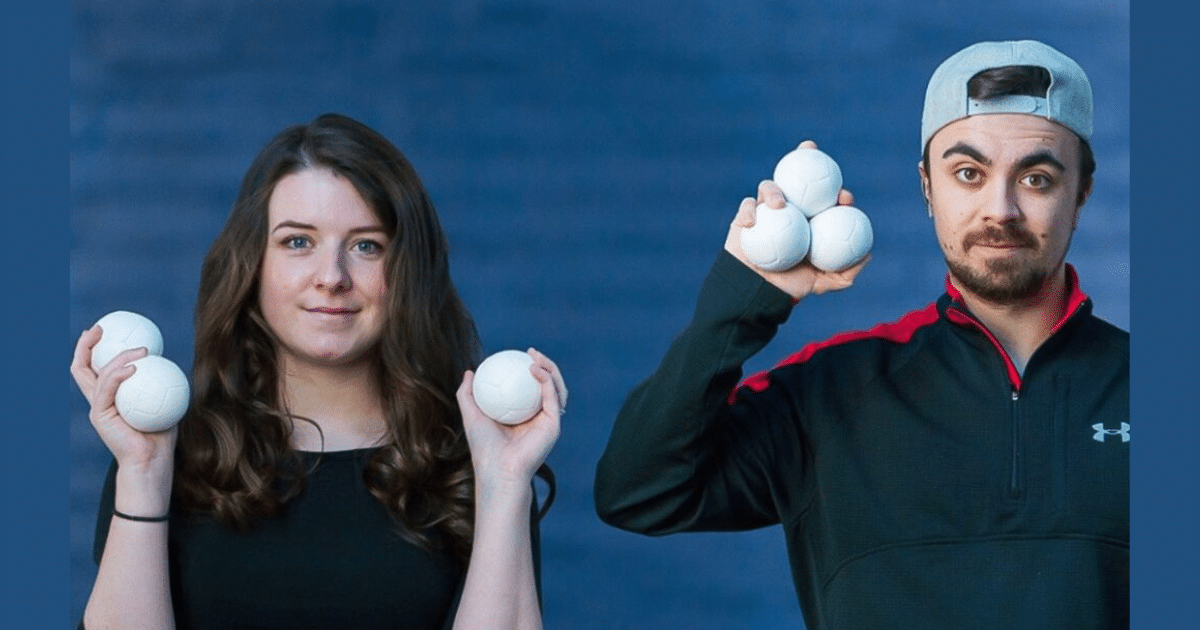
Ten years later, Mike is still doing exactly that. Alongside his wife and creative partner Kim, he runs a YouTube business built around structured self-improvement, high production value, and what he calls “being bad at it.”
“I don’t think anyone else has such high production value for such low-quality skill,” Mike says.
That tension between ambition and ordinariness has become his niche.
How a Bored Engineer Found His Format on Day One
Before YouTube, Mike was a mechanical engineer. His original ambition was not to become a creator but a visual professional. “I always thought I would become a photographer or videographer.”
Photography, however, did not stick. “I don’t think I was a particularly good photographer,” he admits. Video editing, by contrast, clicked immediately. “I played around with editing software, and people resonated with the first video I put up.”
That first experiment, filmed while he was bored writing his master’s thesis, set the template for everything that followed. Kim remembers it clearly. “Mike was so bored with writing. He said, ‘I’m going to learn to kick flip a skateboard and film it to learn the editing software.’ I remember thinking, ‘This is really good. I think this is going to go viral.’”
Unlike many creators who pivoted through gaming, vlogs, or product reviews before finding their audience, Mike landed on his format immediately. “The first video we made is what we’re still doing now,” he says. “There wasn’t a grind to 10,000 subs. The first one just hit the nail on the head.”
That early traction made the long-term vision possible. “The drive to make it my job was always there,” he says.
Kim initially worked full-time while supporting the channel behind the scenes. “When we realized we could pay both of us, we both quit our jobs and went all in. It was a good decision,” she says.

The Niche: High Production, Low Skill
On the surface, Mike Boyd’s content appears to be self-improvement. In practice, it is something more specific. Each video documents him learning a new skill, often from zero, under time constraints.
He describes the positioning simply: “The niche is making a good video but being bad at it.”
In a YouTube ecosystem filled with elite athletes and hyper-specialized experts, Mike occupies the opposite lane. “YouTube’s full of amazing people who are awesome at golf or wood turning or painting,” he says, hence the “high production value for low-quality skill.”
That framing resonates particularly with viewers in their 30s, he believes. “Millennials have this underlying unfulfillment from the regular nine-to-fiver,” he says. “People want to learn or grow in some way. I’ve got that in a turbocharged way. I feel it’s important and necessary to constantly do stuff that doesn’t really matter.”
That phrase, “stuff that doesn’t really matter,” is central to his philosophy. Whether it is crocheting, skiing, or lighting a match with his bare hands, the skill itself is often trivial. The process is not.
“Right now, I’m psyched about learning how to light a match with my bare hands,” he says. “It’s such a silly thing. I don’t even smoke, and I don’t have candles. What’s the point? But something takes hold, and you want to learn how to do it.”
The audience, he argues, responds to that genuine obsession. “The audience is really switched on. They can see when someone’s psyched,” he says. “I think that’s what they’re looking for, genuine love for what you’re doing.”
Kim: The Operator Behind the Camera
If Mike is the face of the brand, Kim is the infrastructure behind it.
“I’m usually the one filming him, encouraging him, buying things to help him, or coming up with ideas for future videos,” she says. She also creates thumbnails and handles organization.
Mike is blunt about the division of labor. “There’s a lot to run in a YouTube business that’s the same as any other business, and I’m really bad at that stuff,” he says. “Paying people, getting paid, working with management at Ziggurat XYZ. Everything you don’t see is what Kim’s doing.”
The couple believes that structure has helped them avoid a common creator trap. As their audience grew, they faced pressure to scale aggressively. “The push when you start gaining followers is, ‘Hire a team, expand, create 10 channels, get a podcast going,’” Mike says. “That can be a trap.”
Instead, they have kept the operation lean. “We have an editor and occasionally hire other cameramen,” Kim says. “But, because it’s mainly Mike and me, the buck stops with us. Deciding not to become a huge production company is what has made it sustainable.”
Burnout, Breaks, and Creative Cycles
A decade on YouTube inevitably brings burnout. Mike addresses it directly rather than optimizing around it.
“When I’m not enjoying it, I don’t do it,” he says. “That’s key to staying online for 10 years. If you experience burnout, you have to address it.”
Kim reinforces that boundary. “I always say mood over work,” she says. “If you’re not feeling it, it comes across in the video. There’s no point.”
Rather than forcing output, they built structural flexibility into the business. Three years ago, they launched a second channel, “Mike Boyd Climbs,” centered on climbing. It allows Mike to channel deeper, longer-term training into one discipline when the “learn quick” format feels stale.
Climbing, Kim says, “really captured Mike and needed to be explored more.”
Logistics, Risk, and the Cost of Ambition
While many of Mike’s challenges appear simple on paper, several have required complex logistics and risk management.
One standout project involved swimming a mile in frigid water. “It was a lifelong dream,” Kim says. “He wasn’t a good swimmer, so he had to train to swim and then train for the cold water.”

The production was far from minimal. Kim arranged safety boats, a filming crew, and extensive logistics to ensure Mike got across safely.
The emotional toll was equally significant. “At the very end, he said, ‘I can’t do it,’” Kim recalls. “I told him, ‘You are so close.’ He said, ‘Kim, can I actually do it?’ I said, ‘You have got to do this.’ And then he did it. It was incredible.”
Other projects introduced unexpected friction. Learning to hold his breath for four minutes proved less physically difficult than logistically complicated. “Getting a place to do that was hard. People don’t like you doing that in their swimming pool,” Mike says. “Lifeguards freak out.”
They eventually rented a private pool. “It was a total pain,” he shares. “If you were a lifeguard and someone was floating face down for four minutes, would you intervene?”
Trust, Sponsorships, and Short-Term Temptations
At a time when many creators have faced backlash over crypto schemes and questionable sponsorships, Mike and Kim are explicit about their guardrails.
“So many YouTubers have scammed their audiences,” Mike says. “I don’t understand why any creator would do that. It’s so short-sighted.”
Their approach is conservative. “Get a good agent who brings you third parties that are worth trusting,” he says. “Test it out and see if it’s actually a good product you’re recommending,” Kim adds.
They avoid certain verticals entirely. “Stay away from gambling, alcohol,” Mike stresses. “There’s so much money to be made promoting gambling websites, but that just seems like a seedy way to make money.”
For them, long-term sustainability outweighs short-term revenue spikes. “Having long-term partnerships with brands that I actually like and use is essential,” Mike says.
Platform Strategy: Why YouTube Still Wins
Despite experimentation, YouTube remains their primary home.
“I’m basically just on YouTube,” Mike says. “I struggle to put stuff on TikTok. I don’t think it’s a good thing to be on.”
His reasoning ties back to motivation. “I don’t have the motivation to engage in a platform that I don’t use or think is good.”
Rather than chasing reach across every emerging channel, they double down on the one that aligns with their creative process and audience expectations.
The Next Chapter
In 2026, their priorities shift less toward algorithms and more toward family. Kim is seven months pregnant and due in April.
“Can we raise a child and have a YouTube channel? We’ll see,” Mike says. “That’s the priority.”
Looking three years ahead, his ambition is intentionally modest. “I’d like to be doing what I’m doing in a sustainable way with a three-year-old son,” he says. “Being able to do it and be a parent would be a huge accomplishment.”
For aspiring creators, Mike’s advice remains consistent with the ethos that built his channel. “Try to make something that would make you fulfilled,” he says. “The audience can see when someone’s psyched.”
He distills a decade of trial, error, and persistence into a single line.
“Just do whatever makes you psyched.”
Subscribe to Our Newsletter
Check Out Our Podcast