







Agency
each&everyone Builds Its Sports Offering Around Creator Intelligence and Commercial Growth

Before a brand commits its budget, influencer and sports marketing agency each&everyone’s proprietary platform predicts what their campaign will return. That capability, built by founder and CEO Abraham Charles over six years in London, is now the foundation for the agency’s focus on sports.
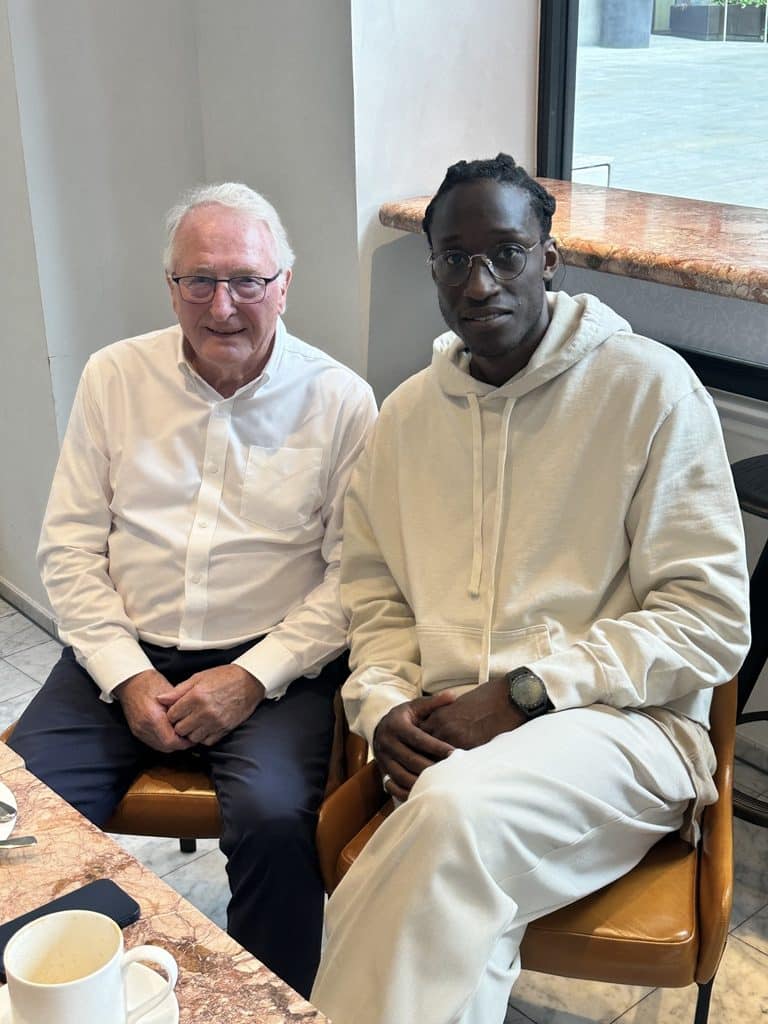
Abraham Charles x Joe Foster Reebok
Abraham spent more than 20 years moving through the UK’s advertising establishment, from senior roles at agencies DigitasLBi, Dare, and M&C Saatchi PR to a post at LADbible Group, where he led direct brand partnerships and worked through the company’s acquisition of UNILAD. At each stop, a conviction solidified: Influencer Marketing would eventually face the same accountability demands as any other media channel.
“I always understood that at some point, Influencer Marketing would be a major media channel,” he says, “and at some point it’s going to have to be accountable for direct KPIs and a return on the investment being spent on it.”
He founded each&everyone in February 2020 with that prediction as its operating premise. A month after launch, COVID-19 hit, and his first major client withdrew.
“We’d identify cohorts of influencers, throw them over the fence, and they would manage them while we go out and find new cohorts on different platforms and just keep reiterating that cycle,” he explains. Over six years, that cycle became a proprietary platform that predicts campaign ROI before a budget is committed. “Our platform connects the decisions behind a campaign, from understanding the brief and researching the audience through to selecting creators, forecasting outcomes, managing rights, and learning from performance,” Abraham explains.
The intelligence model is designed to identify where performance is dropping and suggest where to adjust the creative, creator mix, distribution or budget. That gives the team a clearer understanding of what needs to change and why, with people accountable for the decisions. “The ambition is for brands and agencies to be able to license that capability alongside the managed service we provide,” Abraham says.
The agency now serves brands across betting, FMCG, technology, and fashion categories, while holding no talent on retainer. Abraham is repositioning it explicitly toward sports. During the FIFA World Cup, each&everyone activated more than 80+ tier-one athletes and generated what Abraham reports as 1.7+ billion views across approximately 600+ content assets. A new commercial director with a background spanning Arsenal Football Club, England Rugby, and Charlton Athletic recently joined the team. The agency also serves as an appointed partner on TikTok’s Global Athlete Program.
The Machine Behind the Match
At each&everyone, a brand brief enters a platform that cross-references business KPIs, market research, and historical creator performance data to produce a draft campaign strategy and a projected ROI. “If you change the strategy to direction YZ utilizing these six influencers, this will also be the output,” Abraham explains. Clients can compare multiple scenarios, each tied to specific influencer mixes and expected returns, before committing budget.
The process retains human judgment at defined intervals. After the platform generates a strategy, a team member reviews it for fit. Once influencer selection is finalized, the agency manually contacts each creator to discuss the brand’s expectations and campaign guardrails before issuing a formal brief. “We want it to generate a long-term relationship with these talents and the brands as well,” Abraham says.
He frames the measurement layer as an advantage over how most agencies operate. “Most people are keeping everything in separate systems,” he argues. “We can basically optimize the campaign in real time, get feedback, and put it back in immediately.”
Contracts Are Becoming the New Conversation
Procurement teams are pushing for KPIs embedded directly into influencer contracts, a shift Abraham says he encounters with increasing frequency. The agreed objective can be awareness, consideration, acquisition, customer retention, or a business relationship goal; the point is that it is set before the campaign starts and that creators are held to it. “Everybody’s aware of it, and everybody can be held to it,” he says. “And there are incentives along that path for the actual talent to give added value as well.”
When sales are the agreed objective, Abraham argues, the measurement discipline is more demanding than it first appears. Revenue figures alone do not tell the full story: costs, returns, and profit margins all factor into whether the campaign delivered. Attribution adds a further layer, he says. A consumer may discover a product through a creator and purchase days later through a website or a physical store, meaning the campaign’s contribution to that sale can go untracked.
Alongside that shift, Abraham also highlights the rising cost of licensing creator content. Deals that once bundled long-term usage into modest fees now carry higher price tags and shorter time windows. “Before, you could negotiate a cheaper deal and a longer-term license; it’s now a lot more expensive and a lot less time can be used. If content works, we want to understand where else it could be useful and secure the appropriate permissions to use it. That means planning channels, duration, territories and approvals early. In sport, we also need to understand the surrounding athlete, club, event and broadcast permissions. Those details affect what the campaign can actually deliver,” Abraham explains.
He also notes that “follower count is one piece of information. We also need to understand audience fit, content quality, how someone tests and learns, and whether they can deliver consistently.”
The agency’s predictive model helped hold the line in at least one case. As Abraham shares, a creator who had worked with a skincare brand client for roughly a year and a half received a large outside offer and returned seeking a rate increase. Historical performance data showed the existing relationship’s commercial value did not support it. The creator stayed. “We’ve had that long-term relationship now for the last three and a half years,” Abraham says. “It’s a testament to what we’ve built in terms of the value that he actually brings to clients.”
Helping Athletes Build Lasting Audience and Commercial Value
Professional athletes arrive at content creation with established followings but, in Abraham’s experience, an inconsistent understanding of how platforms actually function. Athletes have different levels of time, support, and content experience; their performance gives people a reason to notice them, but their interests, experiences, and the stories they choose to share give people more reasons to keep following. That relationship creates opportunities for suitable brand partnerships.
A challenge runs across both groups: athletes conditioned to high-production studio shoots for global brands often do not recognize that content on TikTok can be raw and unedited. “They’re not aware that you can take content on your mobile phone and it can be raw and unedited,” Abraham says. “Athletes have different levels of time, support and experience with content. Our job is to understand that and help them develop an approach that fits their personality and sporting commitments.”
He continues, “Signing an athlete or buying sponsorship rights is the beginning of the work. The question is how you turn that partnership into something people engage with throughout the year. That requires creative, content, distribution, clear permissions, and a plan for what happens before, during, and after the major event.”
each&everyone’s role as TikTok’s Global Athlete Program Partner addresses that divide. The agency onboards athletes to the platform, supports creative ideation, handles scheduling, and identifies brand deal opportunities across what Abraham calls a “white glove service.” The 80+ athletes activated around the World Cup ranged from those with full professional teams to those with minimal infrastructure.
Sports Organizations Have the Data. The Monetization Is Still Missing
Abraham’s forward view of the sports category is not primarily about content formats. His argument is that sporting organizations can use existing audience information more effectively to build stronger commercial partnerships, and that helping them do so is where each&everyone sees its opportunity. “Foremost, it’s ultimately with the talent,” he says, “and then it’s down to the brand to earn that loyalty from them. They’re using the talent as a gateway into their brand. But then they’ve got to add value to the end audience.”
The loyalty picture, he notes, is more distributed than any single athlete-to-fan line. It can sit with athletes, clubs, competitions, or fan communities, depending on the context. A brand entering sports needs to understand which relationships carry weight and earn its place within them, rather than treating an influencer partnership as a direct route to an existing audience.
That reading shapes each&everyone’s pitch: help athletes build commercial value now, rather than waiting until after their playing career ends, when the following exists, but the window to build brand equity may have narrowed. Joe Foster, co-founder of Reebok, serves as a mentor to Abraham on the business. Steve Kavanagh, who has led football clubs at CEO level, serves in the same role.
Longer term, Abraham’s ambition is to license the platform to brands and agencies as a standalone SaaS product, extending its predictive capability beyond each&everyone’s own client base. That transition has not yet happened. On where AI fits into the picture, he draws a firm line between infrastructure and creative replacement. “AI is going to be the underlying infrastructure to make things efficient and to track things,” he says. “But ultimately, people are going to want to speak to people.”
Subscribe to Our Newsletter
Check Out Our Podcast