




Influencer
Mark Rober Built CrunchLabs to Survive Without Him

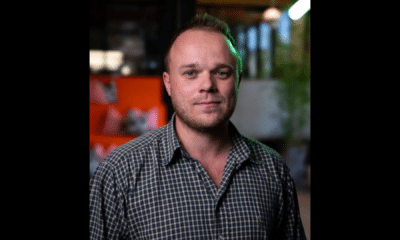
Mark Rober, the YouTuber and founder of CrunchLabs, said in an interview with Bloomberg’s Emily Chang that the company spends roughly $500,000 on average to produce a single video and treats that spending as a break-even cost, not a revenue source.
The remark, made during a conversation about CrunchLabs’ business model at Bloomberg Screentime in Los Angeles, points to a choice that runs through the entire company: CrunchLabs does not depend on its content performing, and it is not built to depend on Rober either.
Most creator businesses tie income directly to content performance. A video earns views, the views sell ad inventory or justify a brand deal, and revenue rises and falls with the algorithm. Rober’s company does not run on that model. “Our strategy is we basically run the production side, making the content to break even,” he said. The company treats that roughly $500,000 per video as a break-even production cost, with the content serving to promote its science-education toy business rather than generate revenue from the video itself. CrunchLabs employs 200 people across its YouTube and toy operations, a structure that lets the company absorb a video’s cost regardless of how the algorithm treats it that week.
Scott Lewers, CrunchLabs’ Chief Content Officer, described the same logic in structural terms at the Kidscreen Summit San Diego. The company organizes its operations around what he calls the three E’s: entertainment, experience, and education. “Entertainment content fuels the entire ecosystem, but our experiential and our education pieces are the new ventures,” he said. Entertainment covers the YouTube videos, Netflix libraries, and Samsung FAST channel programming; experience covers the toy and subscription-box lines the video content is built to sell.
That decoupling extends to Rober himself. Asked whether the goal is a company that can survive independently of its founder, he said, “That is the goal… to have a brand that can stand out, that doesn’t rely on me.” He pointed to Walt Disney and Lego as reference points for companies that scaled while keeping their founding identity intact. The company’s name, CrunchLabs rather than Rober’s own, reflects the same choice, as does the existence of Class CrunchLabs, a nonprofit science curriculum Rober funds personally and that operates independently of his YouTube output. He said the curriculum will cost more than $60 million to build and is targeting 80% classroom reach by 2030.
The distinction matters because “key person risk,” the exposure a business carries when its value is inseparable from one individual, has become a central concern for the capital now moving into the Creator Economy. Investors buying into creator businesses routinely structure deals around removing that exposure after the fact. CrunchLabs appears to have built around it from the start, rather than retrofitting the fix once outside capital asked for it. Rober said the company has not needed outside funding since launching with his own $3 million investment and reaching “cash flow positive within six months” roughly five years ago.
According to Lewers’s remarks from San Diego, creator-led businesses without a structural partner tend to hit “a breaking point” around the ten-year mark, at which point they “either transcend to the next form, graduate to being another part of the business, or evaporate and disappear because the pressure becomes so much.”
The usual advice for creators seeking financial stability is to diversify revenue by adding brand deals, platform payouts, and merchandise so no single source carries the whole business. CrunchLabs’ model goes further than diversification. Multiple revenue streams can still decline together if a creator burns out or a platform’s algorithm shifts against them. CrunchLabs’ toy revenue does not depend on video performance at all, and its curriculum arm does not depend on Rober continuing to post.
The two forms of independence, from content performance and from the founder’s continued output, are not separate decisions. They are the same strategy applied to two different points of failure.
Subscribe to Our Newsletter
Check Out Our Podcast