




Influencer
Colin Rocker Spent 18 Months Testing What Gets Strangers Talking. Then He Put It in a Box

At For The Firsts networking events in New York City, there is one rule: attendees don’t say where they work or what their job title is. Organizer Colin Rocker built the constraint into every gathering, then spent the next 18 months watching what people said once the usual conversation starters were off the table. What he found became “First Round,” a 40-card deck of the questions that actually worked.
Colin runs @careercolin, a career and personal finance media platform with more than 420,000 followers, and is a Forbes 30 Under 30 honoree. His content centers on a specific audience he calls “firsts”: people who are the first in their families, fields, or communities to pursue a particular path. He is one himself, having moved to New York and built a career in consulting before going full-time on his creator business. The community grew from the recognition that the experiences behind those journeys rarely surface in conventional professional settings.
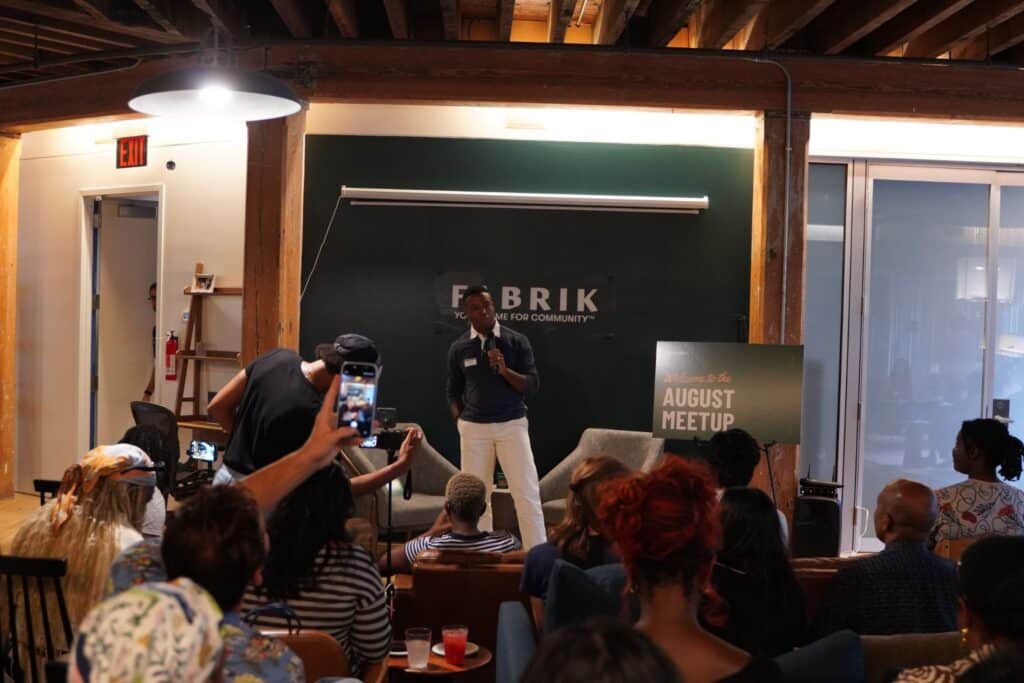
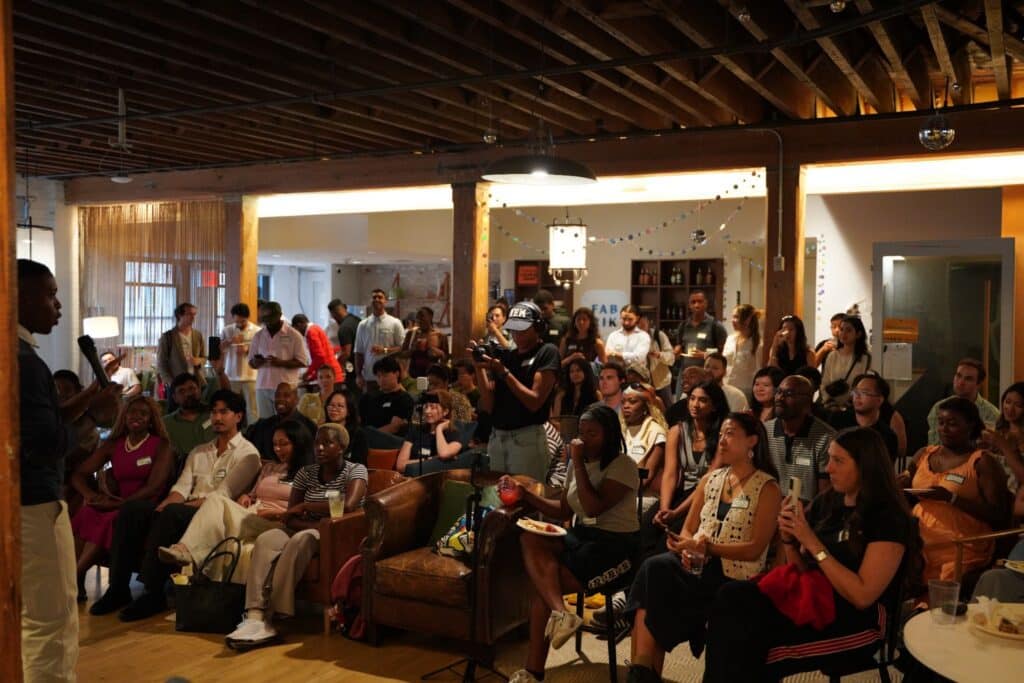
For The Firsts has drawn more than 3,000 registered attendees to recurring events capped at 50 to 60 people. Events are free to attend; some are underwritten by corporate sponsors including Adobe and Microsoft, while others Colin funds himself. He bootstrapped the operation for the first nine or ten months before landing a first sponsor. “I always tried to monetize my mission, not my audience,” he says.
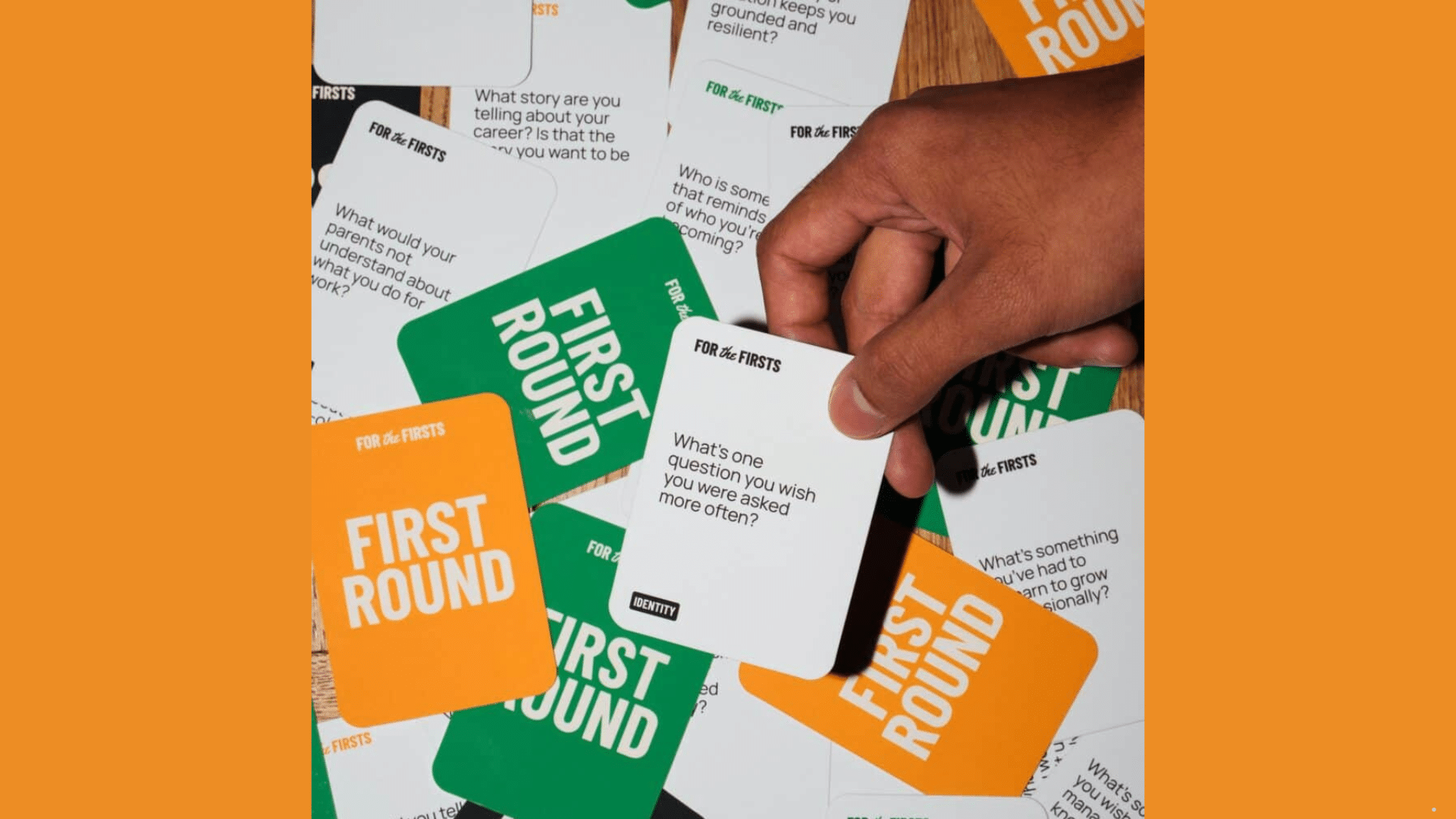
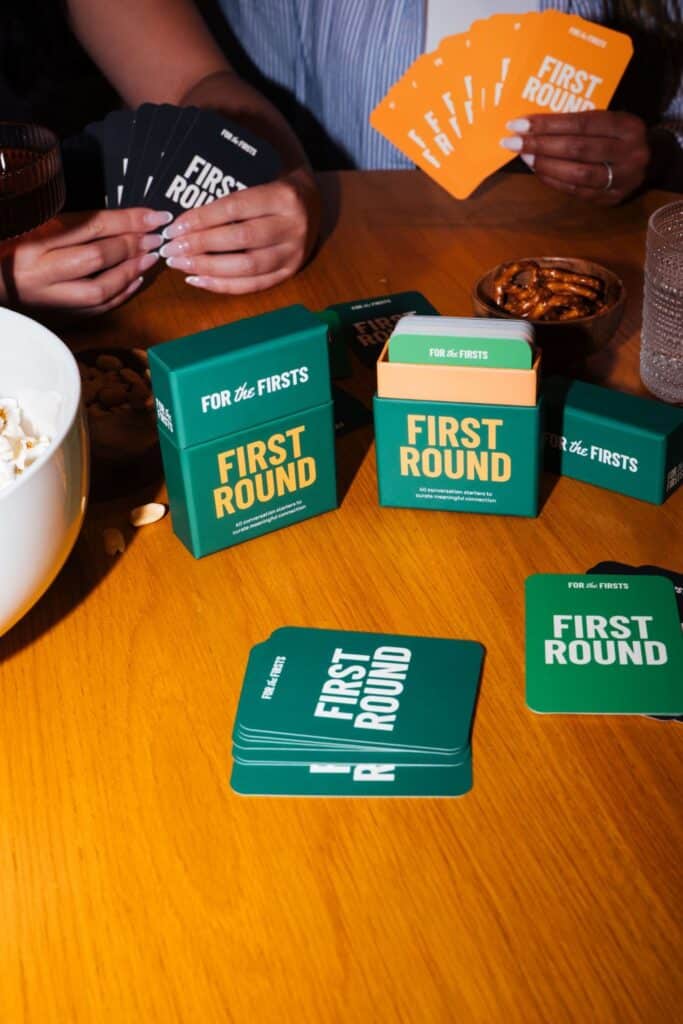
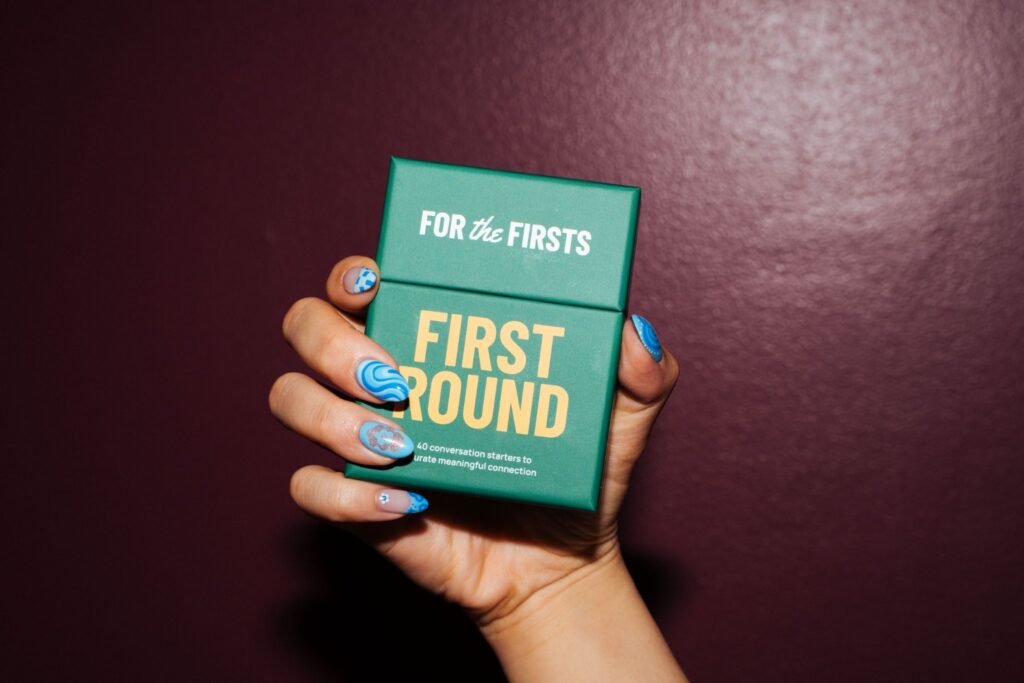
First Round, which launched in July, is the first product designed to take that experience beyond New York. The deck contains 40 conversation prompts, drawn from questions Colin developed and field-tested at For The Firsts events, organized into four color-coded categories: career and work, community building, reframing failure, and identity.
Every Card Earned Its Place Through Live Testing
Colin wrote the 40 prompts in the “First Round” by hand, in notebooks he carried to events, and evaluated each one by watching what conversations it opened in the room.
“Every single prompt in this deck came from me seeing firsthand the kind of conversations that it started,” he says. “Each of them earned their place because they’ve been proven to me in person to generate really nice conversations.”
The four categories map to distinct situations. The “Career” category is designed for professional settings, including conversations with managers or supervisors. The “Community” category works for groups where connections already exist and need to deepen. A third focuses on reframing failure and difficult life experiences. The fourth, “Identity,” is the deepest of the four, intended for relationships where people are prepared to go further than they normally would.
Color coding separates the categories on the physical cards, allowing users to select prompts by situation without reading each one before the conversation starts.
A Physical Product Required Rebuilding the Brand From Scratch
Once the prompts existed, production began. Colin describes the process as a sequence of problems, each larger than the last.
The earliest was visual. The color palette and design language he had used for small New York City gatherings did not hold up when applied to a product appearing in social media advertisements and on store shelves. “We actually completely rebranded the community,” he says. For The Firsts was redesigned as a standalone identity, separate from the @careercolin personal media brand, before any packaging could move forward.
The Drive Agency, which manages Colin’s brand partnerships and speaking engagements, helped connect him with designers, print specialists, and manufacturers, moving the project from what Colin calls “an idea quite literally scribbled on the back of a scrap of paper” into a shippable product. Production decisions multiplied: supplier selection, cost modeling, material sampling, and packaging configuration, including custom mailers, a card insert, and a 41st card that functions as an instruction guide. A portion of “First Round” buyers might have no prior familiarity with Colin, reaching the product through a social post or a LinkedIn mention. The packaging had to do the introduction on its own.
“Understand that it’ll probably cost twice as much and take twice as long as you think,” he says, offering the advice to creators considering a similar move.
The Deck Can Be Photographed. The Brand Cannot.
Colin acknowledges the obvious exposure in a card-based product. Forty printed prompts can be photographed, copied, and reproduced at a lower price. His argument against a cheaper competitor is not legal but relational.
“In today’s world, you can generate almost anything except trust and a brand and a mission and an identity,” he says. “That’s what’s in between the words for me.”
The point connects to how he thinks about the creator business overall. “I’m only selling trust,” he says. “I’ve never shared a piece of career advice that you could not otherwise generate using a large language model. I’m not that brilliant.”
Every prompt was written by hand and tested live rather than produced with generative AI, and Colin has made that provenance visible in how he talks about the product publicly. The launch materials feature people who have attended 10 to 15 For The Firsts events, not sourced talent. The people modeling the deck in promotional content are also community members who helped build the community in which the prompts were tested. The goal, Colin says, was to make the launch continuous with the community that built the product.
“I wanted to make sure that the people I was featuring as I announced this were really of the community,” he says. He has also been writing handwritten notes in the first rounds of outgoing orders.
The ‘First’ Identity Is Wider Than First-Generation College
For The Firsts launched with first-generation college students and corporate newcomers in mind. Each attendee submits an RSVP that describes what their “first” is, and Colin reads every response himself. “People say the most beautiful things,” he says. Among the examples: attendees who are the first in their family to live out of abundance rather than scarcity, the first to own a home, or the first to break six figures.
The responses also surfaced something Colin had not anticipated: widespread shame. “There are so many people walking through life carrying a lot of shame for where they came from,” he says, counting himself among them.
“The real value of what I’m doing is to give people the space to celebrate all the ways they’ve had to innovate and step out for themselves,” Colin says, “and to do that in a room where everyone has that experience, so they know they’re not alone.”
A Networking Series Is the Start, Not the Whole Plan
Colin’s five-year goal for For The Firsts is to move from guided networking toward what he calls a “broker of opportunity.” He cites CultureCon and AfroTech as reference points: events that combine connection with education, workshops, speakers, and pathways to employment or collaboration. A multi-day gathering of 1,000 to 5,000 people, not just a structured meetup, is where he sees the community going.
The community has applied to participate at South by Southwest in Austin next spring and has Cannes Lions on a longer-term list. Colin notes that expanding to other cities depends on venue relationships and brand partners who can cover costs without compromising the event’s identity. “First Round” is the portable version of that framework: a conversation system built over 18 months and more than 3,000 attendees, designed to reach anyone who needs a better question.
“The goal for the firsts is not to be in 50 different cities tomorrow,” he says. “It’s to be the spot to be for what we’re doing wherever we choose to show up.”
Subscribe to Our Newsletter
Check Out Our Podcast