Shoppers who trust AI assistants are five to six times more likely to also trust creators, according to a new holiday shopping study from performance marketing agency PartnerCentric. Among shoppers with high trust in AI, 54% rate creators as important to their purchase decisions and 61% trust them, compared with 11% and 11% among shoppers with low or moderate AI trust. The study frames the finding as a challenge to the assumption that AI recommendation and creator marketing compete for the same budget: reliance on the two rises together rather than trading off against each other.
The report is built from a dual-panel survey of 696 AI-influenced shoppers and 319 paid or affiliate creators with 5,000 or more followers. It arrives alongside a separate headline figure: 43% of surveyed shoppers say they bought a product in the past three months on the recommendation of an AI assistant such as ChatGPT, Gemini, Copilot, or Perplexity, a pattern PartnerCentric frames as already live rather than a forecast, heading into the first full holiday season in which AI-driven shopping operates at scale.
“We are moving into a world where AI is becoming both the largest influencer and the largest creator, shaping what shoppers see and increasingly writing what they read,” said Stephanie Harris, founder and CEO of PartnerCentric. “The brands that earn a place in those answers, with real proof behind them, are the ones shoppers will trust this season.”
The report situates its own data against broader industry benchmarks it did not generate itself: PartnerCentric’s separate December 2025 survey found AI shopping usage rising from 49% of consumers in 2025 to a projected 64% in 2026, while Adobe reported AI-referred retail traffic up 393% year over year in early 2026 and Shopify reported roughly a sevenfold increase in AI traffic since January 2025.
AI Is Becoming a Top-of-Funnel Channel
Among surveyed shoppers, 27% now begin their shopping journey on an AI assistant, close to the 30% who start on Google search and well ahead of the 15% who start on social media. Among the heaviest AI users in the sample, that figure rises to 46%. But visibility does not guarantee action: shoppers said they ignore AI recommendations that feel generic (31%) or unsourced (12%).
Discovery Diversifies, but Purchases Still Concentrate on Marketplaces
Even as shoppers increasingly discover products through AI, the transaction itself remains concentrated. Fifty-two percent of surveyed shoppers complete purchases on Amazon or another retailer, compared with 19% in-store, 17% on brand websites, and 11% through social commerce. The pattern held even among AI-first shoppers, the cohort most likely to trust AI (64%) and most likely to say they’ll spend more this holiday season (62%): 52% of that group still closes on a marketplace.
Reviews, Not Creator Endorsements Alone, Convert Recommendations
The study identifies proof as the mechanism that turns an AI recommendation into a sale. Forty-four percent of shoppers said they want reviews before acting on an AI recommendation, and 33% said they go straight to reviews after receiving one, compared with just 8% who return to a creator. Reviews ranked as the top overall confidence driver at 28%, versus 3% for a creator’s personal recommendation. On the other side of the funnel, price (42%), unclear quality (18%), and insufficient proof (14%) were the leading reasons shoppers abandon a purchase.
The report’s seven-part “holiday playbook” for brands, built from these findings, recommends funding AI-assistant visibility and creator partnerships as a single connected system rather than separate line items, extending creator briefs from demonstration toward review-grade evidence, and syncing product claims and logistics information consistently across creator content, product pages, and what AI assistants report.
PartnerCentric cautions that its shopper sample of 696 was not quota-balanced and that all figures are directional within the sample rather than projectable to the broader U.S. population. The 43% headline figure describes shoppers surveyed for the study, not American consumers generally.
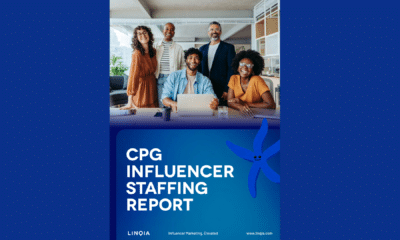
Image source: PartnerCentric Get the full report here
Dragomir is a Serbian freelance blog writer and translator. He is passionate about covering insightful stories and exploring topics such as influencer marketing, the creator economy, technology, business, and cyber fraud.

















Shoppers who trust AI assistants are five to six times more likely to also trust creators, according to a new holiday shopping study from performance marketing agency PartnerCentric. Among shoppers with high trust in AI, 54% rate creators as important to their purchase decisions and 61% trust them, compared with 11% and 11% among shoppers with low or moderate AI trust. The study frames the finding as a challenge to the assumption that AI recommendation and creator marketing compete for the same budget: reliance on the two rises together rather than trading off against each other.
The report is built from a dual-panel survey of 696 AI-influenced shoppers and 319 paid or affiliate creators with 5,000 or more followers. It arrives alongside a separate headline figure: 43% of surveyed shoppers say they bought a product in the past three months on the recommendation of an AI assistant such as ChatGPT, Gemini, Copilot, or Perplexity, a pattern PartnerCentric frames as already live rather than a forecast, heading into the first full holiday season in which AI-driven shopping operates at scale.
“We are moving into a world where AI is becoming both the largest influencer and the largest creator, shaping what shoppers see and increasingly writing what they read,” said Stephanie Harris, founder and CEO of PartnerCentric. “The brands that earn a place in those answers, with real proof behind them, are the ones shoppers will trust this season.”
The report situates its own data against broader industry benchmarks it did not generate itself: PartnerCentric’s separate December 2025 survey found AI shopping usage rising from 49% of consumers in 2025 to a projected 64% in 2026, while Adobe reported AI-referred retail traffic up 393% year over year in early 2026 and Shopify reported roughly a sevenfold increase in AI traffic since January 2025.
AI Is Becoming a Top-of-Funnel Channel
Among surveyed shoppers, 27% now begin their shopping journey on an AI assistant, close to the 30% who start on Google search and well ahead of the 15% who start on social media. Among the heaviest AI users in the sample, that figure rises to 46%. But visibility does not guarantee action: shoppers said they ignore AI recommendations that feel generic (31%) or unsourced (12%).
Discovery Diversifies, but Purchases Still Concentrate on Marketplaces
Even as shoppers increasingly discover products through AI, the transaction itself remains concentrated. Fifty-two percent of surveyed shoppers complete purchases on Amazon or another retailer, compared with 19% in-store, 17% on brand websites, and 11% through social commerce. The pattern held even among AI-first shoppers, the cohort most likely to trust AI (64%) and most likely to say they’ll spend more this holiday season (62%): 52% of that group still closes on a marketplace.
Reviews, Not Creator Endorsements Alone, Convert Recommendations
The study identifies proof as the mechanism that turns an AI recommendation into a sale. Forty-four percent of shoppers said they want reviews before acting on an AI recommendation, and 33% said they go straight to reviews after receiving one, compared with just 8% who return to a creator. Reviews ranked as the top overall confidence driver at 28%, versus 3% for a creator’s personal recommendation. On the other side of the funnel, price (42%), unclear quality (18%), and insufficient proof (14%) were the leading reasons shoppers abandon a purchase.
The report’s seven-part “holiday playbook” for brands, built from these findings, recommends funding AI-assistant visibility and creator partnerships as a single connected system rather than separate line items, extending creator briefs from demonstration toward review-grade evidence, and syncing product claims and logistics information consistently across creator content, product pages, and what AI assistants report.
PartnerCentric cautions that its shopper sample of 696 was not quota-balanced and that all figures are directional within the sample rather than projectable to the broader U.S. population. The 43% headline figure describes shoppers surveyed for the study, not American consumers generally.
Image source: PartnerCentric
Get the full report here
Subscribe to Our Newsletter
Check Out Our Podcast