






Strategy
Invisible Narratives Has Access to $300 Million to Prove Creator Economy IP Is the Next Hollywood

The Creator Economy is worth an estimated $250 billion. Hollywood is worth roughly $1.5 trillion. The difference, according to Invisible Narratives President Mark Shedletsky, is not talent. It is not audience. It is intellectual property.
Invisible Narratives, the Los Angeles entertainment studio founded in 2018 by Adam Goodman, former head of Paramount Pictures and DreamWorks Studios, announced last month that it has secured long-term capital partnerships with Verance Capital and BC Partners Credit. BC Partners envisions deploying more than $300 million through the company’s platform, with an initial $25 million tied to the company’s majority acquisition of Skibidi Toilet, the YouTube franchise that has grown from an 11-second animation to 47 million subscribers, 20 billion views, and more than $150 million in licensed consumer spending.
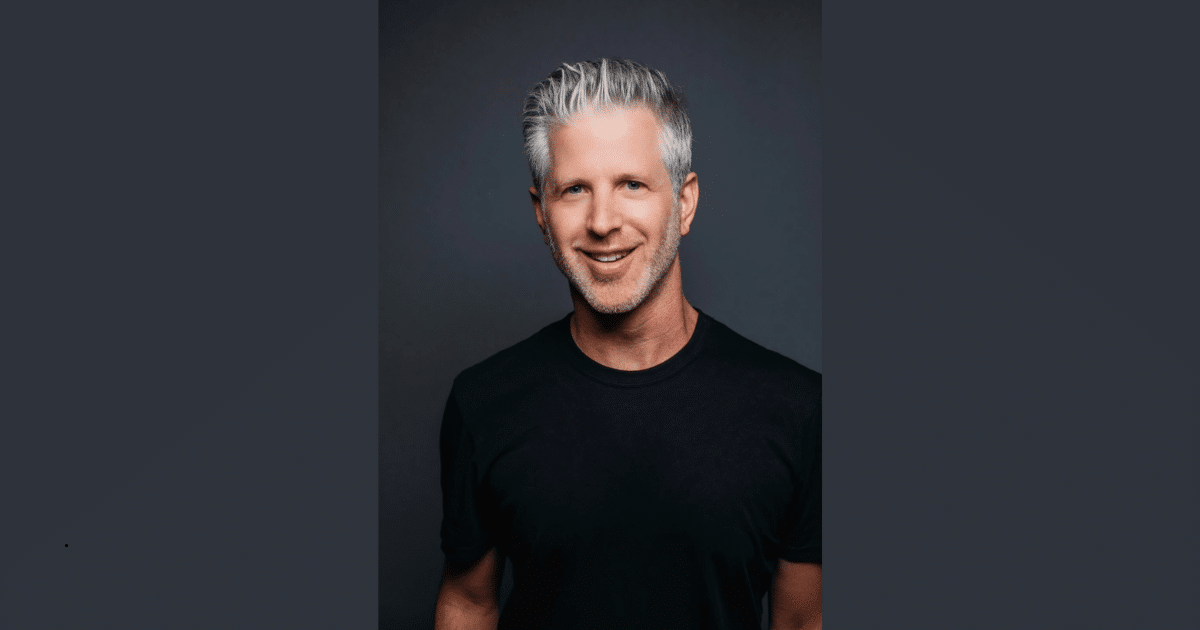
Mark joined the company as President earlier this year to lead M&A strategy, capital deployment, and operations. Having known Goodman for more than a decade, he formally joined Invisible Narratives during the fundraising process.
He spent roughly half his career in traditional entertainment, including executive roles at MTV and Simon Fuller’s XIX Entertainment, and the other half building and exiting venture-backed startups. “I became more and more enthralled with the business,” he says of the transition.
Invisible Narratives describes its model as “tradigital,” a term it coined to combine Hollywood franchise discipline with the creative agility of digital-native content. The company’s thesis is direct: the Creator Economy has the talent and the audience; what it lacks is the IP infrastructure to generate lasting franchise value.
“The way that we look back on IP from our childhood, that’s the goal,” Mark says. “This IP lasts for another 20, 30, 40 years.”
Audience Is a Starting Point. Fandom Is a Business.
The distinction Invisible Narratives draws between audience, community, and fandom shapes every deal the company evaluates. Large subscriber counts matter, but they are not what is being underwritten.
“Audience is a great starting point. Community is even better,” Mark says. “Fandom is really what you’re aiming for.”
The investment thesis is partly generational. Younger audiences are conditioned to expect content to be free but will pay substantially for the merchandise, experiences, and products that surround a creator they care about. Skibidi Toilet’s consumer spending numbers reflect that dynamic: the core video output is free on YouTube, but the IP commands value across licensed consumer products and Roblox, where the franchise has accumulated 8.7 billion visits. “Fandom is the fans’ way of saying, ‘Not only do I want this product, but I also want to support you,’” Mark says. “That’s part of the psyche behind it.”
Mark returns often to the franchise libraries Hollywood has spent decades building. Those properties are valuable not because of the audience that watched them but because they generate licensing revenue across generations.
The Mechanics of Acquiring Creator IP
The Skibidi Toilet acquisition is the clearest demonstration of what Invisible Narratives’ model looks like in practice. For a creator negotiating with institutional capital for the first time, Mark is deliberate about managing expectations. “This is not private equity that’s going to come in and pinch every penny and look for back-end synergies,” he says. “These are company builders.”
Deal structures are flexible. The company can acquire a majority stake, as it did with Skibidi Toilet, or take a minority position, depending on whether the creator is seeking a liquidity event or primarily operational support. In either case, the stated posture is the same: function as an extension of the creator’s team, not its replacement. “It’s not necessarily to take over their business. We have zero interest in that,” Mark says.
IP protection at scale carries costs that most creators haven’t anticipated. “It takes a lot of time and a lot of money, millions and millions of dollars to go and register your IP globally in all the categories that you think you may use it one day,” Mark says. For high-profile franchises, the risk comes from IP squatters moving in before protections are established.
Transparency with the creator’s community is part of the ongoing work. “All that we ever do is offer transparency, offer accuracy in what we say,” Mark says. “Sometimes, the community embraces that, and sometimes, they choose not to.”
Three Ways Capital Enters a Creator Business
The partnerships with Verance Capital and BC Partners address a structural challenge: large institutional funds struggle to underwrite individual creator deals efficiently. A platform that identifies, acquires, and manages creator IP concentrates that exposure into something scalable.
Within individual deals, Mark identifies three primary uses of capital. The first covers IP development, production, and distribution, including the costs of moving content beyond a YouTube channel to streaming and OTT platforms. The second provides liquidity to creators who have built equity and want to monetize it. The third funds team scaling.
Many creators Invisible Narratives is currently evaluating have resonant content but lack the infrastructure to grow it systematically. “It’d be really nice to have a bit more of a traditional production infrastructure behind them so that they can bank 20 episodes,” Mark says.
The company is evaluating roughly a dozen potential partners. To support that pipeline, Invisible Narratives recently expanded its leadership team with three senior hires: Peter Kim, former VP, Corporate Controller at Spotter, as Chief Financial Officer; Greg Salter, who spent 15 years leading more than $1 billion in acquisitions, investments, and joint ventures at Warner Bros. before franchise development roles at Wondery and Amazon, as Head of Business Development & Partnerships; and Patrick Reese, the executive who helped scale CoComelon before its sale to Moonbug and later grew the franchise within Moonbug, as Head of Studio & Franchise.
Two Structural Risks That Don’t Resolve on Their Own
Mark does not minimize the structural risks inherent to creator IP investment. Both are well understood inside the industry. Neither is fully solved.
Key-man risk is the first. Almost every creator business is built around a single individual or small team. “That just exists across almost every creator business that we’ve ever seen,” Mark says. Formats and franchises that can outlast any particular creator’s active output cycle are one structural hedge. Mark cites Dude Perfect as a model: the company has built touring operations, multiple content properties across platforms, and a licensing business that is no longer contingent on any single creator’s YouTube performance.
Platform risk is the second constraint. Algorithm changes shift business outcomes with limited warning. “Diversifying off of a single platform makes a difference,” Mark says. That means OTT partnerships, multi-platform distribution strategies, and investing in characters and worlds whose value travels regardless of where they live.
The Brand Budget That Creator Franchises Could Unlock
One less-discussed implication of the franchise model is what it would mean for brand media planning. Mark identifies a structural mismatch that has capped brand investment in the creator space: brands plan media 12 to 18 months out, but YouTube creators produce content days or weeks before it goes live.
“YouTubers aren’t walking into Madison Avenue agencies and saying, ‘This is what my content calendar looks like for the next 12 months,'” Mark says. Individual sponsorships and creator integrations are already accessible to brands. What they cannot yet do is plan against creator tentpole moments the way they plan around a franchise film release, a television premiere, or a scheduled sporting event.
“If you’ve got formats or franchises that have those tentpole moments that you can plan for, it will unlock a huge amount of capital from brands who want to be associated with those moments,” Mark says. Television’s durability as an advertising medium comes partly from its predictability, and creator franchises with reliable release structures would offer brands something the Creator Economy has not yet delivered.
The Third Step
Mark frames Invisible Narratives’ path to becoming what Goodman has described as the defining studio of the creator era in three stages. The first, securing the right institutional investors, is complete. Verance Capital and BC Partners arrived having already evaluated creator deals independently and were looking for a platform to concentrate their exposure. “It’s hard to do individual creator deals,” Mark says. “It’s much easier at an institutional capital level to put money behind a platform to support those creator partners.”
The second stage, assembling a leadership team with franchise-building experience, is now largely in place.
The third is the company’s core bet in practice: identifying creators whose content has the fandom depth, format durability, and franchise potential to justify the capital behind it. Not every category qualifies. “‘Get ready with me’ videos or tech reviews probably don’t lend themselves to decades-long franchises,” Mark says.
The search is not guided solely by internal analysis. Mark is deliberate about where the signal ultimately comes from. “YouTube is fully democratized,” he says. “The fandom speaks louder. We don’t have to be the arbiters of that.”
Subscribe to Our Newsletter
Check Out Our Podcast