





Influencer
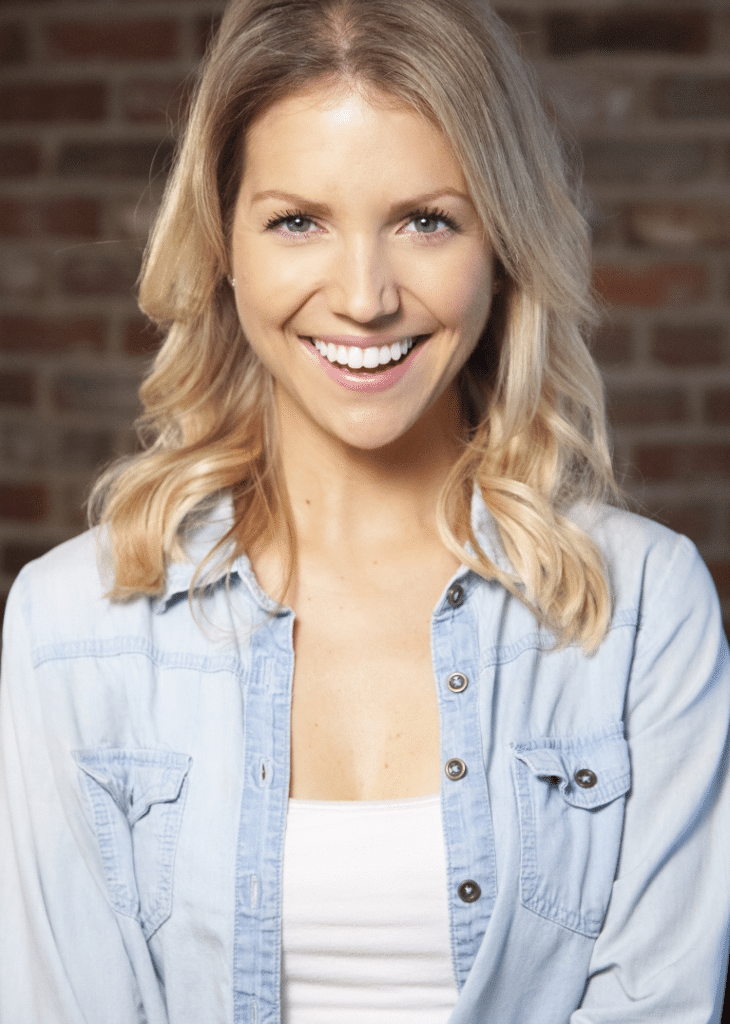
Courtney Michelle on Turning Relatable Chaos Into a Comedy Career Online

For more than a decade, Courtney Michelle thought she was building a career as a dramatic actor. She was auditioning, chasing roles, and showing up to casting calls that looked almost identical every time. Yet the turning point in her career did not arrive through a traditional acting job. It came when someone suggested something she had never seriously considered.
“My manager at the time said, ‘I think you can do comedy.’”
Today, Courtney has built a thriving online presence through character-driven sketches and relatable scenarios that draw on awkward moments, everyday interactions, and the strange dynamics of modern life. Based in Nashville, she creates comedic videos on TikTok and Instagram while continuing to pursue acting and larger storytelling projects.
Her path into the Creator Economy began as experimentation with social media, which has grown into a creative business supported primarily by brand partnerships and a loyal online audience. Yet Courtney still describes the process in a way that reflects the improvisational nature of internet comedy.
“It was very much spaghetti at the wall,” she says. “I had no idea what my voice was. I had no idea what I was doing.”
From Acting Ambitions to Internet Comedy
Courtney’s early creative ambitions centered entirely on acting. She spent years pursuing roles in Los Angeles, viewing herself as a serious performer rather than a comedian.
“As an actor, people would tell me that I was funny in real life,” she explains. “But I was like, ‘I’m a serious actor. I must do all of the drama.’”
Over time, exposure to comedy performers and online creators reshaped her perspective.
“I started watching more comedy happening on social media and realized it catered to my sensibilities,” Courtney says. “I thought I could be funny in conversation, but I didn’t think that would translate to being funny on screen.”
Seeing creators experimenting with character-driven humor online changed that perception.
“I had these ideas of what a comedian looked like,” she says. “Then I saw people being funny in ways that were more dynamic, and I thought, maybe I can do this.”
Courtney began writing and filming her own material. When TikTok emerged as a platform with algorithm-driven discovery, it offered something traditional acting rarely could: direct access to audiences.
“I started in 2019,” she says. “Then the pandemic hit, and I was bored out of my mind, so I started making more and more content.”
Through trial and error, she discovered that sketches and character-driven situations resonated most with viewers.
“For me, it was the characters and the situations in sketch-type videos,” Courtney says. “That’s what I’ve been doing for the past few years.”
Learning the Internet’s Comedy Language
The early phase of Courtney’s creator journey involved experimentation with multiple formats.
“I was trying everything,” she says. “Lip syncing, trying to create viral sounds, just anything.”
Eventually, she began leaning into a format that aligned with her acting background. “Once sketch comedy and characters started happening on TikTok, I thought this was the lane,” she says. “I could write more and show off the acting muscles I’d been honing for years.”
Courtney now filters most of her content through a consistent creative lens. “I run it through the filter of people and situations you love or hate,” she says. “People you’ve met before or awkward scenarios you’ve been in.”
That relatability is intentional. Her goal is not simply to make viewers laugh but to reflect everyday experiences back to them. “My goal is always to make people feel seen,” she says. “I want them to feel like they’re watching a person they’ve met or a situation they’ve been in.”
The strategy also shapes the audience culture surrounding her videos.
“I’m lucky because the people who follow me are empathetic and funny,” Courtney says. “Sometimes, the comments are funnier than anything I’ve made.”
The Creative Process Behind the Sketches
Most of Courtney’s ideas come from everyday observations rather than structured brainstorming.
“A lot of the stuff I come up with are things I’ve experienced,” she says. “I’m an obnoxiously self-aware person.”
When she catches herself saying something awkward or witnessing an uncomfortable moment, it often becomes the seed for a character. “I’ll do something cringey and think, that’s a whole character,” she explains. “Or a whole scenario.”
From there, the production process is simple. Courtney typically writes a script or outline on her phone before filming. “I write out most of what I’m going to say,” she says. “Then I plug in my ring light and shoot it.”
Unlike some creators who follow strict content schedules, Courtney relies heavily on inspiration. “It’s more when inspiration strikes than sitting down and saying you must create content today,” she says.
Still, years of experience have changed how her brain processes everyday life.
“My brain is built around seeing things as short-form or long-form storytelling,” she says. “It’s easier for inspiration to strike because I’ve been doing it so long.”
Two Platforms and Two Audiences
Courtney distributes most of her content across both TikTok and Instagram, but recognizes subtle differences between the platforms.
“TikTok’s audience is a little younger,” she says. “There are references that work there that don’t always land on Instagram.”
TikTok also operates with a strong internal culture, where certain phrases or trends carry shared meaning among users. “There are inside jokes and sayings on TikTok that Instagram doesn’t always pick up,” Courtney explains.
Instagram, on the other hand, tends to skew slightly older and often engages with millennial humor differently. “If I talk about a millennial situation, I know that’s going to hit on Instagram,” she says.
She also interacts with audiences differently across platforms. Instagram serves as a space for more direct communication. “On Instagram, I feel like I’m talking to the audience,” Courtney says. “I’m asking questions in my DMs and responding.”
TikTok, meanwhile, feels more communal. “It’s a hive mind,” she says. “We’re all kind of in it together.”
The Business Behind the Content
Like many creators in the comedy space, Courtney earns most of her income through brand collaborations rather than platform monetization programs.
“The majority of my money comes from brand deals,” she says.
Working with brands introduces its own creative challenges. “The hardest part is creating something that satisfies a brand while still fitting what my audience expects,” Courtney says.
She approaches partnerships carefully, prioritizing the trust she has built with viewers. “I always make sure I’m giving to my audience more than I’m taking,” she says. “I’m not just on there saying, ‘Buy this water because it’s the best.’”
That balancing act sometimes requires difficult decisions. “Sometimes, I have to walk away from deals that are really nice,” Courtney says. “If it doesn’t fit my voice, or it feels like I’m asking too much from my audience.”
Her advertising background has helped her handle these conversations with agencies and marketers. “I have a degree in advertising and worked in marketing jobs over the years,” she says. “So I can have those conversations with brands.”
Still, she acknowledges the tension between creativity and commercial expectations.
“You have this idea that could be really funny,” Courtney says. “But you also have to make sure the analytics and ROI work for the brand.”
Courtney is managed by Odyssey Entertainment Group.
Defining Success Beyond the Numbers
Social media offers constant metrics: views, followers, reach, and engagement rates. Courtney tracks them, but tries not to let them define her work.
“There are so many ways to measure success,” she says.
Financial stability matters to her personally, particularly given her upbringing. “I grew up pretty poor,” Courtney explains. “Being financially stable and making investments now feels like a big deal.”
Yet she recognizes the limitations of viewing success purely in terms of numbers. “I’ll look at my bank account after a brand deal and think, ‘That’s exciting,’” she says. “But then it’s over.”
Instead, she looks for signals of deeper impact. “For me, it’s less about how many people see something and more about how many people feel it,” Courtney says.
Sometimes that means seeing viewers connect with a specific scenario. “Someone might say, ‘This awkward moment happened to me today, and I thought of you,’” she explains.
Those moments often arrive through comments or direct messages. “When someone says I helped them laugh while they were sick or going through something, that really gets me,” she says.
Even everyday relatability can feel meaningful.
“If someone says they thought of my character when the pharmacist was rude to them,” Courtney says, “that means they felt less alone in that moment.”
Advice for Emerging Creators
For up-and-coming creators entering the comedy space, Courtney emphasizes experimentation over strategy.
“In the beginning, just try a bunch of things,” she says.
Many successful creators appear to have a clear niche, but she believes that clarity usually comes after years of testing. “Most people don’t know the intersection between what they want to create and what audiences want to watch,” she explains.
Her advice is simple: “Try sketches, characters, talking to the camera, parodies. Just see what sticks.”
The key is to focus on content that genuinely feels enjoyable to make. “If you start making content for views that you don’t enjoy, that might be the thing that blows up,” Courtney says. “Then you’ve built a career doing something you don’t want to do.”
She also encourages creators to collaborate whenever possible.
“I’m an extrovert, but I’ve created a career where I’m alone with my phone,” she says. “Grab your friends and make things together. The joy will come through.”
Expanding Into Long-Form Storytelling
Courtney plans to return to the storytelling format that first drew her to acting.
“I’m going back to my long-form roots,” she says.
She is invested in larger projects, such as the tour of her live comedy show “Girlwind,” while using social media as a testing ground for characters.
“I’m creating characters in bigger worlds and putting pieces of them on social media to see what people resonate with,” she explains.
Courtney also plans to experiment with new formats, including comedy music and more YouTube content.
For now, her focus remains on creativity and exploration.
“We’re trying new things and building bigger worlds,” she says. “The short-term and long-term goal is just trying new stuff and still having fun.”
Photo credit: Odyssey Entertainment Group
Subscribe to Our Newsletter
Check Out Our Podcast