






Influencer
Sedge Beswick Launches YouTube Series To Share The Unseen Realities Of Building Creator-Led Businesses

Marketing consultant and strategist Sedge Beswick has spent much of her career working behind the scenes across influencer marketing and social strategy.
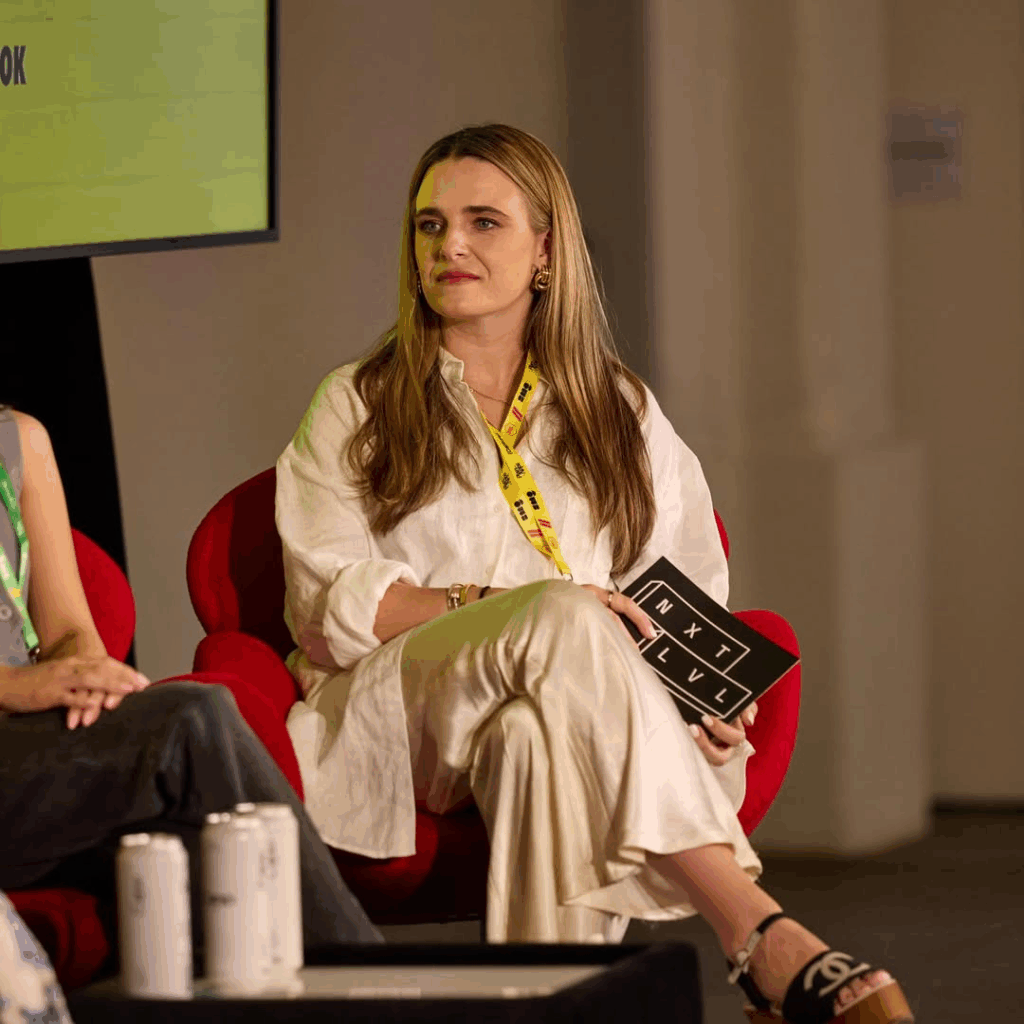
As the former founder and chief executive of SEEN Connects – a global influencer marketing agency she scaled to a £24 million valuation before exiting in late 2023 – Sedge built systems that connected brands to creators long before the discipline became mainstream. Before that, she was ASOS’s first-ever social media hire, responsible for building a global community of 17 million across 22 platforms and launching the retailer’s original influencer program, “ASOS Insiders.”
Now Sedge is stepping into a more visible role with the launch of a new YouTube series. The project marks the first time she has turned the camera on herself, drawing directly on her experience as an exited founder, advisor, investor, and working mother. Rather than offering generalized motivation or polished “founder hacks,” the series focuses on the operational and emotional realities of building businesses inside the creator economy – negotiating deals, advocating for value, making decisions with imperfect data, and managing ambition alongside family life.
“I genuinely like being behind the scenes,” Sedge says. “If I could disappear and not be on any social channel other than spamming grandparents with pics of my kids, I would. But we’re living in an expert creator boom, and I tell everyone I work with to get comfortable being uncomfortable.”
Building Creator Economy Infrastructure Before It Had a Name
Sedge describes her career as defined by being “early”: early to social media at ASOS, early to influencer marketing when she founded SEEN Connects in 2016, and early to recognizing how creator relationships could be structured as a scalable business infrastructure rather than one-off campaigns.
“When I joined ASOS as their first-ever social hire, I built out a global team of 32 across eight markets,” she says. “Then, when I founded the agency, we were super early doors in the space.”
Sedge positioned the firm as data-oriented and globally minded, working with brands including Nike, Lululemon, eBay, Red Bull, Bumble, and LVMH Group. As the agency scaled, it expanded internationally while maintaining a focus on long-term creator-brand relationships rather than transactional placements.
Alongside her advisory and investment work, Sedge also founded NXT LVL, a community and Substack built for senior marketers and founders seeking practical insight rather than surface-level inspiration. “NXT LVL exists because marketers are done with surface-level content, spaces that don’t match the pace of the industry, and ‘communities’ that feel more performative than supportive,” she says.
That operational focus on systems, teams, and repeatable processes became central to Sedge’s view of how the creator economy matures.
“Growth doesn’t happen in perfect conditions,” she says. “It happens in chaos, pressure, and constraint. That’s where you learn who you are as a leader.”
The Limits of Founder Advice
Despite her experience, Sedge has historically avoided the spotlight. She ran SEEN Connects primarily through LinkedIn and client relationships, preferring advisory roles to personal branding. The decision to launch a YouTube series, she says, was driven less by self-promotion and more by frustration with the state of founder mentorship content.
“Most founder content romanticizes it,” Sedge says. “They present entrepreneurship as linear and glamorous: daily routines, vision boards, five hacks to success. Real entrepreneurship is scrappy, iterative, unglamorous, and full of uncertainty.”
That disconnect became personal during her private equity negotiations while pregnant with her first child. Managing a deal process under those conditions, she says, revealed structural realities rarely addressed in public founder narratives. “I was very much brought up to believe that if you work your bollocks off, anything is possible,” she says. “Then I fell pregnant whilst managing a private equity deal, and I felt that shift hard.”
Sedge ultimately withdrew from the deal weeks before her due date, a decision she describes as one of the most important of her career. What stayed with her was how few people she felt able to turn to (particularly other women) for candid guidance.
“Women are still expected to work as if they don’t have kids,” she says, while also acknowledging that access to childcare and domestic support remains uneven across founders.
Why YouTube, and Why Now
The new series is hosted on YouTube, a choice tied to Sedge’s view of the platform’s role in the creator economy. “YouTube allows long-form honesty,” she says. “It’s evergreen. People can discover episodes months or years later when they’re at their turning point.”
Early episodes are filmed in Sedge’s home and deliberately unpolished, with visible reminders of family life in the background. The format, she notes, is designed to feel closer to a conversation than a masterclass. “It’s what I wish I had been able to watch 10 years ago,” she says. “No jazz hands, just laying it out as it is.”
From a creator economy perspective, the series positions Sedge not as an aspirational lifestyle creator, but as an operator sharing lived experience. Topics include negotiating under pressure, backing judgment when data is incomplete, understanding power dynamics in boardrooms, and preparing for exits, i.e., subjects she believes are often omitted from mainstream creator-led business content.
A Business Mindset Rooted in Trade-Offs
Throughout the series, Sedge aims to make it clear that her guidance is not prescriptive. “Everything I share comes with a cost,” she says. “There were sacrifices, compromises, late nights, wrong decisions, and stubbornness.”
That framing reflects how she approaches advisory work today, supporting founders, CMOs, and boards through fractional and strategic roles. Rather than promoting balance, she emphasizes intentional design, structuring businesses and careers around real constraints rather than idealized expectations.
“Confidence doesn’t precede action,” she says. “Action builds confidence.”
For women founders in particular, Sedge argues that structural disadvantages persist not because of capability gaps, but because of how power, timing, and advocacy operate in practice.
“Women can’t be what they can’t see,” she says, describing her decision to speak publicly as a responsibility tied to access she has had to investor rooms, merger and acquisition processes, and board-level negotiations.
From Solo Episodes to Shared Experience
While the initial episodes are solo, Sedge plans to introduce guest conversations later in the series. The goal, she says, is not to broaden reach for its own sake, but to deepen relevance by bringing in founders, creators, and operators who have navigated similar pressure points.
“I want people who’ve actually been in the arena,” she says, referring to those who have built, failed, rebuilt, exited, and continued operating inside the creator economy.
By grounding the series first in her own experience, Sedge aims to establish context before expanding the conversation.
Reframing Success in the Creator Economy
Underlying the series is a broader critique of how success is defined in creator-led business culture. Sedge rejects the idea that entrepreneurship should look tidy or universally aspirational.
“Success is jagged, nonlinear, and often uncomfortable,” she says.
That perspective aligns with her post-exit work as an investor and advisor to female-founded brands and creator-adjacent businesses. Rather than encouraging speed or visibility, she emphasizes sustainability, delegation, and support systems, both professional and personal.
“Founders who scale sustainably learn how to protect their energy and make decisions that serve the long game,” she says.
As the series launches, Sedge frames its success not in views or subscribers, but in whether it provides clarity at moments of decision. “If someone finishes the episode and feels even 10% more confident about their next decision, then the series is doing its job,” she says.
For a creator economy increasingly shaped by visibility, monetization, and personal branding, Sedge’s approach offers a counterpoint: experience over aesthetics, trade-offs over templates, and honesty over performance.
Her final message to viewers reflects that ethos: “You are far more capable than the story you’re telling yourself right now. You will not think your way into the next chapter. You have to step into it.”
Subscribe to Our Newsletter
Check Out Our Podcast