





Influencer
How Milkshake Is Creating A New Model For F1 Fan Content


Natasha Lee Craig identified a specific gap in Formula 1 media coverage: despite 42% of F1’s 800 million global fans being women, no content platforms were speaking directly to this demographic with lifestyle-focused coverage.
Milkshake, her content brand founded in November 2024, addresses this overlooked market segment by creating motorsport content specifically tailored to the interests and communication preferences of female fans.
“There just wasn’t a place where women could go to get F1 news about the culture and lifestyle of F1 that wasn’t around technical motorsport content. And on top of that, there wasn’t a place that’s doing it in a nice aesthetic way,” Natasha explains. Her team focuses on driver personalities, fashion, and cultural aspects of the sport rather than technical analyses, delivered with a distinct visual identity.
With a background in tech and marketing, Natasha employs a strategic approach to content as she works on Milkshake. “I would describe Milkshake as an F1 content creator for the female audience,” she says. “However, our aspiration is to be a full-fledged media company.”
Before launching any content, Natasha invested time in brand development. “What came first was a lot of work that went into the brand and audience definition. We wanted to be clear about the vibe of Milkshake and the really aesthetic component,” she explains.
A post shared by Milkshake 🍒 | F1 for the girls (@sipmilkshake)
Milkshake serves primarily the North American female F1 fan base, which Natasha believes has been growing steadily. She notes, “More than half (53%) of new fans are women. F1 is very complicated, it’s very technical, and no one is helping them think of these fun analogies to break down these racing concepts.” According to Natasha, this deliberate focus on female fans has yielded notable results—nearly 90% of her audience is now female, and Milkshake has doubled its audience growth in the past month.
Natasha’s motorsport credentials run deep despite her professional background in tech. “I’ve been in motorsport my whole life,” she shares. “My sister and I immigrated from Singapore to Canada when we were kids, and my parents were very passionate about racing and taking motorsport to the community.” Growing up, Natasha watched her parents race, with her mother notably being “the only female driver” at events.
Breaking Down the New Model
Milkshake differs from traditional sports media through its human-centered storytelling. Rather than analyzing performance metrics or technical specifications, Natasha’s content explores the emotional and personal dimensions of the sport. When it comes to how she approaches content about drivers, Natasha explains: “We focus on the human side of it and start to break down how a person feels, how that impacts their performance.”
She provides an example of how she might cover a driver’s situation: “Franco Colapinto is an example. When he was a reserve driver for Alpine and when he replaced Jack Doohan, team principal Flavio Briatore said he had five races to prove himself. So it’s just like a pressure cooker situation that he’s in and out of those five races. I think he didn’t finish in two or three of his five races. But it wasn’t his fault the car broke down.” This approach makes the sport more accessible to new fans while still providing engaging content for longtime fans.
This human focus appears in content types like Milkshake’s “girls group chat” series. “We have these girls group chat posts where we have examples of Charles Leclerc, Lando Norris, and Lewis Hamilton having a group chat. What would their personality be like?” Natasha describes. “Those really started hitting, getting in front of a lot of girls because it’s funny and lighthearted and it embodies the spirit of the driver and the team, but told in a girl-coded way.”
By translating driver personalities and race dynamics into formats and references that resonate with women, Milkshake helps viewers feel more invested in the outcomes of race and the success of drivers. A fan who understands that a driver is under pressure from their team principal experiences the race differently than someone who only sees cars going around a track.
Milkshake’s content strategy is also platform-specific, an approach Natasha developed through experience. “It is an inaccurate assumption to believe that you can create one piece of content and post the same thing on all the platforms—it’s going to perform. That’s just not how it works,” she notes.
According to Natasha, she’s observed different audience demographics across platforms: “Our audience on Instagram is primarily Millennial, and then on TikTok is a lot more Gen Z,” she explains. “Right now, we are focused mainly on Instagram, but the next thing I’m really trying to scale to is longer form content on YouTube.”

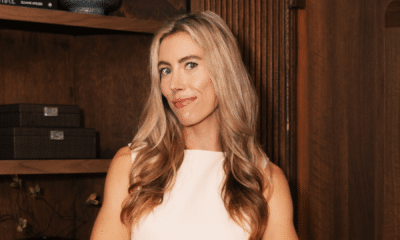
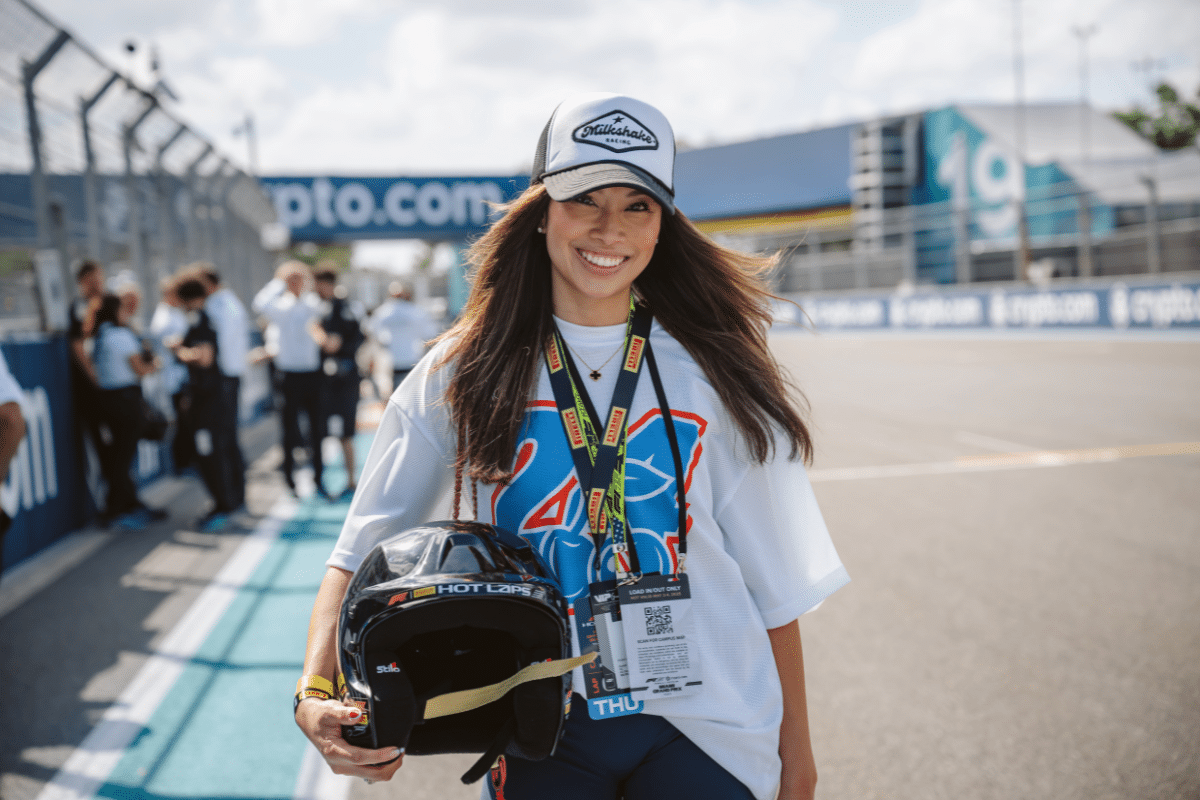
Photo credit: Michael Potts
Community-Driven Business
Unlike traditional top-down media organizations, Milkshake actively involves its audience in content development. “Our audience is our customer, helping us figure out what content we create and focus on and tweak,” Natasha explains, adding that being responsive ensures that content remains relevant to the community’s interests.
The team behind Milkshake is deliberately small and focused. “The team is mainly my husband and me. I’m 100% on camera, and he films. And then my sister does a little bit as well,” Natasha shares. “And we have an incredible social media lead that helps us with researching, planning, & creating content. She’s Gen Z and I’m a Millennial – so together we make a great team.”
Despite starting as a content creator account, Natasha has clear business aspirations for Milkshake. Her vision includes having “on-track Milkshake journalists asking questions that are different from the traditional motorsport journalists” and developing “a full media platform where we have shows on YouTube and subscription-based content that’s all exclusive.”
For monetization, Natasha prioritizes brand partnerships and scaling on YouTube for programmatic revenue over merchandise sales. “I think the programmatic way for revenue for us will be scaling on YouTube and then brand partnerships, because F1 is working a lot more with creators now. That’s been a big shift from before, and we see that as a really big opportunity,” she explains.
Natasha specifically mentions the types of brand partnerships she would like to pursue. In discussing potential collaborations, she says: “I think LVMH because it’s a partner of F1 and there are so many brands under its umbrella that’d be an amazing fit. I would love to partner with them and host a Sephora pop-up at the track, where we could set up makeup stations and allow fans to get their makeup done. They can buy some product, but then we can interview them about what their hot take on the race is.”
This vision extends beyond digital content to creating memorable real-world experiences. “If time and budget were no object, it would definitely be having on-track Milkshake journalists, but it would also be honestly throwing events and parties,” Natasha explains. “I always say we would have made it when we are hosting a Milkshake yacht party in Monaco, where we have all the Milkshake girls there—essentially the vibe in real life.”
Overcoming Challenges and Defining Success
Breaking into the male-dominated world of motorsport content presented challenges. In the early days of Milkshake, Natasha faced skepticism and hostility.
“In the beginning, when we didn’t have as many followers, there were a lot of negative comments,” she recalls. “I got things like, ‘Stick to the Real Housewives of New York’ or ‘F1 is not for you’ and just a lot of negative comments around ‘You’re just a Drive to Survive fan, you don’t know anything about racing or motorsports.'”
The criticism often centered around accusations that Milkshake was “overgeneralizing women and making it stupid that girls can’t understand technical concepts.” Natasha’s response is straightforward: “You can be smart and still love ‘Love Island’ or ‘Love is Blind.’ I like making things more lighthearted and fun.”
For Natasha, success isn’t measured solely through traditional metrics like follower count or engagement rates, though Milkshake has good performance in these areas, with “60-70% of our views coming from non-followers.” Instead, her primary metric is audience composition: “The #1 metric is the percentage of our audience that is female and women. Initially, it was actually around 50%. And so I’m very proud of the fact that we’re 88% female audience right now.”
This focus on serving their target demographic has created a passionate community that actively engages with the brand. “The two questions that I get asked daily on Milkshake are: ‘How can I work for you?’ and ‘How can I build a career in motorsport?'” Natasha shares. “That has been really rewarding, just the community that we’re building that is very female-focused.”
As the motorsport enthusiast advises other women looking to carve out space in male-dominated fields: “You need to have a very thick skin, firstly, and don’t beat yourself up too much when negativity comes at you. I also think you need to persevere and keep reaching out. Finding advocates for you will make a big difference.”
By shifting her focus away from traditional technical analysis and instead prioritizing personality, aesthetics, and human connection, Natasha has created a system that resonates with her target audience.
“The future of motorsport is changing and that future is female,” she concludes.
Subscribe to Our Newsletter
Check Out Our Podcast