Technology
From Concept To Creation: How FLORA Streamlines Ideation For Creative Professionals

Weber Wong was evaluating startup investments at Menlo Ventures when he discovered something unexpected: the gap between having creative ideas and bringing them to life wasn’t just a problem for artists—it was a business opportunity hiding in plain sight. That realization propelled Weber from investment banking to NYU’s Tisch School of the Arts, where he created AI installations that transformed viewers into living Picasso paintings.
What began as artistic experimentation evolved into FLORA, an AI-powered creative tool founded in January 2024 that connects text, image, and video generation on a single canvas.
Weber describes FLORA as “an intelligent canvas with every creative AI tool on one infinite canvas,” adding that users can connect them together to concept quickly, explore iterations, speak their ideas into existence, and assume control over where the thought process goes.
As Weber notes, designers and art directors might envision dozens of directions they’d like to explore, but resource constraints force them to narrow their focus prematurely. “From idea to exploring many concepts is hard with traditional tools, with non-AI tools, because you can’t just ask for what you want and see many different things,” he explains.
FLORA addresses this specific challenge in creative workflows, allowing teams to visualize and evaluate many more ideas in much less time.
“Our customers will generate hundreds of variations of a given direction they want to go in and then just choose one, and then they go and refine that,” Weber says. “That would take a week of constantly iterating, moving things around.”
Launched publicly in February 2025, the startup quickly attracted users from Pentagram, Gretel, Complex, and MSCHF, with the founder of MSCHF becoming an angel investor in the company.
Designers use FLORA to generate and evaluate dozens of typographic variations in minutes. Filmmakers create storyboards directly from script text, then animate those storyboards to preview scenes before production begins. Production studios quickly prototype visual concepts that would otherwise require specialized 3D software and hours of technical work.

How FLORA Works
FLORA differentiates itself through its node-based interface, which connects various AI capabilities in cohesive workflows. Weber explains how the platform operates: “The core mechanic in FLORA is connecting different blocks together. If I spawn an image block, I can just type whatever prompt I want.”

The real value proposition lies in how these blocks interact. For example, users can generate an image, then connect it to a text block that describes the image, then feed that description into another image block to create variations. The system maintains these relationships, creating what is effectively a creative system rather than just a series of isolated generations.
“You can change the first image and by running it again, it’ll go through the same thing but just with a different result,” Weber explains. “Just like in Figma, if you change the corner radius of a button, that propagates throughout the entire design system.”

This approach enables creative professionals to work in ways that weren’t previously possible. The tool enables users to create a spinning 3D glass logo in seconds by applying a series of transformations: removing the background of a logo, imparting a glass-like appearance, placing it on a black background, creating a slightly rotated version, and finally generating a video that animates between the two perspectives.
For filmmakers, FLORA connects the scriptwriting, storyboarding, and previsualization phases into a single flow. “For film studios, they’re using it a lot for storyboarding,” Weber notes. “Typically, you write a script, draw a storyboard, go outside and shoot a video. In FLORA, you can think of that as text, image, and video.”

Not Just Another AI Product
Among many AI solutions in the market, Weber is clear about FLORA’s position: “We’re a creative tooling company, not an AI company.” This distinction dictates FLORA’s product development and its relationship with users.
“I think there’s a lot of noise. You should be skeptical,” Weber acknowledges about the AI space. His critique is pointed: “When I was in venture and deep in the tech startup world, I feel like people there didn’t even understand that the professional creative industry even exists. They’re not aware that there are agencies and people that do this for a living.”
This insight informed FLORA’s development philosophy. “Current AI creative tools are built by non-creatives, for non-creatives, to fool creatives,” Weber observes. “It’s all prompt-based, or you’re literally looking at machine learning. No one was really thinking about how to have creative control.”
Weber draws a distinction between AI models and creative tools: “There’s very much a difference between models and creative tools. I think many people have assumed that AI models are creative tools, but they’re not. They’re just technologies.” He compares this to web development: “Figma is built on this architecture called WebGL. But WebGL is not a creative tool. So, these AI researchers who are building text-to-image tools like text-to-image are not creating a creative tool. You have to build interface, you have to enable control, you have to make it intuitive to use these tools to get to what you want.”
FLORA operates on a per-seat pricing model, similar to Figma, with a credit system that allows users to run different AI models depending on their tier. “We also have signed a few bigger enterprise deals, so that operates a little bit differently,” Weber notes, indicating flexibility for larger organizations.
Balancing AI Assistance and Creative Expertise
As AI tools become more powerful, questions arise about their impact on creative skills. Weber offers a nuanced perspective on this relationship: “I think the act of learning will never be over. I don’t know if creative tools always need to have a high barrier to entry, but I think you’ll always be rewarded if you continue to improve your craft.”
He uses painting as an analogy: “Painting has a very low barrier to entry, you can just do some Jackson Pollock stuff and you don’t have to learn brushstrokes, but you could also be like Matisse, where every brushstroke is genius.”
For Weber, the focus is on removing unnecessary technical barriers while still respecting the expertise of creative professionals. “I feel like sometimes when using other creative tools, I don’t know if my time felt respected because they just built the functionality; they didn’t think as much about ‘there’s a creative using this tool every single time.'”
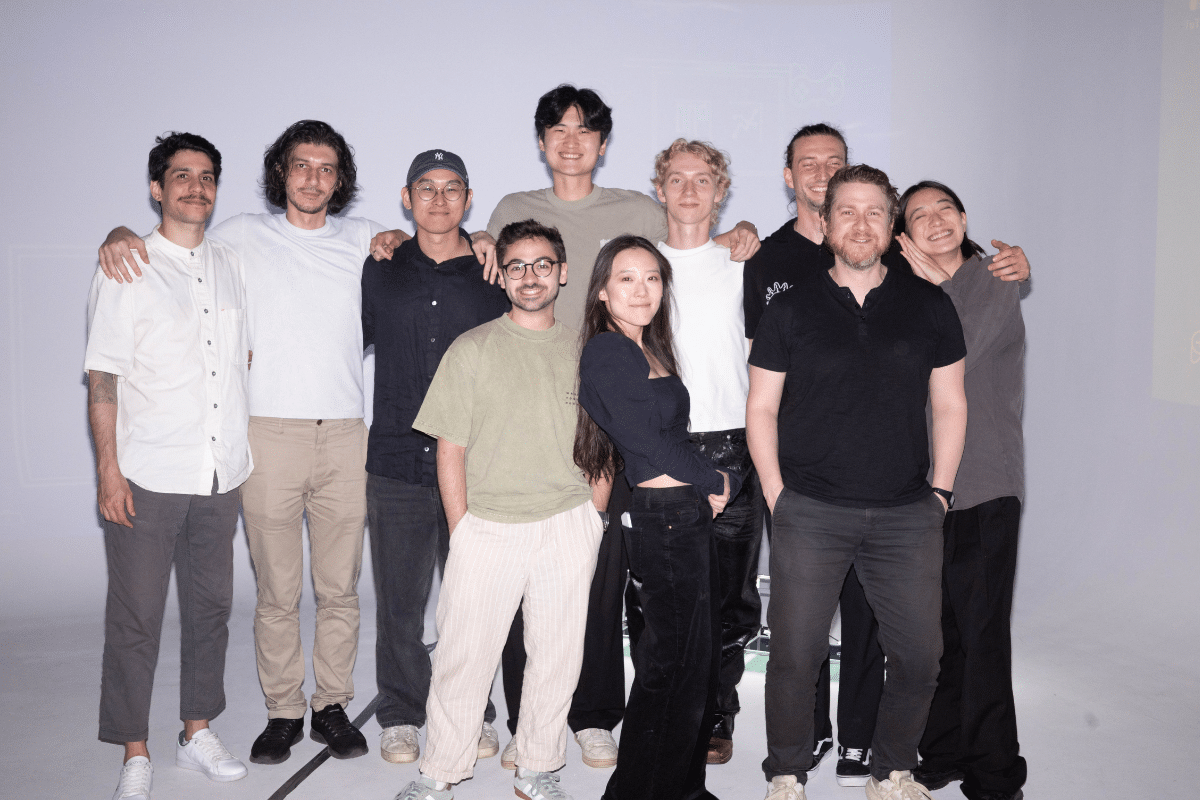
This perspective influences FLORA’s roadmap. Weber and his team, many of whom come from NYU’s Interactive Telecommunications Program, are focused on adding more creative control, enhanced team functionality, and improved workflow capabilities. “We launched team workspaces so you can collaborate in real time and all that stuff. But we can definitely do even more there,” Weber explains.
Subscribe to Our Newsletter
Check Out Our Podcast