Creator journalism has become a major media segment with one-third of journalists now publishing independently outside traditional newsrooms, according to new research from PR software platform Muck Rack. “The State of Creator Journalism 2025” study reveals that this shift isn’t just a recent trend, as half of creator journalists have been self-publishing for more than 5 years.
Creative Freedom Drives Movement, Not Revenue
The primary motivation for journalists to venture into independent publishing isn’t financial gain, according to the research. Fifty-seven percent of creator journalists cite creative or editorial freedom as their main driver, far outweighing financial opportunity, which only 9% identify as their primary motivation.
The report states that independence is about control, not clicks, with creative autonomy ranking significantly higher than other potential motivators, such as professional branding (13%) or filling gaps in media coverage (10%).
This focus on creative control comes despite modest financial returns. While 63% of creator journalists report earning some income from their independent work, 39% say they earn none and 31% report less than 10% of their total annual income from self-publishing. Only 6% say it constitutes their full-time income.
Social Media Essential to Creator Workflow
The research identifies a clear distinction between creator journalists and their traditional counterparts in their reliance on social platforms. Creator journalists are 60% more likely than traditional journalists to consider social media essential to their reporting process.
Thirty-one percent of creators rate social media as “very important” to producing their work compared to just 19% of non-creator journalists. This social-first approach shapes both content development and distribution strategies.
Publishing Patterns and Platform Preferences
Personal websites remain the dominant publishing channel, with 53% of creator journalists using their own blogs or sites as their primary platform. Email newsletters follow at 41%, while social platforms Instagram (30%), LinkedIn (29%), and X (26%), round out the top five distribution channels.
Despite social media’s importance, traditional text-based formats continue to lead, with fewer creator journalists embracing audio (18% produce podcasts) or private community platforms (only 2% use Discord or similar services).
The survey reveals that 78% of creator journalists have relatively small audiences, reaching fewer than 10,000 subscribers or followers. This places most in what the industry classifies as the “nano influencer” category. Only 9% report having audiences exceeding 100,000.
PR Relationships More Valued by Creator Journalists
The research demonstrates that creator journalists place higher value on public relations relationships than traditional journalists. Thirty-two percent of creators view PR professionals as “very important” to their success, compared to 21% of traditional journalists.
This translates to higher engagement rates with PR pitches. Twenty-nine percent of creators say they “usually” or “always” respond to PR professionals, versus just 17% of traditional journalists. Creator journalists also demonstrate more tolerance for follow-up communications, with 46% finding one follow-up email acceptable and 34% open to two follow-ups.
Despite this openness, relevance remains paramount. Seventy-two percent of creators report that half or fewer of the pitches they receive align with their coverage area.
Content Development Influenced by PR
PR pitches play a significant role in creator journalists’ content pipeline. Eighty-two percent report that at least some portion of their stories originates from PR pitches, although most (45%) say these account for only 1-10% of their published work. Just 18% indicate that a quarter or more of their output stems from PR pitches.
Effective Pitching to Creator Journalists
For PR professionals seeking to engage creator journalists, the research identifies clear preferences. Sixty-one percent want access to relevant interview sources, and 60% expect pitches that clearly relate to their beat. Original data or research (40%) and high-resolution images (38%) also rank highly.
Brevity remains important: 55% of creator journalists prefer pitches under 200 words. Most (82%) expect follow-up communications within the first week after an initial pitch, with 52% specifically preferring follow-ups between days 3-7.
Job Security Perception Higher Among Creators
Creator journalists report greater confidence in their employment stability – 27% express “very confident” in the long-term stability of their organization, compared to 19% of traditional journalists. This suggests that developing independent publishing capabilities may provide journalists with a sense of professional security despite industry volatility.
Methodology
Muck Rack conducted the self-administered online survey from April 4-30, 2025. After data cleaning, the final sample included 1,515 journalists, of whom 522 self-identified as creator journalists. Most respondents were U.S.-based, with additional representation from the United Kingdom, Canada, and India. The estimated margin of error is ±4.3%.
The survey examined publishing practices, motivations, monetization strategies, content development approaches, and media relations preferences among journalists who independently publish news, commentary, or other content under their own name or brand, outside of traditional media organizations.
David Adler is an entrepreneur and freelance blog post writer who enjoys writing about business, entrepreneurship, travel and the influencer marketing space.




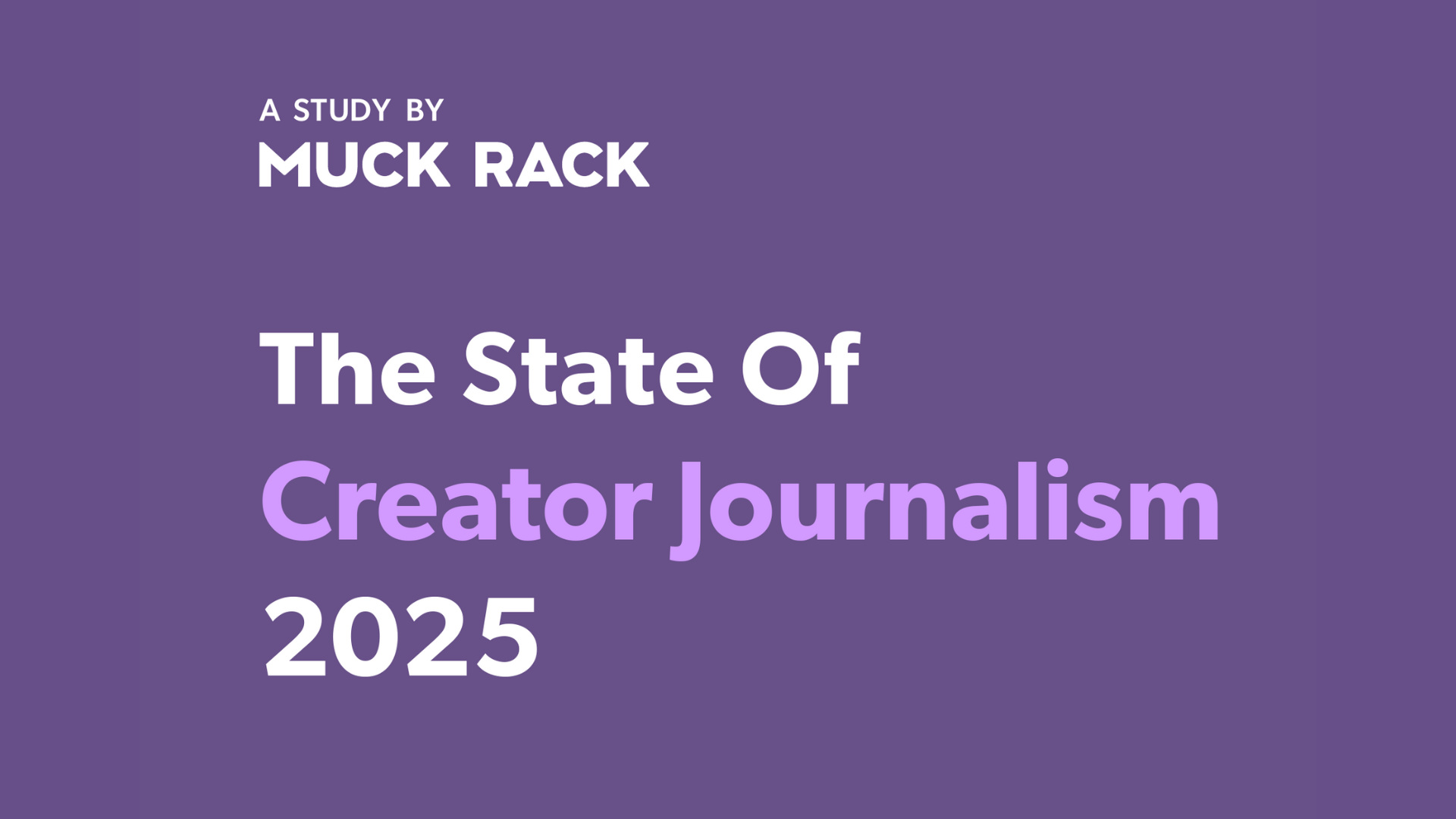





Creator journalism has become a major media segment with one-third of journalists now publishing independently outside traditional newsrooms, according to new research from PR software platform Muck Rack. “The State of Creator Journalism 2025” study reveals that this shift isn’t just a recent trend, as half of creator journalists have been self-publishing for more than 5 years.
Creative Freedom Drives Movement, Not Revenue
The primary motivation for journalists to venture into independent publishing isn’t financial gain, according to the research. Fifty-seven percent of creator journalists cite creative or editorial freedom as their main driver, far outweighing financial opportunity, which only 9% identify as their primary motivation.
The report states that independence is about control, not clicks, with creative autonomy ranking significantly higher than other potential motivators, such as professional branding (13%) or filling gaps in media coverage (10%).
This focus on creative control comes despite modest financial returns. While 63% of creator journalists report earning some income from their independent work, 39% say they earn none and 31% report less than 10% of their total annual income from self-publishing. Only 6% say it constitutes their full-time income.
Social Media Essential to Creator Workflow
The research identifies a clear distinction between creator journalists and their traditional counterparts in their reliance on social platforms. Creator journalists are 60% more likely than traditional journalists to consider social media essential to their reporting process.
Thirty-one percent of creators rate social media as “very important” to producing their work compared to just 19% of non-creator journalists. This social-first approach shapes both content development and distribution strategies.
Publishing Patterns and Platform Preferences
Personal websites remain the dominant publishing channel, with 53% of creator journalists using their own blogs or sites as their primary platform. Email newsletters follow at 41%, while social platforms Instagram (30%), LinkedIn (29%), and X (26%), round out the top five distribution channels.
Despite social media’s importance, traditional text-based formats continue to lead, with fewer creator journalists embracing audio (18% produce podcasts) or private community platforms (only 2% use Discord or similar services).
The survey reveals that 78% of creator journalists have relatively small audiences, reaching fewer than 10,000 subscribers or followers. This places most in what the industry classifies as the “nano influencer” category. Only 9% report having audiences exceeding 100,000.
PR Relationships More Valued by Creator Journalists
The research demonstrates that creator journalists place higher value on public relations relationships than traditional journalists. Thirty-two percent of creators view PR professionals as “very important” to their success, compared to 21% of traditional journalists.
This translates to higher engagement rates with PR pitches. Twenty-nine percent of creators say they “usually” or “always” respond to PR professionals, versus just 17% of traditional journalists. Creator journalists also demonstrate more tolerance for follow-up communications, with 46% finding one follow-up email acceptable and 34% open to two follow-ups.
Despite this openness, relevance remains paramount. Seventy-two percent of creators report that half or fewer of the pitches they receive align with their coverage area.
Content Development Influenced by PR
PR pitches play a significant role in creator journalists’ content pipeline. Eighty-two percent report that at least some portion of their stories originates from PR pitches, although most (45%) say these account for only 1-10% of their published work. Just 18% indicate that a quarter or more of their output stems from PR pitches.
Effective Pitching to Creator Journalists
For PR professionals seeking to engage creator journalists, the research identifies clear preferences. Sixty-one percent want access to relevant interview sources, and 60% expect pitches that clearly relate to their beat. Original data or research (40%) and high-resolution images (38%) also rank highly.
Brevity remains important: 55% of creator journalists prefer pitches under 200 words. Most (82%) expect follow-up communications within the first week after an initial pitch, with 52% specifically preferring follow-ups between days 3-7.
Job Security Perception Higher Among Creators
Creator journalists report greater confidence in their employment stability – 27% express “very confident” in the long-term stability of their organization, compared to 19% of traditional journalists. This suggests that developing independent publishing capabilities may provide journalists with a sense of professional security despite industry volatility.
Methodology
Muck Rack conducted the self-administered online survey from April 4-30, 2025. After data cleaning, the final sample included 1,515 journalists, of whom 522 self-identified as creator journalists. Most respondents were U.S.-based, with additional representation from the United Kingdom, Canada, and India. The estimated margin of error is ±4.3%.
The survey examined publishing practices, motivations, monetization strategies, content development approaches, and media relations preferences among journalists who independently publish news, commentary, or other content under their own name or brand, outside of traditional media organizations.
Image credit: Muck Rack
Get the full report here
Subscribe to Our Newsletter
Check Out Our Podcast