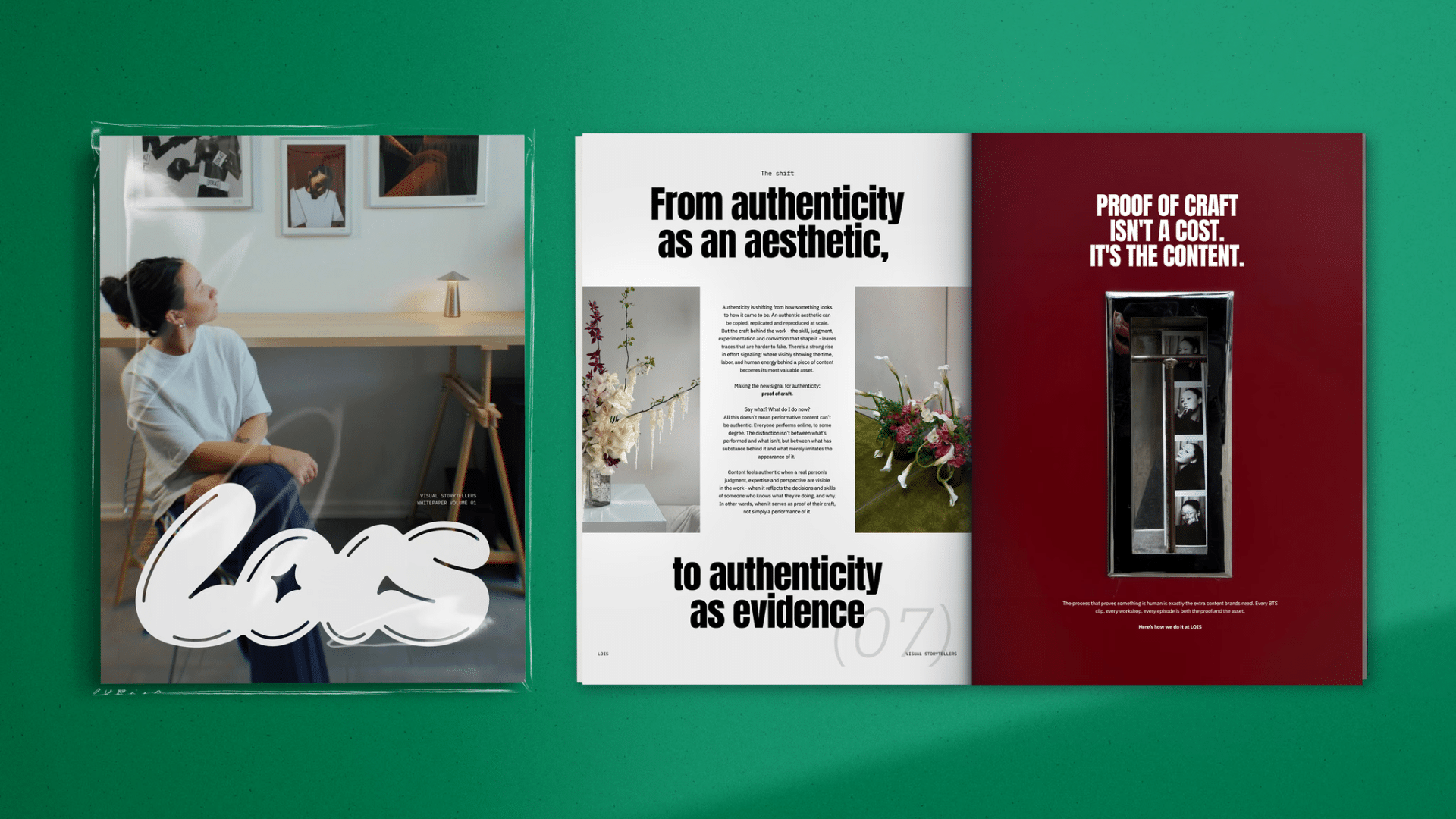
LOIS, the creator collective founded by independent creative agency SuperHeroes, argues in its first whitepaper that generative AI has made the look of authenticity easy to simulate, leaving brands to prove it through visible craft instead.
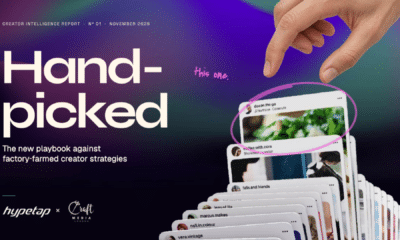
The whitepaper, titled “Visual Storytellers Whitepaper Volume 01,” draws on the experiences of LOIS members, whom the collective describes as filmmakers, illustrators, photographers, and artists. LOIS says it is “not an agency” and “not an influencer network.” SuperHeroes has offices in Amsterdam, New York, Los Angeles, and Singapore and lists Oreo, Lenovo, Netflix, Hinge, and Google among its clients.
“The rules of marketing have not changed. But the rules of influence did change,” writes Django Weisz Blanchetta, Chief Executive Hero and founder of SuperHeroes, in the paper’s introduction.
He describes a shift in trust from what brands say about themselves toward the “community voice” of creators and the “consumer voice” of reviews, ratings, and user-generated content. “AI made the aesthetic of authenticity easy to simulate,” he writes. “The question is no longer how brands can make creators sound authentic. It’s how brands can partner with creators whose process is authentic to begin with.”
How the Signal Became a Style
The paper traces the problem to brands adopting the language and aesthetics of authenticity until, in its words, “the signal has become a style.” It identifies three breakdowns: “authentic” came to mean unpolished, authenticity became curated, and AI made the authentic look meaningless.
Creators in the collective describe each one. “A brand used the word ‘authentic’ as a creative brief requirement, which is a little ironic,” says @giuliahartz. “They asked for something spontaneous, natural and relatable, but then provided a very detailed script, a list of mandatory talking points and many rounds of feedback.”
On AI, @sharjeel.mp4 says: “People say: ‘We can just prompt these imperfections.’ But what are you simulating then?”
The paper argues that AI did not create sameness in creator content but magnified it, since creators were already chasing the same trends, sounds, hooks, and formats the algorithm rewarded. “I use AI to script my videos, and after working with it so much, I recognize its phrasing and sentence structures,” says @mqrra. “Sometimes I’ll read a line on camera and think, ‘This sounds so AI.’ Viewers will notice the same thing.”
The Numbers Behind the Shift
The whitepaper assembles third-party data under the heading “Trust isn’t gone; it needs proof.”
It cites Sprout Social Pulse data from Q1 2026 as showing that 50% of Gen Z have unfollowed or blocked a brand or creator over low-effort content. The paper also cites Modash’s 2026 Creator Trust Report, which found that 69% trust a creator more when there is visible evidence they genuinely use the product. The same report found that 43% trust a creator less when a partnership feels forced or relies on shortcuts, according to the paper.
LOIS also points to a 16% decline in weekly time spent on social media over one year, citing Deloitte’s 2025 Media & Entertainment Consumer Insights for Australia, and presents it as evidence that people are scrolling less.
On the platform side, the paper quotes Adam Mosseri’s December 2025 year-end memo: “Authenticity is becoming a scarce resource, driving more demand for creator content, not less.” It also cites a November 2025 Tubefilter report on TikTok to note that platforms are giving users tools to turn down formulaic, low-effort content in their feeds.
From Aesthetic to Evidence
The paper’s central claim is that authenticity is moving from how content looks to how it came to be. It describes a rise in “effort signaling,” in which showing the time, labor, and human energy behind content becomes its most valuable asset, and names the new signal “proof of craft.”
LOIS says the distinction is not between performed and unperformed content but between work with substance behind it and work that imitates the appearance of substance. It breaks that evidence into three parts: process, meaning the real decisions and trade-offs behind the work; personality, meaning opinions and taste that stay consistent; and authorship, meaning human involvement that is credited and visible.
“When people know something is human-made and by whom, the value increases,” says @pinatocrafts.
“We need to keep sharing our expertise, knowledge, craft, way of working, and point of view,” says @mqrra, “everything that makes us unique as creators.”
Image source: LOIS The full report can be foundhere
Dragomir is a Serbian freelance blog writer and translator. He is passionate about covering insightful stories and exploring topics such as influencer marketing, the creator economy, technology, business, and cyber fraud.













LOIS, the creator collective founded by independent creative agency SuperHeroes, argues in its first whitepaper that generative AI has made the look of authenticity easy to simulate, leaving brands to prove it through visible craft instead.
The whitepaper, titled “Visual Storytellers Whitepaper Volume 01,” draws on the experiences of LOIS members, whom the collective describes as filmmakers, illustrators, photographers, and artists. LOIS says it is “not an agency” and “not an influencer network.” SuperHeroes has offices in Amsterdam, New York, Los Angeles, and Singapore and lists Oreo, Lenovo, Netflix, Hinge, and Google among its clients.
“The rules of marketing have not changed. But the rules of influence did change,” writes Django Weisz Blanchetta, Chief Executive Hero and founder of SuperHeroes, in the paper’s introduction.
He describes a shift in trust from what brands say about themselves toward the “community voice” of creators and the “consumer voice” of reviews, ratings, and user-generated content. “AI made the aesthetic of authenticity easy to simulate,” he writes. “The question is no longer how brands can make creators sound authentic. It’s how brands can partner with creators whose process is authentic to begin with.”
How the Signal Became a Style
The paper traces the problem to brands adopting the language and aesthetics of authenticity until, in its words, “the signal has become a style.” It identifies three breakdowns: “authentic” came to mean unpolished, authenticity became curated, and AI made the authentic look meaningless.
Creators in the collective describe each one. “A brand used the word ‘authentic’ as a creative brief requirement, which is a little ironic,” says @giuliahartz. “They asked for something spontaneous, natural and relatable, but then provided a very detailed script, a list of mandatory talking points and many rounds of feedback.”
On AI, @sharjeel.mp4 says: “People say: ‘We can just prompt these imperfections.’ But what are you simulating then?”
The paper argues that AI did not create sameness in creator content but magnified it, since creators were already chasing the same trends, sounds, hooks, and formats the algorithm rewarded. “I use AI to script my videos, and after working with it so much, I recognize its phrasing and sentence structures,” says @mqrra. “Sometimes I’ll read a line on camera and think, ‘This sounds so AI.’ Viewers will notice the same thing.”
The Numbers Behind the Shift
The whitepaper assembles third-party data under the heading “Trust isn’t gone; it needs proof.”
It cites Sprout Social Pulse data from Q1 2026 as showing that 50% of Gen Z have unfollowed or blocked a brand or creator over low-effort content. The paper also cites Modash’s 2026 Creator Trust Report, which found that 69% trust a creator more when there is visible evidence they genuinely use the product. The same report found that 43% trust a creator less when a partnership feels forced or relies on shortcuts, according to the paper.
LOIS also points to a 16% decline in weekly time spent on social media over one year, citing Deloitte’s 2025 Media & Entertainment Consumer Insights for Australia, and presents it as evidence that people are scrolling less.
On the platform side, the paper quotes Adam Mosseri’s December 2025 year-end memo: “Authenticity is becoming a scarce resource, driving more demand for creator content, not less.” It also cites a November 2025 Tubefilter report on TikTok to note that platforms are giving users tools to turn down formulaic, low-effort content in their feeds.
From Aesthetic to Evidence
The paper’s central claim is that authenticity is moving from how content looks to how it came to be. It describes a rise in “effort signaling,” in which showing the time, labor, and human energy behind content becomes its most valuable asset, and names the new signal “proof of craft.”
LOIS says the distinction is not between performed and unperformed content but between work with substance behind it and work that imitates the appearance of substance. It breaks that evidence into three parts: process, meaning the real decisions and trade-offs behind the work; personality, meaning opinions and taste that stay consistent; and authorship, meaning human involvement that is credited and visible.
“When people know something is human-made and by whom, the value increases,” says @pinatocrafts.
“We need to keep sharing our expertise, knowledge, craft, way of working, and point of view,” says @mqrra, “everything that makes us unique as creators.”
Image source: LOIS
The full report can be found here
Subscribe to Our Newsletter
Check Out Our Podcast