


Strategy
Well Over Half Of U.S. Adults Get Midterm Information From Creators, New Survey Finds

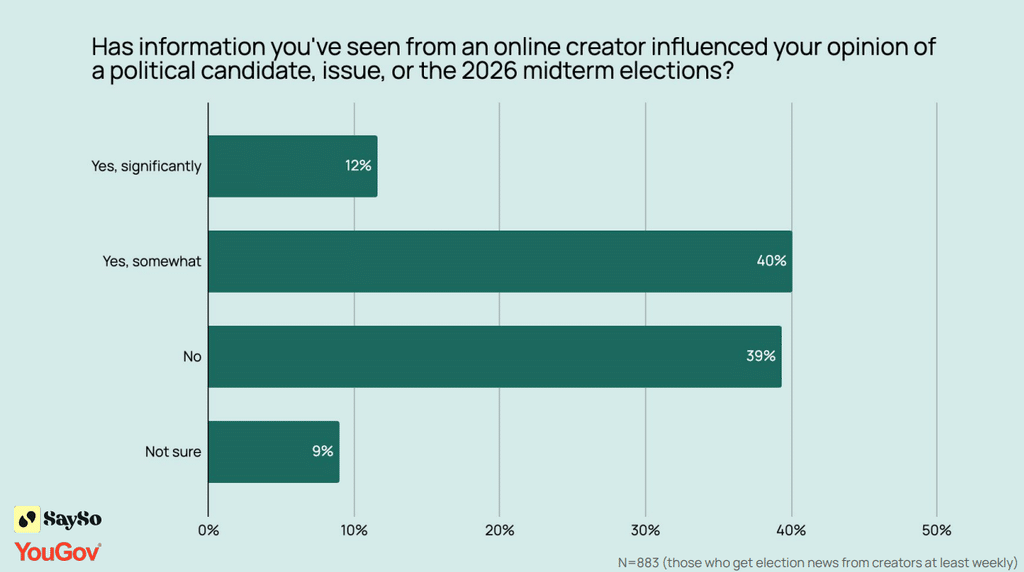
Nearly two in three U.S. adults receive information about the 2026 midterms from online creators, according to a YouGov survey commissioned by the platform SaySo. Among those who get election news from creators at least weekly, more than half say a creator has influenced their opinion, and one in five names trust as the reason for watching.
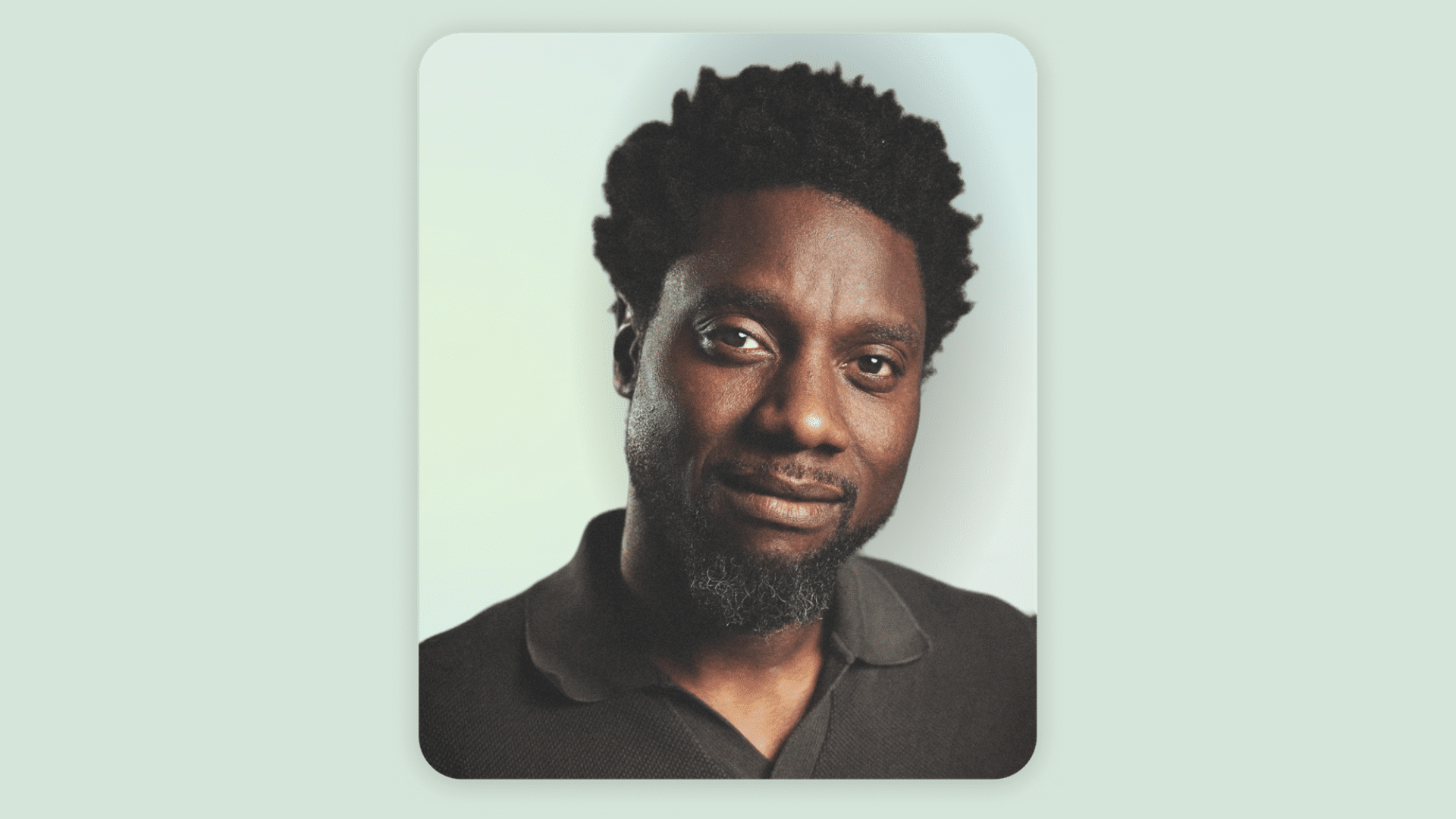
Dion Bailey, Chief Product and Technology Officer of Caliber, the media holding company behind SaySo, reads the findings as evidence of a shift in how people get news. “What it shows is that we are in a transition for how news is consumed and how it gets to a wider audience,” he says. New York-based Caliber is the parent company of The News Movement, which Dion co-founded in 2021 after leading Technology and Architecture at The Wall Street Journal.
SaySo, which Caliber built around that shift, hosts creators vetted against journalistic editorial specifications. Dion says the platform has been live for about six months and targets viewers aged 24 to 40. He argues that younger audiences remain interested in news and attach to individuals who make them feel represented, which is the case he makes for a platform built on vetted creators.
SaySo commissioned the survey to test that case beyond its own platform. “We are saying that we’re on this mission, but it’s like, how true is this?” Dion says. YouGov polled 2,000 U.S. adults from September 16-28 with a margin of error of 2.46 percentage points. Dion says the questions came from a separate body and partner organizations, with SaySo keeping final say.
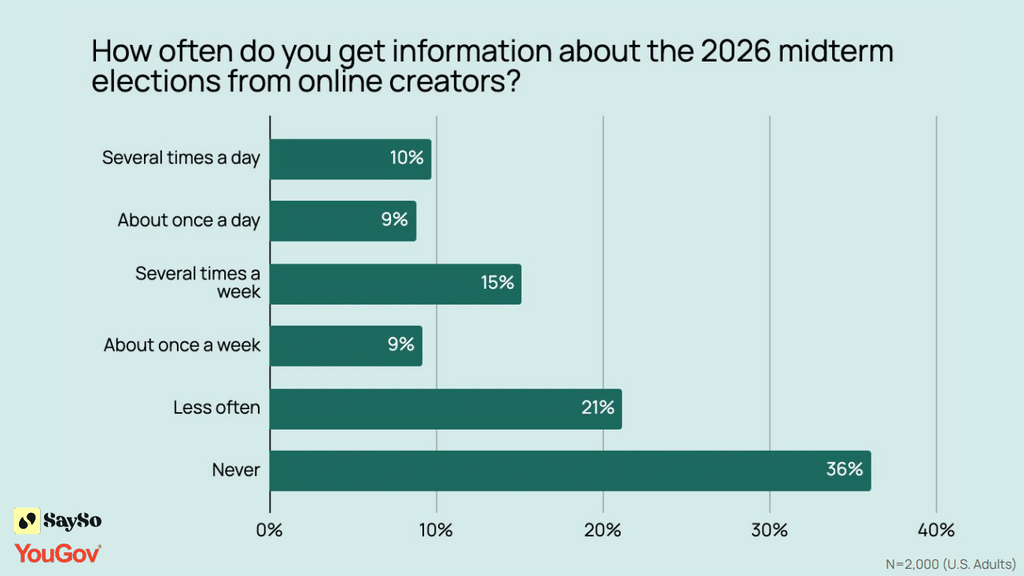
Creator Reach Extends Across Generations
Dion cites 77% of Gen Z and 67% of millennials getting midterm information from creators. The ten-point difference points to a broad spectrum of audiences, he says.
Dion disputes the idea that creator news is a small bubble. It “covers the wide gamut and it covers different age groups,” he says.
SaySo’s audience reflects that range. Since launch, it has spanned roughly 18 to past 55, Dion says, a wider band than the platform’s target.
Audiences Say Creators Offer Perspectives Traditional News Lacks
Among weekly viewers of election content from creators, 47% say creators cover topics or perspectives they do not get from traditional news, the top reason in the survey. Another 39% find creators more engaging or relatable.
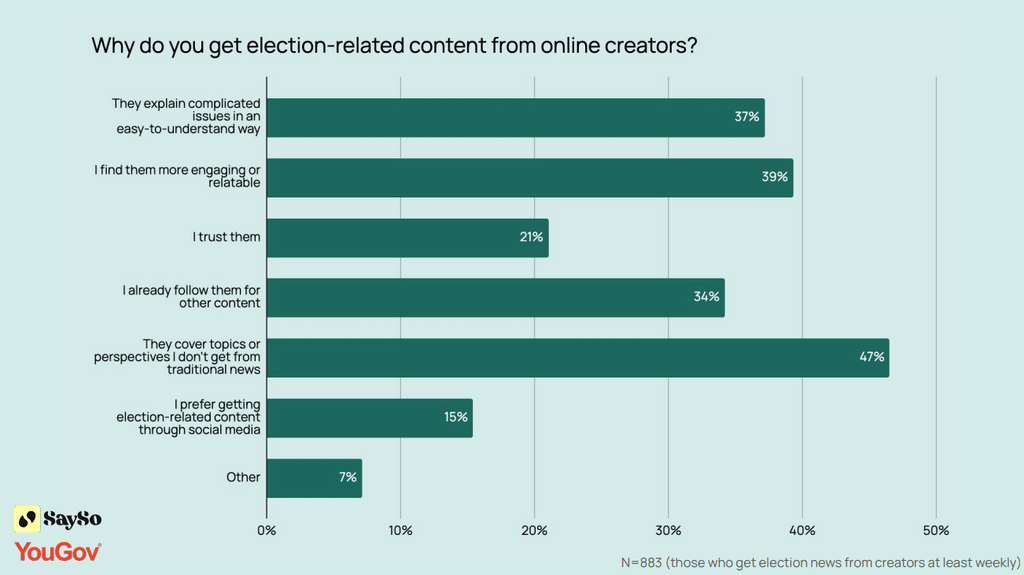
Dion says traditional news organizations were slow to register that people now engage through a different medium. He has worked at some of them and says they often treated digital websites like their older publications. “The point was to entice people back to their platform versus meeting them where they are,” he says.
He also argues that continuous publishing pressure leads outlets to run headlines that overwhelm audiences. “You’ve got more of a soft voice in their living room now with professional mics,” Dion says of creators. He adds that journalists leaving large news companies to go independent are responding to the same need.
Audiences Treat Creators as One Source Among Several
Dion says the trust results surprised him. Among weekly viewers, 36% trust creators and traditional news organizations equally, 34% trust creators more, and 30% trust traditional outlets more. “It’s not like a huge skew in either way,” he says.
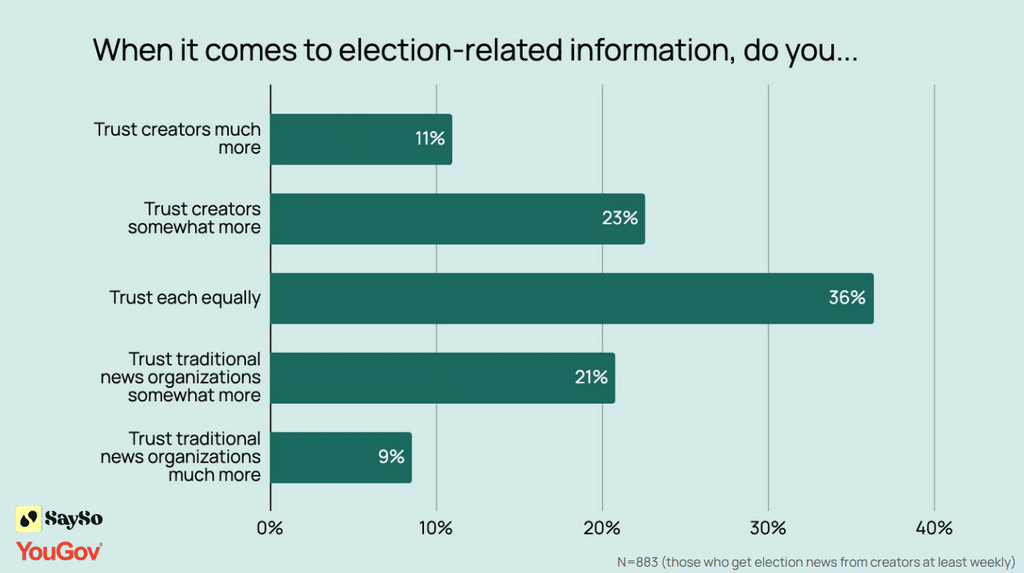
Traditional institutions took a long time to build their audiences’ trust, Dion notes, yet a cohort now sees both equally. Viewers also check what they see. Some 54% say they always or often consult another source, and traditional outlets can be among them, he says.
Dion sees that cross-checking as part of why creators can sway viewers who do not cite trust. Trust in other media has fallen, he argues, and people find creators relatable. “The audience has become a lot more savvy,” Dion says. Viewers draw on a number of sources and then decide whom to trust.
Platforms and Creators Should Carry the Verification Load
Dion places most of the responsibility for verification on platforms and creators. “I don’t think the onus should be on the user, quite frankly,” he says, though he adds that in the current transition each party has a part to play.
He wants creators to show their sources, correct themselves publicly when wrong, and disclose any payment. Platforms share the fault, he argues. “The mechanisms and systems in place currently encourage information that may go in the wrong direction,” Dion says.
The survey measured some of those experiences. Among all adults surveyed, 30% report repeatedly encountering the same political stories or claims on social media, and 28% say they have become less certain about what information to trust.
SaySo’s response has two steps so far, Dion says. First, its creators are vetted. Second, the platform encourages them to provide sources that users can see. For viewers, he suggests checking a creator’s feed and profile to see whether the message stays consistent.
Half of U.S. Adults Would Not Use AI on Midterm Topics
On AI, 50% of U.S. adults say they would use it for none of the midterm topics listed in the survey, while 21% would use it to fact-check political claims.
“Our philosophy here at Caliber is human in the loop when it comes to AI,” Dion says. On SaySo, an AI workflow reviews a prospective creator’s content across platforms and produces a report. Editors check it against the platform’s specifications and decide whether the creator joins.
AI used without human support or a known source can mislead, he argues, because such systems predict what users want to hear. For audiences who use AI to check claims, Dion advises creators to tell them to ask for sources and confirm that those sources are real.
Brands Can Back Political Creators After Due Diligence
Brands weighing creators who cover politics should first run their own due diligence, Dion says, including on what creators are willing to show about how their content is produced. Once that is clear, he would not hold back partnerships.
“Why would you starve them of an opportunity where they’re trying to be as ethical as possible?” he asks of creators who agree to be vetted and show their sources. He also questions whether traditional channels still deliver for brands and calls it “a real miss” to skip an audience this large.
On payment, Dion says a creator paid to amplify a political message should say so. “Why not make that public?” he asks. SaySo creators track where campaigners and council members get their money, he says, adding that disclosure builds trust with audiences. He says government should have some involvement in ensuring certain things are disclosed.
His advice to brands is to “jump in with your eyes wide open.”
Creator Influence Is Expected to Grow Past the Midterms
Dion expects creators’ role in news to expand into the next presidential cycle. He points to podcasts, which he describes as creators with long shows, as a significant force in the last presidential campaign, and he notes new agencies for creators and portfolios built to fund them.
Growth of that kind calls for guardrails, he says. “We need to have good guardrails for how we’re engaging as well as consuming,” Dion says, because people can otherwise be misled easily. He says the results signal no crisis, and that the industry, SaySo included, needs to keep doing better for its audiences.
Within five years, Dion wants SaySo to be one of the staple places people go to stay informed. He says that depends on becoming a habit, which builds community among creators and audiences, a key metric in his view. News is often ephemeral, he says, a one-and-done experience he sees on TikTok. “I want to be able to build a relationship with our audience that can truly build momentum over time,” he says.
Image source: SaySo, YouGov
The full study can be found here
Subscribe to Our Newsletter
Check Out Our Podcast