Influencer
Why This Michelin-Trained Chef Creator Duo Runs Its Blog and Social Channels as Separate Businesses

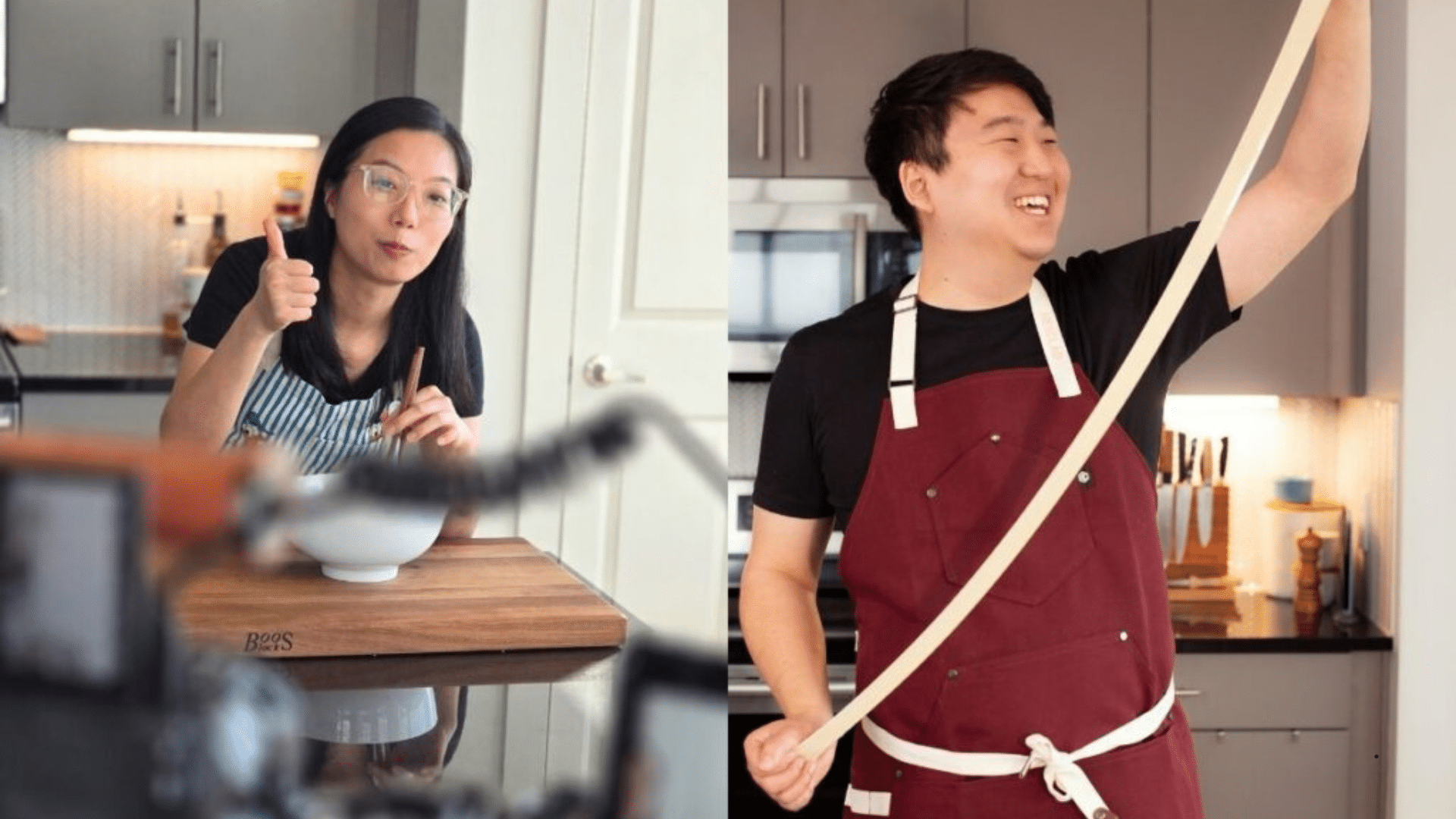
Mei Liu and Kyong Han are classically trained chefs and the husband-and-wife duo behind “Two Plaid Aprons,” a food platform with more than two million followers across Instagram, TikTok, and YouTube. They met at the Chef John Folse Culinary Institute at Nicholls State University in Thibodaux, Louisiana, cooked in Michelin-starred restaurants, trained under Meilleurs Ouvriers de France at Institut Paul Bocuse, and then lost their jobs when the pandemic closed the restaurant industry. Two Plaid Aprons grew from that reset, built on one enduring commitment: professional technique and family heritage, treated as inseparable.
“I always say we run two businesses,” Kyong says. “It’s a blog, and then we run social media.” The blog supplies the operation’s steady revenue. The social channels build the audience and, when alignment is right, generate brand partnerships.
How a Tornado Egg Video Made the Business Real
The platform launched in 2019 as a side project, a place to share recipes with family and friends after the couple discovered that food blogging was something people actually did. It became a business in stages.
A Korean cream cheese garlic bread recipe went viral on the blog around mid-2020. Social video followed. A tornado egg, eggs twisted and set over fried rice, caught the algorithm and pushed traffic to the website. “The numbers are coming in,” Mei recalls. “This seems like a viable business that we should really focus on and try to expand as fast as we can.” Platform diversification became a strategy from that point. Pinterest, which many food creators underestimate, proved particularly durable. “Some recipes we posted three years ago on there, and they blow up and now just get thousands of viewers on them on a daily basis,” Mei says.
The comment-for-recipe system ties the two businesses together: viewers comment a keyword under a video to receive the recipe link via direct message, routing them to the website. The couple noticed followers were already doing it unprompted. They formalized it, then started replying personally to every message. “They always say, ‘Oh, you guys responded to me,'” Mei says. “It creates, kind of like a more concrete community.”
The Blog Is the Main Dish
Paid partnerships occupy a secondary position in the couple’s revenue model by design. “I’ll never look at brand deals as the backbone of the business,” Kyong says. “They’re all going to be side dishes for the main dish of the business.” Partnerships pay out in 60 to 90 days, sometimes 180, whereas the blog generates steady monthly income.
Their filter is narrow. Products are tested before any agreement is signed. Larger brands, they have found, tend to offer more creative latitude; smaller ones sometimes demand more for less. An early lesson shaped the approach. “We’d go with any company when we were smaller,” Mei says. “It backfired on us pretty heavily.”

Self-Taught, With a Cinematic Goal
Neither Mei nor Kyong had video production training. Kyong studied other creators analytically, looking for transferable principles. “I like to analyze the whole field in general,” he says. The aim was to understand what made other videos function well, then apply what fit Two Plaid Aprons specifically.
He edits in his head while filming, sequencing shots and anticipating sound before touching editing software. “While I’m filming, I also edit in my head,” he says. “What kind of angles do I want? What do I want people to kind of see and perceive or hear certain sounds?” Their faces appear sparingly in the frame, shaped by camera shyness and a focus on food.
Heritage Is the Recipe
Mei grew up in her parents’ Chinese restaurant, and many of the takeout recipes Two Plaid Aprons publishes trace to that kitchen. Five or six years removed from home, some dishes have grown hazy in memory. Mei calls her mother to confirm specifics. “Some of the memories of how they make certain dishes are a bit fuzzy,” Mei says. “So I’ll still call them every so often, say, ‘Hey, Mom, I just gotta check: is this how you make this dish?'” Her parents, initially bewildered that anyone would want to cook Chinese food at home when they could simply buy it, came around quickly. Her mother, she says, gets excited when a recipe of hers attracts attention.
Some heritage dishes never reach the platforms at all. If a recipe lacks searchable keywords, it cannot compete in blog SEO. “If it’s not a good keyword or it’s not something that people already know about, it’s hard to rank for,” Kyong says. Some of those recipes went into the cookbook instead.
The Cookbook That Nearly Broke Them
“Fork and Chopsticks” holds 108 recipes. Only 10 to 12 overlap with content on the Two Plaid Aprons website. The rest are exclusive, freed from keyword logic. “If I buy a cookbook, I want something that feels fresher,” Mei says. “A collection of fun new recipes that you never got to do.”
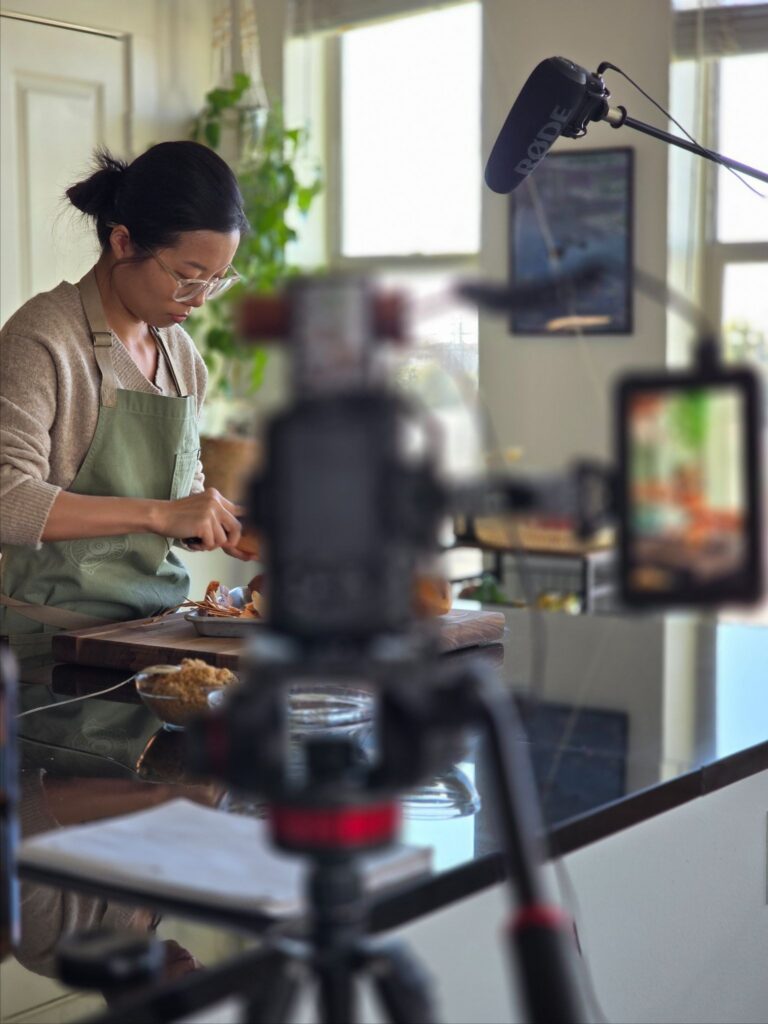
The production was self-directed: six in the morning to one in the morning, two and a half to three weeks straight, recipe testing moving directly into a photo shoot of more than 1,300 images, with no external photographer or stylist. The mental toll accumulated faster than the physical one. “I just hit a brick wall,” Kyong says. “I always think, are we good enough? Is this going to be good enough? Is the photo going to be good enough?”
The crisis point came at the airport. Heading to Japan after the edit was complete, they received word from the publisher that every photo had been exported as a JPEG rather than a RAW file, too compressed for print. “I did the JPEG. Even though in my head I knew I was supposed to do the RAW,” Kyong says. He came home and re-edited every image from scratch. What steadied him was Mei’s support alongside the community they had built online. Sharing the mental strain of the project openly drew followers with their own experiences. “There are a lot of people who are also relatable to that,” Kyong says. “You’re not alone in a way.”
The Six-Month Video and What Comes Next
After the cookbook, the anime series moved back to the front of the schedule.
For an “Apothecary Diaries” episode, the couple sourced a cauldron from Walmart, broke off the handle, spray-painted it, froze a large custom block of ice, and ordered the specific hammer from the scene from Japan for $80. An episode at this level of detail takes roughly six months to produce. “When we watch it, and I make the scene side by side,” Mei says, “people go, like, ‘This is what I want for a live action.’”
The series reflects a conviction about where food content is heading. AI-generated video is now realistic enough that comment sections debate whether videos are produced by real people at all. “None of our videos are AI-generated,” Kyong says. What drives the investment in hand-sourced props and months-long timelines, Mei argues, is what audiences are starting to require. “A lot more people are looking for more just authenticity with what you’re delivering,” he says.
The duo hopes to create an anime cookbook down the road, along with live cooking classes, where the couple hopes to bring their professional training into direct teaching. The underlying goal, Mei says, has not changed since the beginning. “I just want to encourage people, inspire people to enjoy time in the kitchen and cook more.”
Subscribe to Our Newsletter
Check Out Our Podcast