
Agency
Viral Nation’s Fabio Gonçalves Shares Why Brands Should Look Beyond Follower Counts

Fabio Gonçalves, Director of Talent at Viral Nation, argues that creator marketing is maturing into a discipline in which creators are chosen deliberately, with community engagement outweighing raw reach. Australia’s proposal to let users switch off algorithmic feeds, he says, would favor some creators and strain others.
The market has “just become more mature,” Fabio says, and the change shows in how brands pick talent. Brands are weighing whether a creator is still relevant, has engagement and talks to the right people, he says, instead of hiring whoever has the largest following.
Australia’s proposal puts that shift to a test. The initiative, called “My Feed, My Way,” would require platforms to notify new and existing users so they can choose their default feed, and companies that fail to comply could face penalties of up to AU$109.2 million (~$79M). The government opened consultation on the draft rules for “My Feed, My Way” on October 15, with submissions accepted until November 5.
Fabio joined Toronto-based Viral Nation, founded in 2014, as an intern in early 2019 and now directs its talent department. He works with experts such as coders and teachers, as well as creators in other specialized fields.
Fabio Says Brands Are Moving From Counting Followers to Weighing Relevance
Follower counts can mislead, Fabio says. Some creators with 40 million YouTube followers draw about 10,000 views per video, and he describes them as frustrated, unsure how to regain traction. Many creators who went viral on TikTok found that staying relevant is harder than getting there, and some left the platforms.
Some brands are absorbing that lesson. “We have been seeing some brands starting to understand a little bit more about what matters,” Fabio says. Brands used to traditional media, where a television buyer knows the audience only roughly, need agencies to explain what to look for, he says.
When a brand asks for a celebrity, agencies should ask why, he says.
Choosing a Creator Means Separating Reach From Community
Reach can be added by boosting posts or running them through whitelisting, Fabio says, so he ranks community engagement above it. A committed community makes it “better and easier to justify a higher rate,” he argues.
Programming is his clearest example. “We charge a premium even though the numbers are not that high,” he says, because viewers in that niche are there to learn.
Fabio also checks for one-off viral hits. He excludes a creator’s highest- and lowest-performing videos from his assessment, so a post with 15 million views does not distort an account that typically draws 100,000. He then looks at engagement rate, frequency of posting, and brand safety. His method strips out emoji-only comments that look like bots and checks whether engagement is friendly or hostile. “High engagement means little if the conversation around the creator is consistently negative,” he says. “Sentiment matters as much as volume.”
Engagement rate has to be read against audience size, he adds. By his example, a creator with 20 million followers and a 3% engagement rate represents 600,000 engagements, compared with 10,000 for a creator with 100,000 followers and a 10% rate. Brands can use engagement rate to show that a creator has a community that matters, whatever its size, he says.
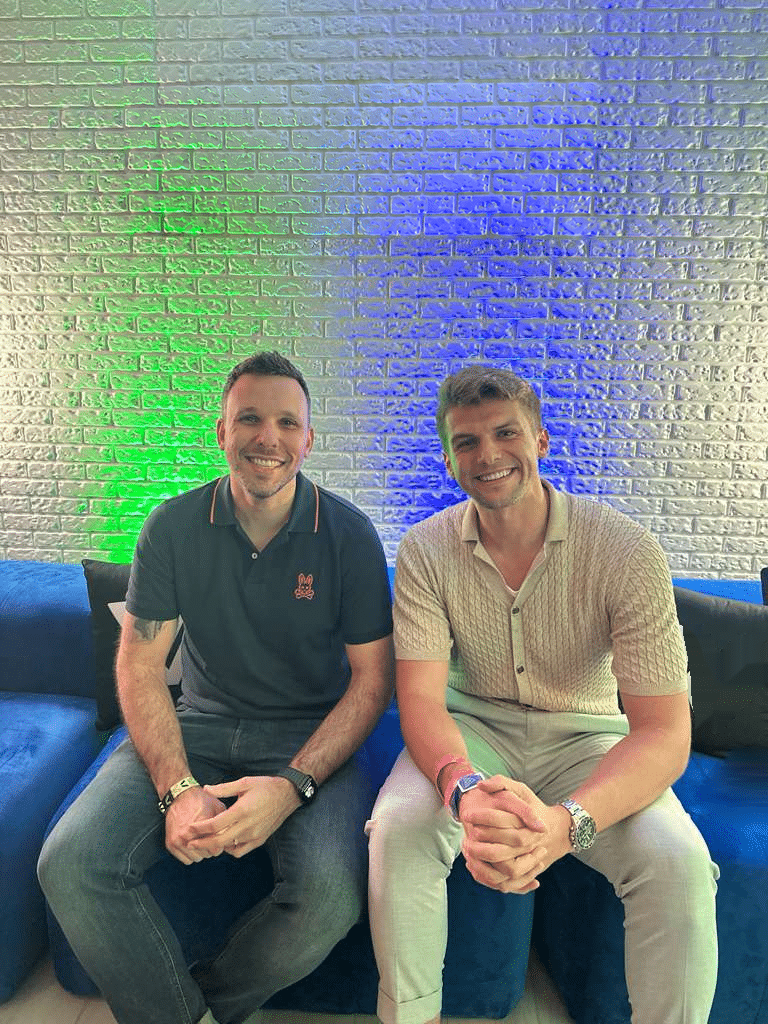
Photo: Fabio Gonçalves & Gabe Dannenbring (Viral Nation creato
Proven Communities Can Charge More While Repeat Partners Pay Less
Higher rates would go mostly to smaller and mid-tier creators in niches, Fabio says, while big names are paid for the face and the name. A brand that looks only at follower counts may decide a niche creator is not worth the price. Creators who can show that followers interact with them and believe in them can charge what they are worth, in his view.
Long-term deals pull the other way. “You don’t have to charge the same as you charge for one-off because you are a partner now,” Fabio says. The brand saves money over time, he adds, because it has a recurring relationship with a creator who matters to it. He has seen a couple of brands return for long-term work.
Campaigns Work Better When Brands Plan Longer and Give Creators Creative Freedom
One-off campaigns can deliver results, Fabio notes, but they rarely build the same level of trust, learning, and efficiency as a sustained creator partnership. He recommends using the same creator repeatedly, so the creator becomes someone relevant to the brand instead of a new face.
He also wants the standard briefing replaced with a question. “How can you talk with your community?” is how he frames the ask. Brands are finally learning that creative freedom helps, he says. “If they give creativity to the talent, the campaign works better.”
A celebrity can anchor a campaign and serve as the face used to boost ads, Fabio says, while long-tail creators drive the results. Follower counts still belong in the plan, alongside demographics such as gender, location and age, plus engagement.
A creator who underperforms should prompt the brand to ask whether it picked the wrong person or needs a longer run, such as a three-month campaign.
Fabio Expects a Followed-Only Feed to Favor Mid-Tier Creators and Strain Newcomers
Established creators would see their audiences filter toward people who like them, Fabio says, and mid-tier creators with engaged audiences stand to gain. “It will kind of favor them,” he says, since fewer followers would be there only because a recommendation reached them, and the creators would not have to fight for attention in a crowded feed. Broad adoption would produce more engaged audiences, he says, which is the signal brands look for.
Newcomers face the harder problem. “For the people who are starting, that’s the hardest part,” Fabio says, because a creator cannot be recommended to someone who has switched the algorithm off. He points to remarks he has heard from Instagram head Adam Mosseri that the platform wants shareable content, and expects new creators to start making things people send to friends.
He expects limited uptake among young users. “I think that young people will not,” he says, since they are used to scrolling no matter who posted. Parents and older users might opt out, though he stresses “we don’t know,” and he says that if such a rule were mandatory, wider adoption would be much harder. Advocates, he expects, will push for similar rules in other countries. A parallel is already in motion in the U.S., where Meta agreed in an August settlement with state attorneys general to let users under 18 choose a non-algorithmic feed.
Fabio Expects the Market to Mature Toward the Discipline of Traditional Media
Fabio expects money to spread across more creators instead of concentrating on whoever has the most followers. With fingers crossed, he expects budgets to keep rising, and he points to research on how many people buy after seeing a review. People also look for how-to videos, such as fixing a faucet, before reading a manual, he says. He does not expect the growth to stop. Fabio has worked on the internet since about 2000, and says whoever has the data has what a successful campaign needs.
He sees the market heading toward where traditional media was, with spend allocated by strategy and more fairly.
“Brands are starting to understand that creators are an extremely effective tool, but they have to be chosen wisely. You can’t just go and choose whoever you want,” Fabio says.
Subscribe to Our Newsletter
Check Out Our Podcast