







Influencer
The UGC Creator Who Earned Nothing From His First 100 Videos Now Picks Brands by How Fast They Spend
Tyler Shafer‘s first 100 videos on Trybe paid him nothing. Nine months after he started, the videos he films for brands on the creator marketplace have driven more than $1.5 million in sales, by his count, and on October 28, he left his corporate job to make them full time. He did it without an audience, in a model that pays creators only when brands run their videos as ads and those ads perform.
That model is performance UGC, and Trybe is one of the marketplaces built on it. Brands there pay creators a commission on the sales a video drives or a share of the ad spend placed behind it, and the videos run as paid ads, largely on Meta, instead of on the creator’s own pages. A creator can deliver a strong video and earn nothing if the brand never spends on it.
That arrangement shapes both how Tyler works and which brands get his time. He now makes 75 to 100 videos a week and treats each brand relationship as a shared bet. “Working with brands is a symbiotic relationship,” he says. “My end goal is to make a brand as much money as possible, and in turn I see rewards from it.”
The same view runs through the coaching sessions he now offers creators starting out on Trybe. He says he has no relationship with the company beyond being a creator on it.
The Unpaid Stretch Before the First Sale
Tyler started making UGC in February, with little sense of what the term meant. He found Trybe through Colin Reich, a creator he followed on Instagram, who posted that he was starting an agency built specifically for the platform. The post said, as Tyler recalls it, that “you can make money from your phone without any followers.”
“It honestly almost sounded too good to be true, but I gave it a shot anyway,” he says.
What kept him filming through the unpaid months was the work itself. “I had this creative side to me that I didn’t really know was in there,” he says. “It didn’t really feel like a job.” Others in the creator community he had joined were starting to earn, and he read that as a sign his turn was coming.
He says he never came close to stopping. “I knew in the back of my head at some point it was bound to happen,” he says. The quality that eventually paid, he says, came over time.
Why a Copied Winning Video Usually Fails
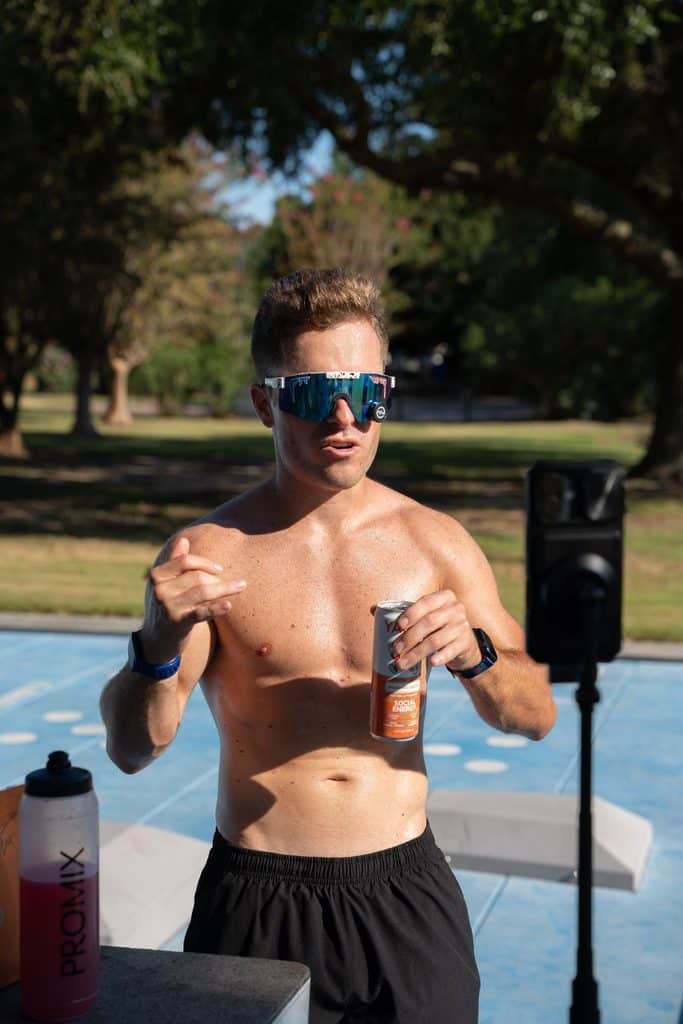
One video that earned Tyler more than $20,000 uses a format he says has worked across Trybe for months. It opens with “I unfortunately have to return this product,” then walks through the product’s ingredients and health benefits as reasons he is not returning it. Viewers, he says, are left wondering why. “I have to return it because I paid full price when I could have gotten this discount instead,” he says of the closing line.
Most new hooks come from his own head. When he hits a block, he scrolls Trybe’s ranking of its top 100 videos, the top formats inside individual brands, or Instagram. “If I’m scrolling on Instagram and something stops me, it’s probably a really good hook,” he says.
Borrowing a format is different from copying a video, and the second is the mistake he sees most. Creators lift the exact script and visuals, and the result falls flat. “Part of the reason why it works for the person who made that [winning] video is that it was theirs,” he says, with “their own little unfair advantages.”
His own edge is delivery. “Sometimes I feel like my scripts aren’t that good, but I have really good tonality,” he says. A copied video, by contrast, “just sounds like you’re trying to sell the product.”
Volume Earns the Chances, Quality Earns the Payout
Tyler says brands on performance platforms reward output first. “Volume for sure, but it can’t be crappy volume,” he says. More videos mean more chances for one to take off, but only if each still carries quality.
Most of his videos produce few sales. By his estimate, he gets paid for about a quarter of what he films, and that share carries the rest. “When you get that high scaling video, it really doesn’t stop,” he says. He applies the same arithmetic to flat fees. A $500 video sounds good until it makes a brand $10,000, at which point “I would realistically be missing out on a lot of commissions.”
When a video stalls, he changes little and iterates on the ones that work, keeping the idea but swapping the background or switching to green screen. He writes his own scripts without AI and films no more than two brands a day, one in the morning and one in the afternoon. “I feel like I can get more of a creative flow state if I just take it one brand at a time,” he says.
The Brands Worth Filming For Show Their Spend
Because his pay depends on a brand’s ad budget, Tyler vets brands before he films. He looks for weekly calls, practical advice, a look into the ad account, and ideas about what is working. After approval, he tracks how quickly a brand runs his video as an ad and whether it spends enough to give it a chance.
His worst experience involved a brand he declined to name. It worked well for a while, then videos sat pending, sample requests went unanswered, and the brand went quiet. Later, he says, it ran earlier videos off platform without telling creators. “That’s kind of where I drew the line,” he says, and he stopped working with it.
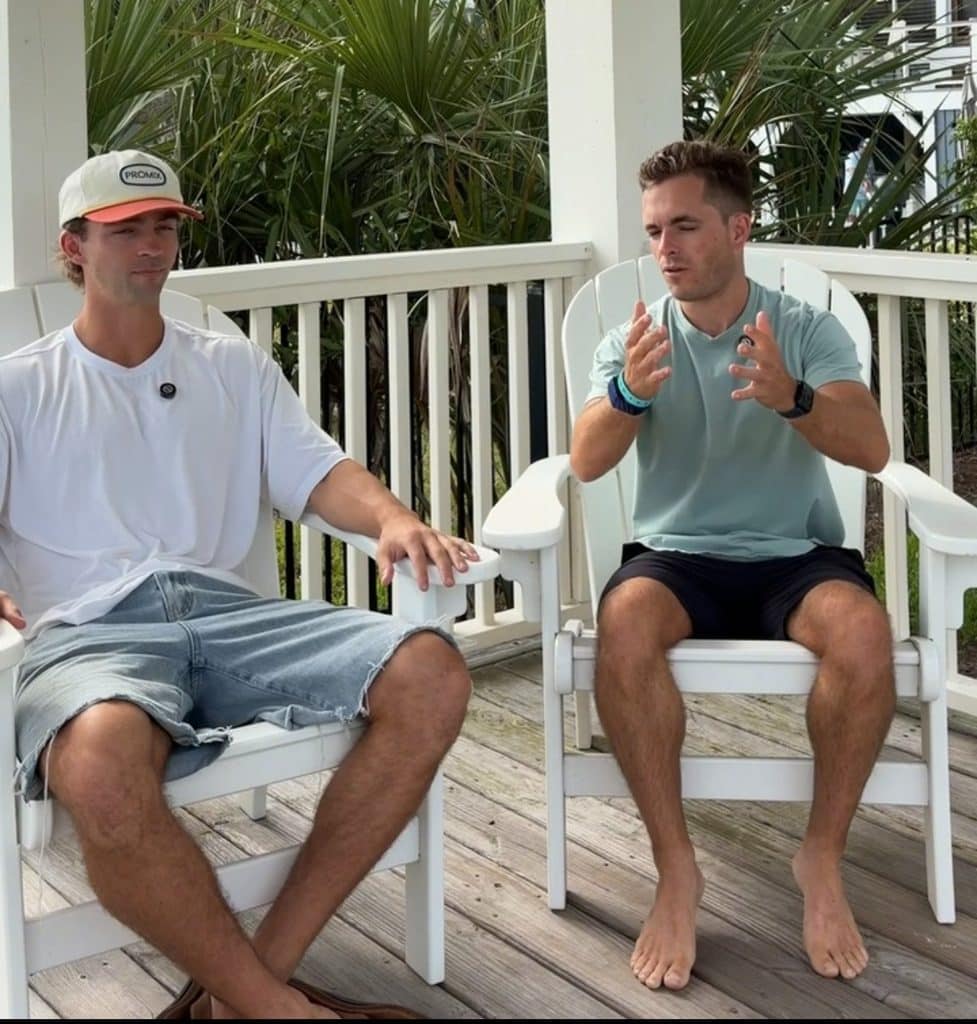
He describes most of his brands as solid and credits part of that to luck, since a creator joining a program has “no idea where it can go.” What earns his best work is communication. The brands that have paid off for him include Rythm Health, an at-home blood-testing company, AG1, and Promix, the supplement brand behind a product called Debloat.
Why He Quit in His Biggest Month
Performance pay also swings. Tyler recalls a month at about $23,000 followed by one that finished around $10,000 or $12,000. “Am I not even that good of a creator? Are my videos even good?” he remembers asking himself. He admits he had grown complacent after a strong month, though he concluded much of the swing was out of his hands.
The upswing came in October, which he says finished around $48,000. Much of it came from one brand paying creators 15% of ad spend, “a pretty high number for Trybe,” and from one video that “absolutely skyrocketed.” The brand had reached out to him by email, and joining its program early meant less competition from other top creators.
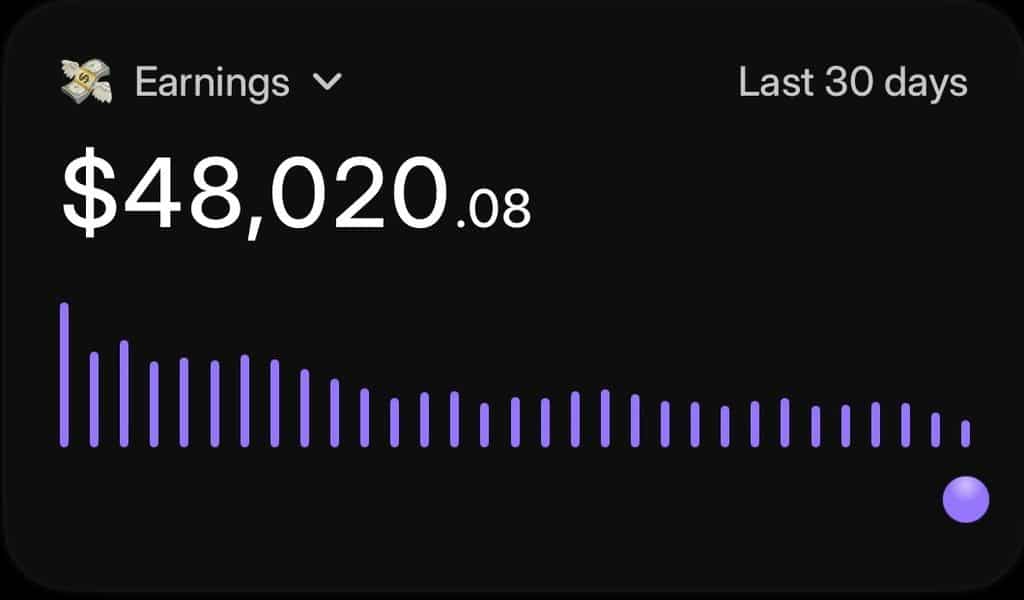
He left his job that month. He planned to quit in August as the company lost accounts and his boss was let go, but five days of remote work and one day in the office each week left room for UGC. Stress under new management settled it, along with a rule he set for himself. “If I’m not going to quit when I’m having a high-earning month, then I’m definitely not going to quit when I’m not,” he says.
Brands Are Shrinking Their Creator Programs
Tyler expects the next year to favor creators who have stayed with brands they like. Many brands on Trybe accepted too many creators at first, he says, and several of the programs he belongs to have already been cut in half. “Instead of having a thousand creators that do five videos each, they would rather have, I think, 50 creators that are doing 100, 200, 300 videos each,” he says.
He sees the shift as good for those who remain, since a smaller roster means more ad spend behind each creator’s videos. The brands keeping creators want volume and coachability, and he treats professionalism as part of the job, because brands spend their own money running videos creators submit for free.
That consolidation rewards the habit that carried him through his first 100 videos. He mentions launching a brand or expanding the coaching as possible next steps, and admits the workload brings occasional burnout. For creators still waiting on a first sale, his advice is the one he followed.
“Stick the course,” he says. “Know that the money is going to come, and the more reps that you do, the better you’re gonna get.”
Subscribe to Our Newsletter
Check Out Our Podcast