






Strategy
Selfie Leslie Let Mia Croft Design Its First Creator Collection, Betting Shoppers Can Tell the Difference

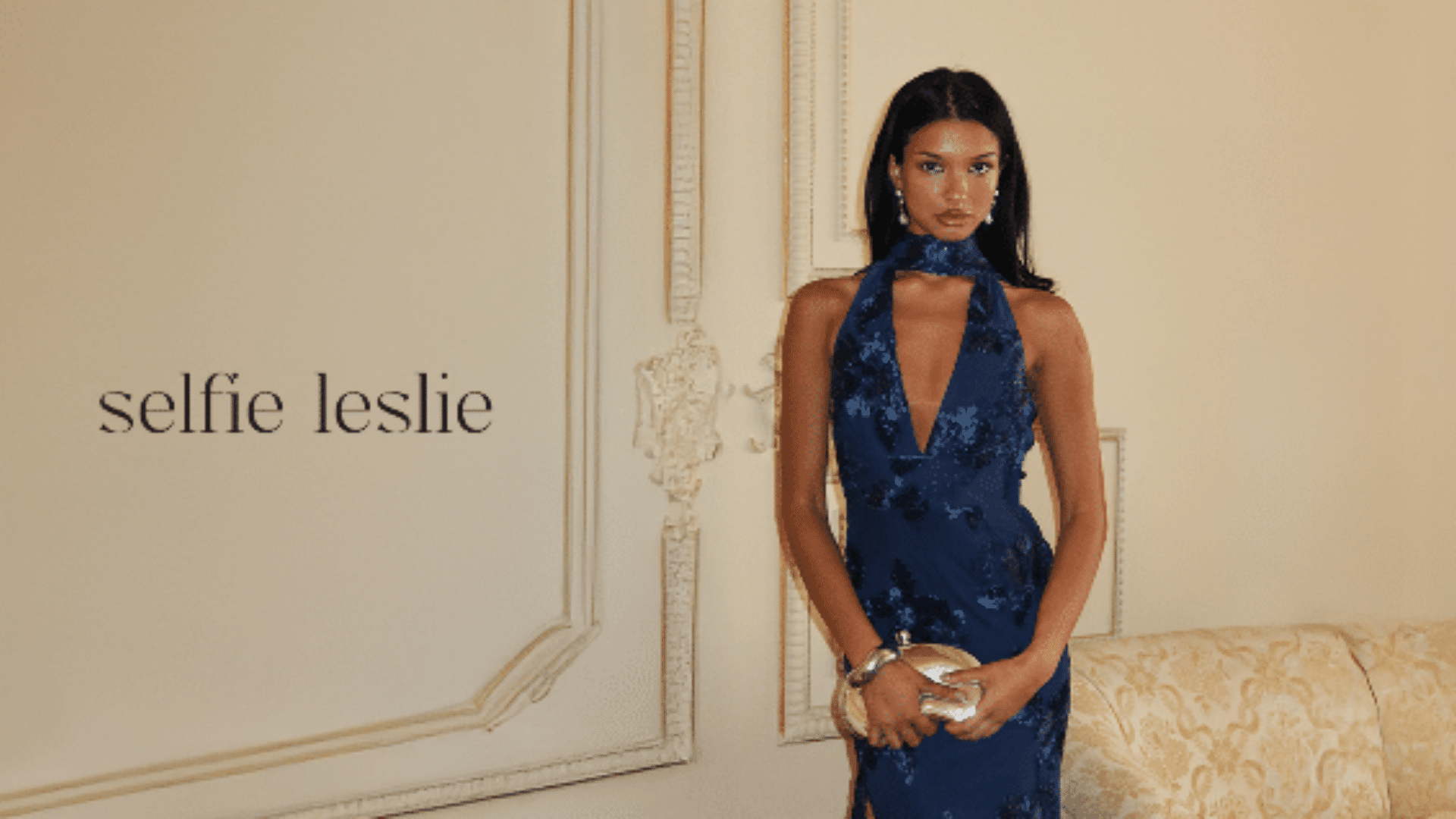
Selfie Leslie’s first influencer collection started with Mia Croft’s Pinterest boards. The label, which releases new styles every week, gave the Australian creator the design brief and reworked its own process around her notes, on the view that shoppers can tell when a creator actually made the clothes carrying her name.
That view comes from Lulu Davidson, Selfie Leslie’s PR and partnerships coordinator, who was handed the collection as her first project when she joined in June. “I think you can tell when the product is just another version of what the company’s always done,” she says.
The collection was released on the Selfie Leslie app on November 5 and online a day later. Selfie Leslie operates from Los Angeles and Sydney, where its head office sits, and its creator work had run on monthly gifted and paid partnerships, with talent picking pieces from a lookbook. That route was available for Mia.
The reason lies in who shops the brand. “When people come to Selfie Leslie, they want to feel feminine,” Lulu explains. The brand’s customer base is larger in the U.S. than in Australia, while Mia’s audience is the Selfie Leslie customer in Australia, so the collection had to win one market without shutting out the other.
Trend Calls Made Mia the Only Candidate
Finding a creator for that brief took no outreach. Mia was the pick from the start, which Lulu calls rare. The idea came from a March campaign shoot, before Lulu joined, where the team watched Mia take over her own styling.
For Mia, the day settled the fit. “These girls back me. They like me. I like them. I like the clothes. This is going to work,” she says.
Lulu gives two commercial reasons. Mia keeps to recurring formats, including kitchen videos that often go viral and always center on what she is wearing, and her followers go to her page to buy those outfits. “She’s consistent; people know what they’re getting from her,” Lulu says.
The second is trend forecasting. Selfie Leslie usually builds its weekly drops on U.S. trends, though Lulu argues the U.S. often follows trends that start in Australia. About five months before launch, Mia predicted aqua would be the color of the Australian summer, a call Lulu says has since played out in local stores. Both reasons describe a creator whose taste already sells clothes, which is what the brand then asked her to put on paper.
Mia’s Pinterest Boards Became the Design Brief
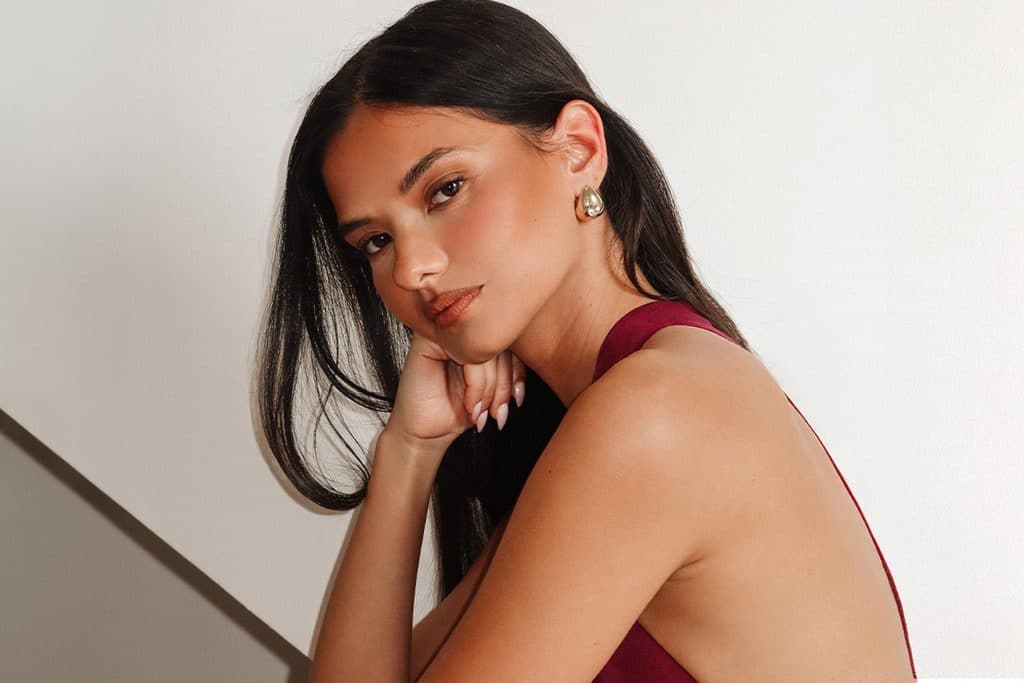
Putting it on paper started with meetings where the team went through Mia’s Pinterest boards and asked for colors, materials, swatches, and draping references, which she turned into mood board after mood board.
The designers returned first sketches within about five days, according to Lulu, and Mia marked them up with notes on necklines, hem lengths, and fabric. “There was so much involvement, and I think that’s what makes it so unique,” Lulu says. “I don’t think a lot of brands actually do that.”
“I chose colors that complement every skin type and skin color,” Mia says. On the Beverly Draped Maxi Dress, she asked for more draping at the front. “I wanted to add more draping effect so it would make it more elevated,” she explains.
Her role in design and content was written into her contract, and she chose among four or five versions of her own signature for the collection’s logo. The result departs from the house style. Lulu describes it as sexier and more slim-fitting than Selfie Leslie’s usual ruffled maxis, with lower necklines and shorter minis, and believes a shopper could spot Mia’s hand even with her name removed.
Co-Design Slowed a Weekly-Drop Process
That input landed on a design team used to choosing its own designs. Lulu says the collection brought about 10 more voices into the process than usual, which slowed it down, and every element had to align with Mia, down to the shoot location.
Fittings followed the same route. Lulu and the brand’s PR and social media manager flew to Mia’s Brisbane apartment with the first samples and fitted them on her. “We didn’t just send her the product; we got to see her try it on with her manager as well,” Lulu recalls.
To fit the weekly calendar, the team estimated a ready date and held a firm timeline over roughly the final three months. “It wasn’t impossible with the weekly-drop process, but it definitely was different for us,” Lulu says. The other hard part, in her account, was selling one collection into two markets heading into opposite seasons.
The Range Had to Sell Into Two Seasons
Mia’s collection launched into a hot Australian summer, but Selfie Leslie also sells it in the U.S. ahead of the holidays. The team told Mia it would add wine colors for the American winter and include the Beverly Maxi, which Lulu ties to U.S. holiday parties, prom and graduation.
“The markets are genuinely different,” Lulu says. In her account, American shoppers favor maxis, ruffles and prints, while Australian customers like color blocking.
The collection’s namesake dress came from the brand’s side. An in-house designer drew it in the ruffled house style without a brief from Mia. She asked for a lower halter neckline and a floor-length hem; the team made it in chocolate, and she named it after herself. “It was important, in retrospect, for us to make sure that we weren’t completely excluding our usual customer base from the style that they love and know,” Lulu says.
Early sales follow the split. According to Lulu, the aqua Gabby Maxi and aqua Grace Batwing Mini are the two best sellers, with aqua styles tripling other products’ sales, while the wine colors and the Beverly are selling in the States. American influencers have also approached her about the collection, including one with 2 million followers who requested a partnership featuring the Beverly Maxi.
In figures the company shared for Nov. 2 to Nov. 8, labeled as CRM results, U.S. revenue rose 130% and sessions 165% against the week before launch, compared with 42% and 27% in Australia. The larger lift came in the market the brand added the Beverly and the wine colors for.
Mia Promoted the Collection Past Her Contract
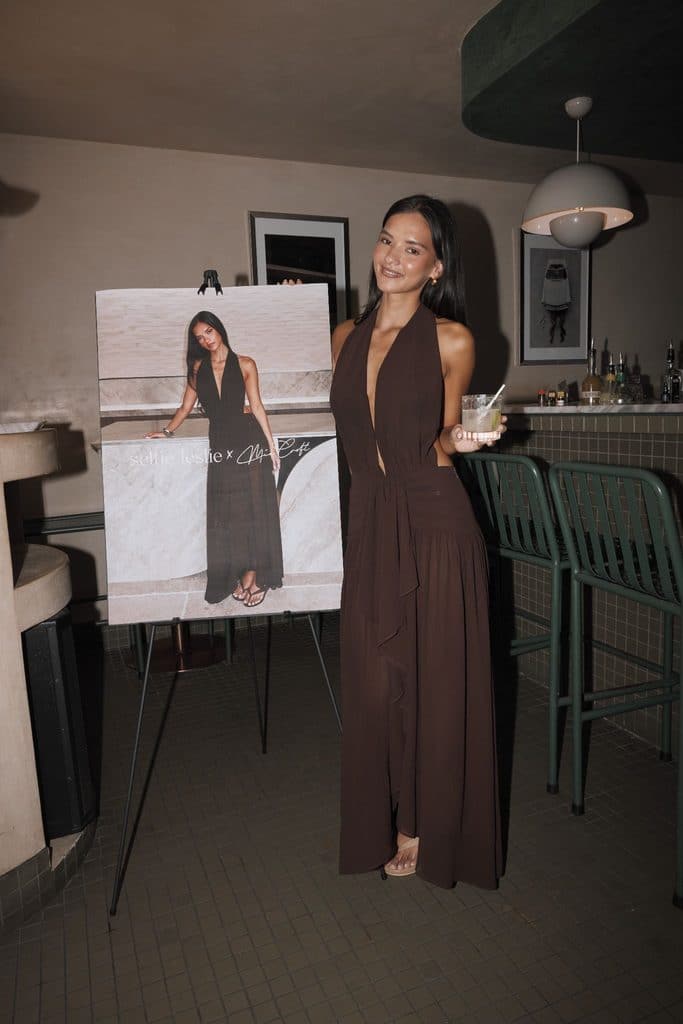
Product is one signal shoppers read. The other, in Lulu’s view, is how hard the creator promotes. Mia’s contract set posting deliverables, and Lulu says she went well beyond them, choosing the launch venue, guiding the cake and building the guest list. She also agreed to give the full collection away to one person in Australia, which her contract did not require.
By Lulu’s count, Mia reposted over 50 stories featuring the collection within 72 hours of launch. “That’s really annoying for people to watch, and she didn’t care because she loved it and she was excited,” Lulu says. “That’s how you know.”
Before launch, the brand spent two to three weeks introducing Mia to its own shoppers on its homepage, Instagram, and emails. During launch week, organic social sales on Selfie Leslie’s TikTok account rose 128% week over week, and engagement rates rose 30% on both TikTok and Instagram, according to company figures.
Lulu argues those signals matter because shoppers study partnerships closely, pointing to comment threads that dissect marketing roundups slide by slide. “I really think audiences know more than brands and creators want to let on,” she says.
Selfie Leslie Is Counting on the Relationship for a Sequel
Whether Selfie Leslie repeats the model is still open. Lulu says the team has not locked in any partner collections yet and is waiting on customer feedback, though she would like to work with Mia again.
The brand did not sign Mia to a 12-month exclusive, a term Lulu personally opposes because working across brands is how creators earn a living. Its hold rests instead on the relationship the collection built, which ran through a group chat active about 20 times a day, and Lulu believes Mia would rather return than take the format elsewhere. Her advice to brands is to pick creators they get along with and invest time in them.
“When you are having fun, and when they’re having fun and when it doesn’t feel like work, you will get better work from them,” Lulu says. “You’ll get better content, you’ll get better designs, you’ll get better everything.”
Subscribe to Our Newsletter
Check Out Our Podcast