



Strategy
Paris Creator Week Adds M&A Track as Investors Seek Creator Businesses in Europe

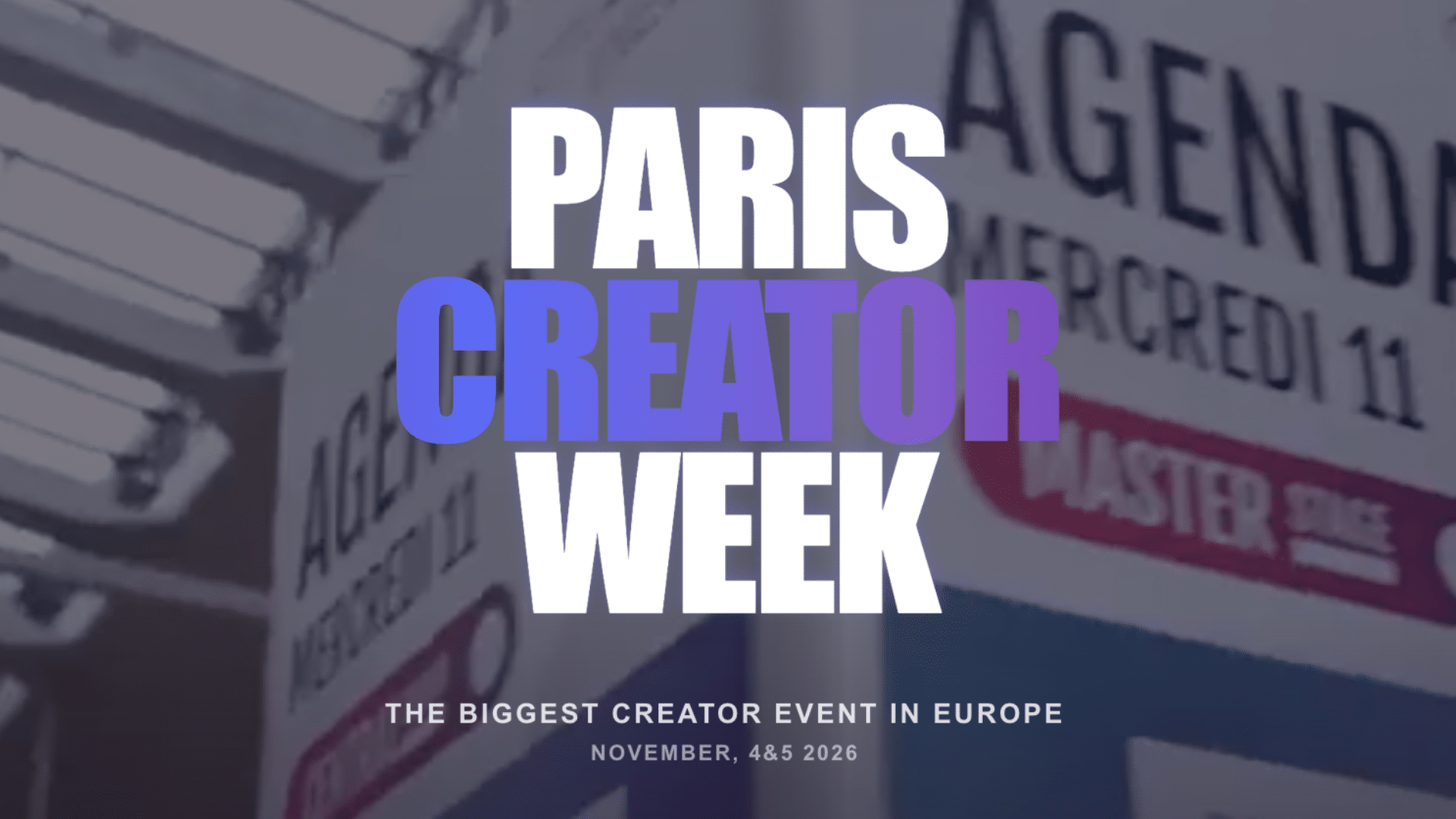
Paris Creator Week has added an M&A and investment track this year as investors look to buy into creator businesses and, in Europe, find few to buy, says co-founder and General Manager Pierre Allary. The third edition, on November 4 and 5, is built on the premise that creators have become entrepreneurs.
That is the change Pierre sees between the event’s first edition and this one. Creators “really emerge as an entirely independent, economic entity,” he says. He formed that view as a partner of “Jokariz,” a YouTube channel that interviews people about their dream jobs, through which he met creators who were “entrepreneurs at core but didn’t know how to build companies.”
Paris Creator Week, which he co-founded in 2023, is his answer. Pierre describes the program as a path “from upload to exit,” and says creators make up about a third of attendees and brand marketers another third. A further group, which he calls the ecosystem, covers anyone making money in the chain of content, from tool makers to agencies.
Pierre says that mix suits creators because they are “usually solopreneurs” who work alone. The event gives them two days to meet peers and potential partners in a professional setting. “We don’t have, today, a lot of places to meet and actually do business,” he says. Four tracks structure the program, and the first is built around that idea.
Creators Are Treated as Entrepreneurs From First Upload to Exit
The first track covers “how to start, how to grow, how to fund, how to exit,” and it is aimed at creators who want to run companies. The event lists brand deals and live shopping among the topics. A second track covers how brands select and work with creators, and a third follows content from idea to broadcast across podcasts, newsletters and video.
Pierre has a session with Tibo InShape, a fitness creator with more than 50 million followers. Tibo started a supplement company and now partners with established entrepreneurs to run it. Pierre plans to ask Tibo about his mistakes and about the do’s and don’ts of “launching a business, growing a business, and then partnering with people.”
The fourth track looks ahead. Pierre notes it takes up the role of creators in elections and whether creator-entrepreneurs have social status and legal protections.
The M&A Track Addresses How to Value, Sell and License Creator Businesses
“There’s a lot of M&A going on in the U.S. market,” Pierre says. “It’s starting in Europe.” Creator-led companies are starting in large numbers, he says, mostly in food and clothing, and investors are looking to acquire them as well as software tools and agencies. He cites a kombucha recently launched in France and crisps from the creators behind “McFly et Carlito.”
Pierre argues that people need to be educated on how such deals work. “Is there a key man risk with the content creator?” he asks. Other questions include how to value a company, how to evaluate a YouTube channel, and whether a channel can be sold or its content licensed.
Pierre co-produced the track with Quartermast and ties it to his own line of business, “creating business out of content.” He frames the demand as part of a wider shift. “This is just a global movement of the industry being professionalized,” he says.
‘ScreenTube’ Focuses on the Convergence of Legacy Media and the Creator Economy
The “ScreenTube” track focuses on new formats and the convergence of legacy media (television, press, etc.) and the Creator Economy. It asks how those former business models fit with the creator economy.
“Who drives the content? Who drives the sponsoring?” Pierre asks. He also wants to know how people invest in brand content and how the contest for attention and financing plays out.
Pierre frames the answer as convergence. “They are inspiring each other,” he says, and he wants the event to be “a positive actor” in that merging of the two worlds.
Platforms Arrive With Their Own Agendas and a Shared Interest in Growth
Pierre says all of the platforms are partners this year, among them YouTube and TikTok. Twitch CEO Dan Clancy and YouTube Shopping General Manager and Vice President Travis Katz are on the speaker list. Pierre wants executives to address “how does platform think? What are the challenges they are living?”
“Everybody has their own agenda,” Pierre notes, and the platforms know they operate in similar territory. The event follows an editorial line, as a media outlet would, and brings them to a common table to discuss topics the organizers choose.
Pierre sees a shared incentive. “We all want this economy to grow,” he says, arguing that participants in a growing economy have reason to “pool the resources” and make the industry more relevant.
The Program Treats AI as a Tool and Asks Where It Pays Off
“Everybody wanted to talk about AI, and I never wanted AI to be a central topic,” Pierre says. He says too many conferences have been built on the question “is AI an opportunity or a menace for the Creator Economy?”
Pierre wants the sessions to ask where AI is profitable, where it is dangerous, and who it helps, along with how brands can use it for social listening. He also wants to examine whether AI produces “the rise of small creators or the acceleration of the big ones.”
The program also takes up public funding for creative industries in France, which Pierre counts among its more touchy topics. “Who gets that funding and how do they get it?” he asks.
Attendance Growth Follows a Shift From a French Crowd to an International One
The event expects 8,000 attendees this year, up from 4,600 at the 2025 edition at Station F. The first edition drew a crowd that was entirely French, Pierre says. More than a third of this year’s audience comes from abroad, he says, and he is aiming for an even split next year.
In-person demand rises as work moves online. “People are more and more disconnected from everything,” Pierre says, and creators make content “for people you never meet.” He adds that a study the event plans to release shows the creator economy accelerating.
Reaching beyond France was the hardest part, Pierre says, because influence is local. “You know very well your local influencers, you know very well the super big ones, but you know very little in between,” he says. “And we are right in between.”
The team rents a bare shell at the Grande Halle de la Villette and builds out everything itself. The previous venue was too small for attendees and for partners that wanted larger booth spaces, and the new one has room for food courts, B2B areas and interview rooms. Pierre calls “building an event from the ground up in 24 hours” a challenge he underestimated.
Pierre Wants the Event to Reach Politicians and Investors and Become a Fixed Date
The “Society” track carries a goal beyond the conference itself. Pierre says it exists to have an impact on creators’ lives, and he wants to use the gathering to send messages to politicians, investors and others.
That aim rests on Pierre’s view of “the industry being professionalized,” emphasizing again that the people working in it rarely get the opportunity to talk to one another, and that the event exists to put them in one room.
Pierre wants the event to be a fixed entry in the industry’s calendar for next year. “All the creators are there, all the brands are there, all the platforms are there, and everybody talking about the creative economy is there,” he says.
Paris Creator Week runs Nov. 4 and 5 at the Grande Halle de la Villette in Paris. Tickets and the full agenda are at www.pariscreatorweek.com.
Subscribe to Our Newsletter
Check Out Our Podcast