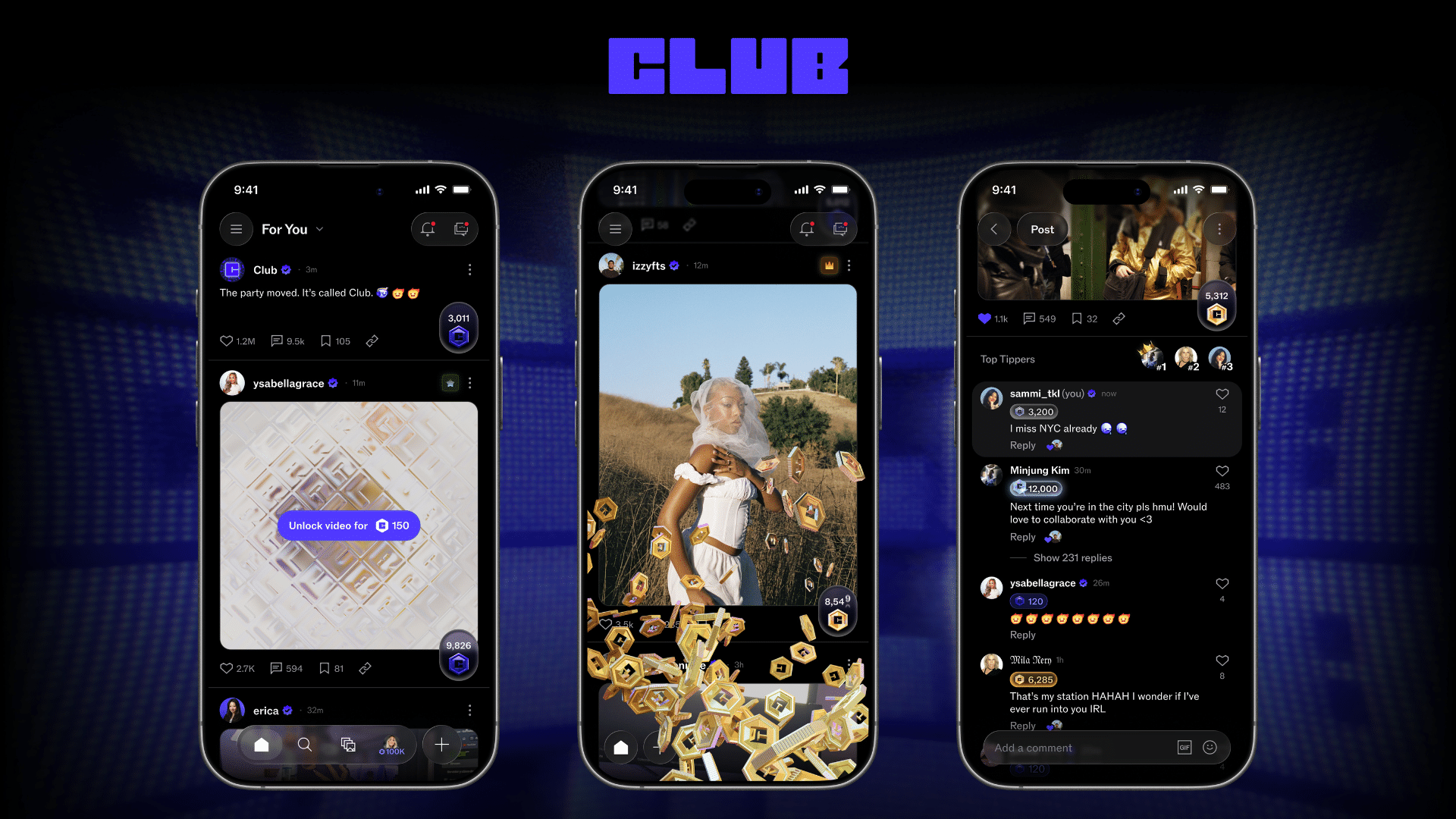
Club, a New York-based platform that launched its mobile app this month, is betting creators want one place to run their businesses instead of piecing together separate tools for monetization, community, and engagement.
Henrik Pohlmann, Club’s co-founder and CEO, is approaching that argument as an engineer. His background is in data science and software engineering, not talent management or Influencer Marketing, and he remains closely involved in the product. A University of Virginia graduate, Henrik leads day-to-day operations at a platform co-founded with Bijan Tehrani and Ed Craven, who also co-founded livestreaming platform Kick and crypto casino Stake.
“Club brings together content, community, and monetization in one place, giving creators more ways to grow and build businesses around their audiences,” Henrik says.
The platform emerged from a beta period that, according to the company, attracted more than 118,000 registered users without paid marketing. Club combines subscriptions, tipping through its ClubCash system, premium content unlocks, paid direct engagement, and built-in discovery. The company acquired the domain Club.com for $10 million, a purchase that frames the brand as something more durable than a feature set attached to Kick’s existing user base.
The Toolchain Creators Already Use Is the Problem Club Is Tackling
Henrik frames creator monetization fragmentation as an architectural inefficiency. The standard setup for a mid-tier creator (a subscription platform, a community platform, and a link-in-bio tool routing traffic between them) produces multiple fee structures and audience handoffs at every step.
“Most creator platforms require creators to stitch together multiple products and send audiences across different services,” he says. “Club brings discovery, subscriptions, tipping, premium content, direct engagement, and community together in one ecosystem, making it easier to grow an audience and monetize without relying on external tools or algorithms.”
Club is designed to help creators grow inside the platform as well. “Rather than relying solely on existing audiences, creators benefit from built-in discovery alongside subscriptions, premium content, and direct engagement tools that help strengthen relationships with their communities over time,” Henrik notes.
On ClubCash tipping, Club takes 20%, and the creator keeps 80%. The same founding team gives creators 95% on Kick. “They’re fundamentally different products and business models,” Henrik says. “Club brings discovery, community, and multiple monetization tools into one platform, and we don’t rely on advertising.”
The Kick and Stake Question
Club’s co-founders built Kick as a livestreaming alternative to Twitch and Stake as a crypto gambling platform. Kick in particular has faced scrutiny over content moderation practices. Creators evaluating Club as a primary income source encounter that history before they reach the product.
“Club is an entirely separate company based in the U.S., with its own team, platform, and mission,” he says. “While we share some investors with Kick, Club was built independently for the broader Creator Economy.”
Tehrani and Craven are described as advising rather than operating. “Bijan and Ed are kept informed on our objectives and direction and provide feedback from time to time, but the day-to-day is really driven by me and the team,” Henrik says.
Gamification as Community Infrastructure
Club’s engagement layer includes streaks, achievements, stickers, and an Easter egg for maxing out a tip. The mechanics are familiar from gaming environments and gambling products.
Henrik frames them as participation and retention tools. “For Club, these features are about encouraging participation and making communities feel active and rewarding,” he says. “The goal is to strengthen engagement between creators and their audiences, rather than make the experience purely transactional.”
Discovery and Communities as the Platform’s Next Layer
Henrik’s stated near-term priorities are expanding customization options, achievement tools, and participation mechanics. His broader thesis is that creators are moving toward sustained community businesses rather than one-off revenue opportunities. “Creators are increasingly looking for sustainable businesses rather than one-off revenue opportunities,” he says. “We believe that’s where the Creator Economy is headed.”
Club reports its 118,000 registered users came through word of mouth, which Henrik cites as a signal the model can sustain itself past beta.
“Club was built to help creators turn their audiences into sustainable businesses,” Henrik says. “By bringing discovery, community, and monetization together in one platform, we’re giving creators more ownership over how they grow, engage, and earn.”
Tamara is a writer, editor, and project manager passionate about using storytelling to inspire awareness, connection, and positive change. With years of experience leading creative teams, developing global campaigns, and producing award-winning visual and written stories.
As Impact Storytelling Manager at Photographers Without Borders, Tamara managed an international team of writers, designers, and photographers, coordinating content creation, editing, workshops, and grant programs focused on social and environmental impact. Her work as a freelance travel writer for Static Media's Islands further sharpened her research and editorial skills while deepening her understanding of global tourism, culture, and sustainability.









Club, a New York-based platform that launched its mobile app this month, is betting creators want one place to run their businesses instead of piecing together separate tools for monetization, community, and engagement.
Henrik Pohlmann, Club’s co-founder and CEO, is approaching that argument as an engineer. His background is in data science and software engineering, not talent management or Influencer Marketing, and he remains closely involved in the product. A University of Virginia graduate, Henrik leads day-to-day operations at a platform co-founded with Bijan Tehrani and Ed Craven, who also co-founded livestreaming platform Kick and crypto casino Stake.
“Club brings together content, community, and monetization in one place, giving creators more ways to grow and build businesses around their audiences,” Henrik says.
The platform emerged from a beta period that, according to the company, attracted more than 118,000 registered users without paid marketing. Club combines subscriptions, tipping through its ClubCash system, premium content unlocks, paid direct engagement, and built-in discovery. The company acquired the domain Club.com for $10 million, a purchase that frames the brand as something more durable than a feature set attached to Kick’s existing user base.
The Toolchain Creators Already Use Is the Problem Club Is Tackling
Henrik frames creator monetization fragmentation as an architectural inefficiency. The standard setup for a mid-tier creator (a subscription platform, a community platform, and a link-in-bio tool routing traffic between them) produces multiple fee structures and audience handoffs at every step.
“Most creator platforms require creators to stitch together multiple products and send audiences across different services,” he says. “Club brings discovery, subscriptions, tipping, premium content, direct engagement, and community together in one ecosystem, making it easier to grow an audience and monetize without relying on external tools or algorithms.”
Club is designed to help creators grow inside the platform as well. “Rather than relying solely on existing audiences, creators benefit from built-in discovery alongside subscriptions, premium content, and direct engagement tools that help strengthen relationships with their communities over time,” Henrik notes.
On ClubCash tipping, Club takes 20%, and the creator keeps 80%. The same founding team gives creators 95% on Kick. “They’re fundamentally different products and business models,” Henrik says. “Club brings discovery, community, and multiple monetization tools into one platform, and we don’t rely on advertising.”
The Kick and Stake Question
Club’s co-founders built Kick as a livestreaming alternative to Twitch and Stake as a crypto gambling platform. Kick in particular has faced scrutiny over content moderation practices. Creators evaluating Club as a primary income source encounter that history before they reach the product.
“Club is an entirely separate company based in the U.S., with its own team, platform, and mission,” he says. “While we share some investors with Kick, Club was built independently for the broader Creator Economy.”
Tehrani and Craven are described as advising rather than operating. “Bijan and Ed are kept informed on our objectives and direction and provide feedback from time to time, but the day-to-day is really driven by me and the team,” Henrik says.
Gamification as Community Infrastructure
Club’s engagement layer includes streaks, achievements, stickers, and an Easter egg for maxing out a tip. The mechanics are familiar from gaming environments and gambling products.
Henrik frames them as participation and retention tools. “For Club, these features are about encouraging participation and making communities feel active and rewarding,” he says. “The goal is to strengthen engagement between creators and their audiences, rather than make the experience purely transactional.”
Discovery and Communities as the Platform’s Next Layer
Henrik’s stated near-term priorities are expanding customization options, achievement tools, and participation mechanics. His broader thesis is that creators are moving toward sustained community businesses rather than one-off revenue opportunities. “Creators are increasingly looking for sustainable businesses rather than one-off revenue opportunities,” he says. “We believe that’s where the Creator Economy is headed.”
Club reports its 118,000 registered users came through word of mouth, which Henrik cites as a signal the model can sustain itself past beta.
“Club was built to help creators turn their audiences into sustainable businesses,” Henrik says. “By bringing discovery, community, and monetization together in one platform, we’re giving creators more ownership over how they grow, engage, and earn.”
Subscribe to Our Newsletter
Check Out Our Podcast