Influencer
Lola Torres Built a Fashion Business by Choosing Affiliate Income Over Brand Deals

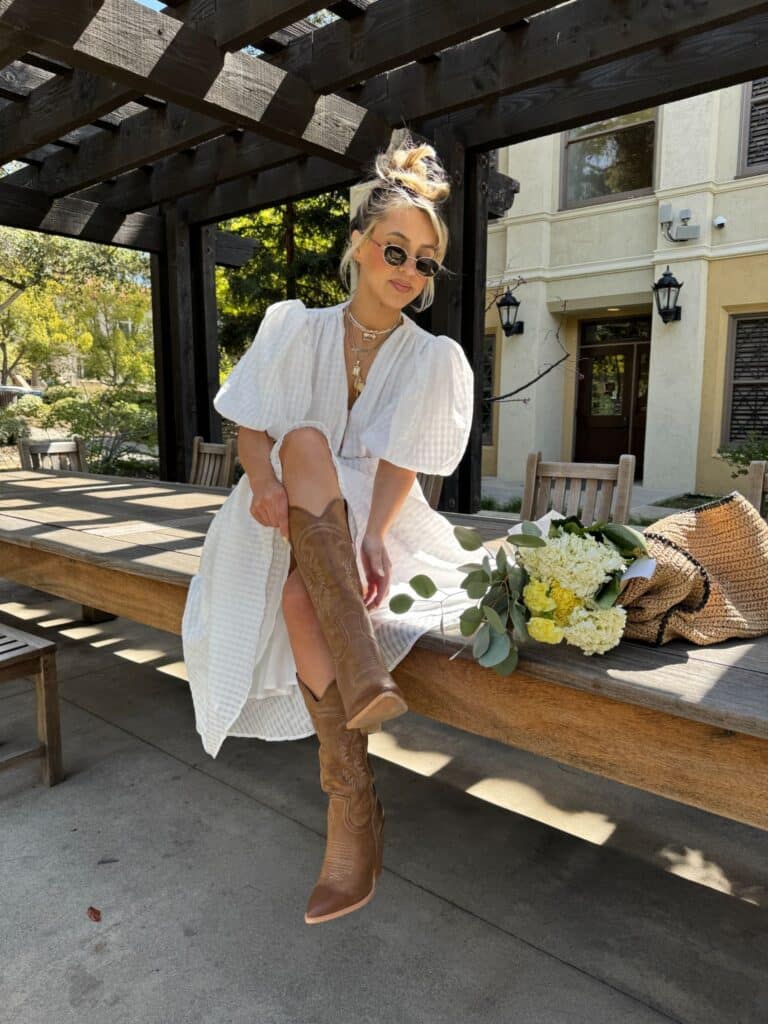
Ask Lola Torres what she does for a living, and she will tell you she is in sales. While millions know her as a content creator, Lola views content as the way she serves her audience, and sales as the engine that drives her business. Sales. “I am selling clothing and lifestyle and outfits and a vision to women of many ages,” she says. It is an unusually direct answer from someone in an industry that has spent years crafting more aspirational language for itself, and it is also the clearest signal of how she built her business.
Maria “Lola” Torres has spent about six years developing a fashion and beauty platform centered on everyday outfit inspiration, with a particular focus on petite and curvy styling. Her Instagram account, @im_lola__, counts roughly two million followers. Her TikTok presence has passed a million. She has brand partnerships, a talent manager at Link Management, and an Amazon Storefront designation as a Top Creator. But the business she built first, the one that persuaded her to leave full-time employment, runs primarily through LTK, where her storefront has accumulated more than 550,000 followers.
“I’m a big believer in affiliate marketing,” Lola says. “I think that as a business owner, you have a lot more control over your revenue, your income.” She is quick to add that she values her brand partnerships, but the distinction matters to how she has built her business. “Unfortunately, there are highs and lows in this industry,” she says. “Sometimes, brands want to work with you; sometimes they don’t. And so you’re at the mercy of these brands.”
Before the Content, There Was a Career
Lola came to content creation by a winding route. For the first 17 years of her life, she worked as a child actor, appearing in commercials and television productions on a schedule that largely replaced conventional schooling. In her early twenties, she trained to become a teacher. A stint at the corporate level of a franchise chain company followed.
Social media was not a plan. It became one incrementally, beginning around 2021, when she started posting with enough consistency to see real results. The first signal was financial. The first month Lola earned three times her regular salary through content, she recognized that something had changed.
“The very first month that I exceeded my regular job’s pay threefold, I knew I was like, oh shoot, okay, I think this is going to be something,” she says. Even then, she did not resign. She continued working full-time alongside her content for roughly two years, unwilling to leave until the income had proven itself over time.
“It’s a very difficult decision to make, and I didn’t want to be impulsive in any way,” she says. “I didn’t want to make a wrong move.” It was not until she had exceeded her previous salary consistently, month after month, that she made the shift.
The Argument Against Making Brand Deals Your Foundation
Many creators at her scale treat brand partnerships as the primary revenue pillar and affiliate income as supplementary. Lola structured it the other way around from the start, and she has maintained that priority.
Her reasoning is structural. Brand deals introduce a volatility that affiliate income does not. A partnership can end. When it does, the revenue tied to it ends with it. Affiliate income, by contrast, is tied to her own content and her own audience.
She remains grateful for the brand relationships she has, but she does not build around them. “I have felt the sting of it,” she says, referring to the cycles where brand interest slows or pauses.
What she also found is that affiliate income does not stay passive in practice. “The downside of affiliate marketing is that you are always having to work,” she says. “Even being one week off and not working enough for one week, you’ll see a decline in your income.”

Audience and Customer Are Not the Same Thing
Lola draws a firm distinction between her Instagram presence and her LTK storefront. “Instagram is my audience,” she says. “LTK are my customers.”
The platforms receive different content. On Instagram, Lola posts outfit reels calibrated to reach a broad range of women, content designed to perform well at scale. On LTK, she posts exclusive material, more day-to-day outfit ideas, and shopping-oriented content aimed at the subset of her audience that has already indicated an intent to buy.
She has also begun using Meta’s ad tools to extend the reach of her best-performing organic posts, targeting women outside her existing follower base without creating additional content from scratch. “I’m taking my organically best-performing content, content that’s doing well on its own without any money into it, and then I’m creating an ad to target a larger audience,” she explains.
The proliferation of retailer-built creator programs is something she regards with pragmatism rather than enthusiasm. Lola has signed up for many of them over the years and has a structural critique of how they are built. “A lot of these retailers are trying to launch these storefronts without putting enough time, effort, and probably even money into them to really perfect them,” she says. Her operating response is not to disengage but to stay distributed. “You do not put your eggs in one basket. Never.”

The Work Behind the Shoppable Reels
Lola organizes her production week around three shoot days, each running roughly two and a half hours. An assistant tracks incoming orders on the backend and links product information before filming begins, so nothing has to be located manually after the fact. Once items arrive, they are unboxed, steamed, and arranged on racks. Lola then pulls looks herself, often late at night. “That’s kind of the favorite part of my process,” she says.
The question of what to actually film is guided primarily by real-life occasions rather than trends or partnership calendars. “I am choosing ideas that cater to a broad audience of women,” she says. Teachers who need to move through a classroom, women heading to a 9-to-5 job, and someone planning a date night or a brunch with friends. The approach reflects who she imagines on the other end of the camera, someone hardworking and building toward something beyond herself. “Most importantly, someone who is working for the future of her family,” she says.
Presentation is not incidental to the business. “Having my hair and makeup done and having a whole look and being presentable, I think, is appealing to the eye,” she says. Aesthetics, she argues, are not separate from the content strategy. They are part of what keeps viewers watching.
What Six Years Teaches You About the Long Game
Lola has begun looking beyond affiliate income and brand partnerships toward a product line of her own. The reasoning is consistent with the logic that has guided her business from the start: her years of affiliate marketing have given her considerable insight into exactly what her audience wants but struggles to find.
“Over the years, I’ve had the opportunity to recommend so many incredible products,” she says. “I’ve learned exactly what my audience loves, what they struggle to find, and what they value. Launching my own brand feels like a natural next step.”
She is also thinking about the duration of her career in ways that many creators publicly avoid. The assumption that a creator career has a built-in expiration date is one she dismisses. “I think we’re well past the point where this is just a trend,” she says. “Content creation has become a real career, and like any career, it evolves. People of all ages want to feel represented, and today, everyone is consuming content.”
For Lola, longevity rests on the same principle that shaped her entire revenue model. “The best affiliate marketing doesn’t feel like marketing at all,” she says. “It comes down to trust. If you’ve built a genuine relationship with your audience and you’re recommending products you truly love and use, everyone wins.”
Subscribe to Our Newsletter
Check Out Our Podcast