Artificial intelligence has moved deeper into creator marketing, taking on work from creator discovery and vetting to reporting, research, outreach, and campaign administration. But as more of the workflow becomes automated, practitioners are drawing different boundaries around the decisions they still want people to own.
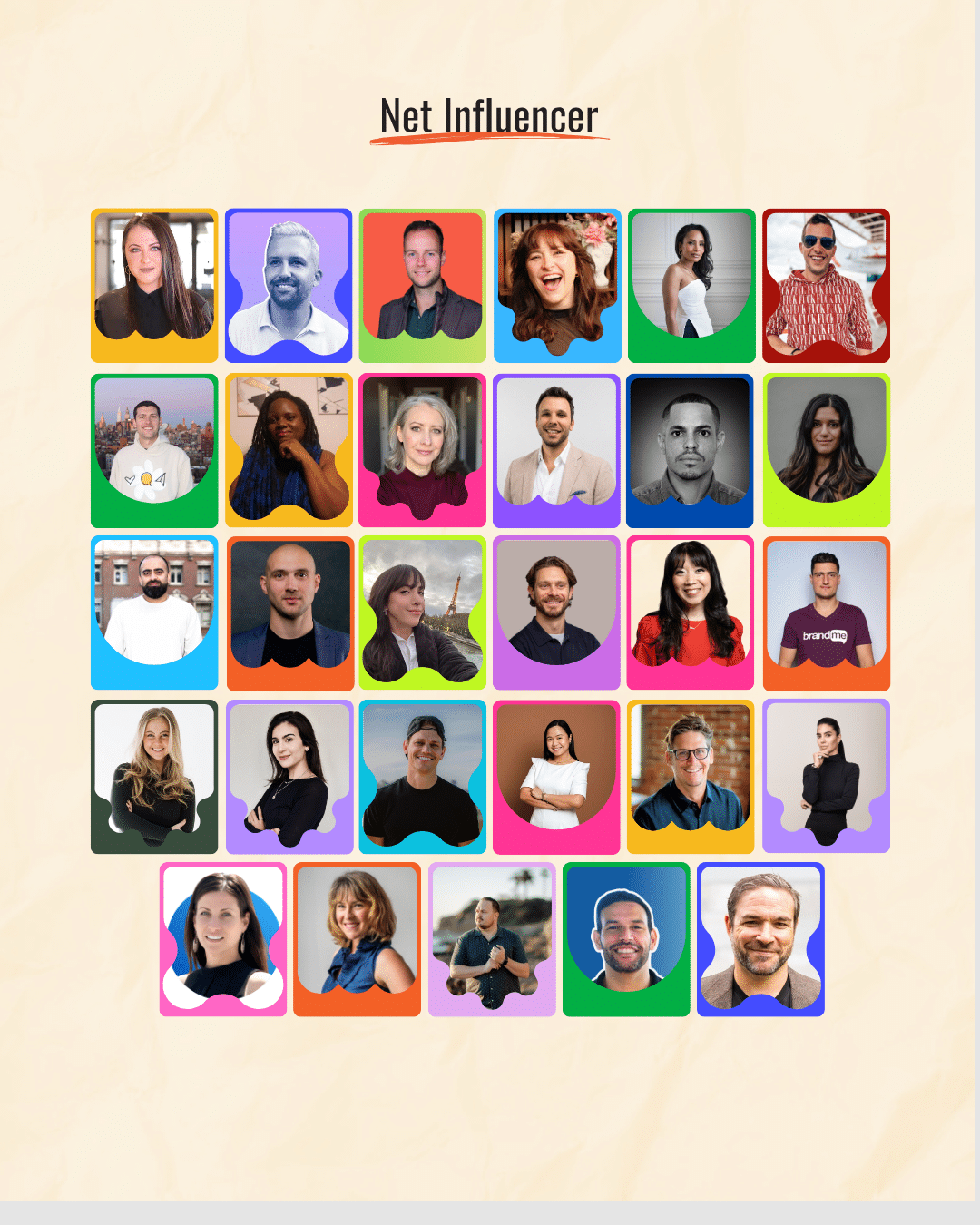
We asked 29 creator marketing executives, founders, and practitioners to name one task they have handed to AI and one they would not, and to explain where they draw that line.
The task I’m happiest to hand to AI is the operational layer, mostly. Post-performance analysis, like turning a raw export into proper drivers of engagement instead of running a content calendar on assumptions. Fact-checking any hard number against a live source before it goes into a brief or a deck. First-pass drafting in a specific voice, once that voice is actually documented as a pattern library rather than “sound professional.” And more and more the infrastructure itself: content intelligence engines that hold what’s been tried, what’s approved, what’s off-limits, so the team doesn’t relearn the same lesson in every new thread.
What do I not hand over to AI? Sign-off on whether content actually sounds like the person it’s attributed to. This is a trust call and I have seen a technically clean draft still getting rejected as “not them” until the real patterns went back in by hand.
But one thing that actually matters more is qualitative read from actual human contact, like clients, leads, a room at an event. AI can tell me what happened. It can’t tell me what mattered to the person standing in front of me.
What we’ve handed to AI: finding creators and proving what worked. An agent can screen millions of profiles against a brief, check whether an audience is real, estimate what a campaign will actually return before anyone commits budget, and then go back afterwards and check the forecast against reality. Most manual shortlists are just the forty creators someone already knew. Machines don’t have favorites.
What we won’t hand over: anything that moves money or can’t be taken back. Paying a creator, signing a contract, committing spend, posting to a brand’s own channels, ending a partnership. The agent can get all of it ready; the list, the terms, the payment run, but a person says go.
It’s not that the model is wrong more often than we are. It’s that a bad recommendation costs you an afternoon, and a bad payment costs you real money and a creator who won’t work with you again.
Handed over: the research and synthesis layer. Pulling a creator’s last hundred posts, mapping what their audience actually engages with, cross-checking brand mentions and past partnerships, drafting the first version of a brief, summarizing campaign reporting. That work used to eat days and produce a deck nobody read. It’s pattern matching, and machines are better at it.
Never: the judgment call on whether a creator is right for a brand. That decision is about taste, cultural read, and what a creator’s audience will forgive. AI can tell you a creator’s demographics line up. It can’t tell you their audience will feel sold to if this brand shows up in their feed. That’s a read you earn from watching the space, not from a scorecard.
Same goes for the creative brief’s actual point of view. AI can draft the structure. The idea inside it, the thing that makes a creator want to do the work properly, still comes from a person who understands both sides.
The line I’d draw: automate what’s verifiable, keep what’s debatable. Anything where two smart people could reasonably disagree is a human decision.
AI helps me see influence with much more depth and consistency.
I use AI to help me measure what actually matters in creator marketing: influence.
I have a framework of metrics and signals I look for – trust, community density, action, advocacy, portability, conversion – and I use AI to analyze those signals across content, comments, past partnerships and audience behavior at a scale that would be impossible to do manually.
That gives me an “Influence Score” based on evidence, not just reach or engagement rate.
I use the same logic after campaigns. AI helps me connect fragmented metrics (content performance, comments, search, traffic, conversion, sales, brand lift, etc.) to understand what actually drove impact and where the evidence is strong or weak.
What I would never hand to AI is defining what matters.
The framework, the criteria, the weighting and the business interpretation still need human judgment.
We’ve handed over initial contract scanning and compliance to closed-system AI tools, agents we’ve trained exclusively on Shine’s internal resources with zero internet access to streamline our contracting process securely (no hallucinations please!). But we draw a hard line at pitching creators to brands. AI can summarize a media kit, but it can’t understand human nuance, story, or why a specific creator is the right cultural fit. It takes a real Talent Manager who genuinely knows a creator to articulate their true value and connection with their audience. Back-end gets the automation; the talent representation stays strictly human.
I think the industry is drawing the line around AI in the wrong place.
People keep asking, “What should AI never do?” I’m not sure that’s the right question. If AI can do something better, faster, and more consistently than a human, I want it doing it.
We’re already pushing AI into pricing, contracts, research, reporting, SOPs, deal history, and decision support. I expect that list to keep growing.
What I won’t outsource is accountability.
AI can tell me what a creator should charge. It can flag a terrible clause. It can draft the negotiation. It can recommend whether we should walk away from a deal.
But if we damage a creator’s career or lose a seven-figure client, I can’t say, “the AI made the call.”
So I’m not protecting tasks from AI. I’m protecting ownership.
The agencies that win won’t be the ones that use AI to make their teams 20% more efficient. They’ll be the ones willing to redesign the company around the assumption that AI can eventually do most of the work, while humans stay responsible for the decisions that actually matter.
AI is useful for analyzing the content a brand already has to understand what’s working, rather than relying on instinct. It can look at how closely new content aligns with what has historically performed well for that brand, while also identifying in real time which assets are gaining momentum. That gives brands a clearer signal of what to amplify.
Where I won’t use AI is on the other side of this. There are tools now that will auto-cut a brand’s video into dozens of reposts and push them out from other accounts, sometimes with AI-generated comments layered on top to make it look like real engagement. That’s clipping, and it doesn’t just add noise, but it dilutes the signals brands are trying to build around their own content. The engagement lives on those other accounts, not on the brand’s own handle, so the platform’s algorithm never learns that the brand’s content works. You get reach, but you don’t get credit. The opportunity is to use AI to identify what’s working, then focus distribution on amplifying that original content rather than creating more versions of it.
Thousands of creators. Sometimes for a single brief.
That’s what working with the biggest AI brands looks like. No human gets through that pile fairly. So AI does the first sweep. It searches the whole CRM and surfaces who actually performed last quarter, not who I remember. Engagement gets checked for real versus bought. When twelve months of posts don’t match what the brand thinks it’s buying, that gets flagged before anyone wastes a call.
That used to take weeks. Now it’s a shortlist I can argue with.
What I’ll never hand over is the relationships. The whole business runs on them. With creators, other agencies, and with the brand itself.
A model can tell me a creator’s numbers are strong. It can’t tell me which creator needs the contract walked through line by line before she’ll say yes, or which brand contact is quietly panicking about a launch date and needs a call, not an email.
So we keep a human in the loop at every stage, including the parts AI does better than we do. Everyone on the other end is someone we plan to still be working with in three years.
At GigaStar, we’ve handed reporting to AI without hesitation – pulling campaign data, summarizing performance across creator cohorts, and flagging anomalies that used to take a full day to compile. That work is repetitive and pattern-based; AI does it faster and more consistently than we ever could by hand.
What we’ll never hand off is creator vetting. A brief can be templated, and an edit can be automated, but judging whether a creator’s voice, audience, and values actually fit a brand (or a fintech product like ours) takes human instinct. AI can flag red flags in engagement data, but it can’t sit through a conversation and sense whether someone is going to represent GigaStar with integrity. That call carries real financial and reputational weight, and it stays with a person.
The line, in practice, sits exactly where judgment replaces pattern-matching: if a task is about processing information, AI is in the workflow. If it’s about trusting a person, it isn’t – yet.
One task I’ve handed to AI is the first pass of creator screening. Using tools such as VN Secure, we can review years of publicly available content and surface potential brand-safety concerns or signals of alignment far more comprehensively than a team could by looking only at a creator’s latest posts.
But I would never hand AI the final decision on who should – or should not – be part of a campaign. A flagged post is a data point, not a verdict. Context matters: when something was said, why it was said, whether the creator has evolved, and how they respond when a concern is raised. Those judgments require experience, accountability, and often a real conversation.
The same applies to brand fit. AI can identify patterns, but it cannot fully assess trust, chemistry, reliability, or the strength of the partnership that may be built.
My line is simple: AI can expand the evidence and accelerate the process, but it should not own the judgment. I will use it at nearly every stage of creator marketing, but I will never outsource responsibility for the final call.
One task I’m happy to hand to AI is structuring creator content: it can transcribe long recordings and surface the strongest moments, saving time without taking anything away from the creator.
What I wouldn’t hand over is human performance. Imagine an AI clone of a football freestyler performing tricks no human could. Technically, it might be better. But I always come back to chess: computers have outperformed humans for decades, yet no one really wants to watch computers play. We still want to watch people, even if they’re not as skilled, because effort, tension and imperfection make it compelling.
One of the most overlooked but powerful tasks to hand over to AI in the Creator Economy is SDR work for talent managers. Lots of eyes are on the campaign process, but before that come the thousands upon thousands of pitches sent to talent agencies. Some are qualified, legitimate opportunities and some are not. Having an AI agent that understands the campaign requirements an agency accepts for its creators and having it weed out the “garbage” is a game changer as many opportunities often fall through the cracks. A task I would not pass on to AI is closing the deal. We still need that human touch at the end.
Handed to AI: The top of the funnel. AI now helps us source creators, understand their audiences, assess fit and handle first-touch outreach at a scale we simply couldn’t achieve manually. The goal isn’t to replace the team. It’s to remove the volume work so our people can spend more time on strategy, relationships and the decisions that actually determine who we win.
Never will: The commitment. Who we choose to back, how we approach them, what we’re willing to offer and how we show up when things don’t go to plan. Those decisions need people. Creators build relationships with people, not systems. AI can tell us that a creator looks like a strong opportunity, but it can’t fully understand the dynamics of a negotiation, recognize when someone feels undervalued, or build the trust that makes a creator genuinely want to work with us.
The line I draw: AI helps us find the right people and get to them at scale. Humans decide who we believe in and build the relationship from there. The better AI becomes at the first part, the more time our team has to be great at the second.
One task I’ve handed to AI: research and shortlisting.
I use AI to scrape potential sponsors, identify partnership opportunities, shortlist editor candidates, compare conferences, analyze creators, build briefs, and process huge amounts of information. Frankly, I don’t think there are many marketing tasks you can’t hand to AI in some form.
One task I never will: final judgment.
AI is a tool, not a substitute for taste, creativity, experience, or responsibility. A hammer doesn’t decide where the nail goes. You do.
AI can give me 50 ideas, recommendations, or solutions. But I still need to decide: Does this make sense? Is it generic? Is the judgment poor? Can two mediocre ideas become one great one? Would a real person actually care?
That’s why I think human judgment will become more valuable, not less. As AI-generated work becomes abundant, genuine human feedback based on lived experience, taste, context, and actual interaction becomes a premium.
AI can accelerate almost everything. But I still own the result.
AI is absolutely integrating itself into nearly every aspect of our field, and there are plenty of things it can make us better and more efficient at. But there are some things AI simply can’t replace. If there’s one thing we will always have over AI, it’s human intuition.
I’m all for passing off numerical and performance-based data analysis in reporting, or having AI conduct a first review of creator scripts against rigorous client compliance requirements. Those are areas where there’s a clear right or wrong. But when it comes to concept and content review, humans still need to have the final say. AI can check whether a transcript aligns with an approved script, but it can’t truly determine whether the content will connect with the person watching it.
That’s where human intuition matters. Whether content resonates, feels authentic, or is visually compelling requires an understanding of emotion and human connection that can’t be reduced to a checklist.
The one we’ve happily handed over is the plumbing: AI to collect data, to speed up processes, to train our team. The unglamorous infrastructure underneath the work. And the shift over the last year has been telling: at Cannes, the conversation moved from AI-generated content and synthetic creators (the shiny, slightly scary stuff) to exactly this kind of unglamorous groundwork. The industry’s stopped treating AI as the new shiny toy and started treating it as a tool to get the work done. That’s the stuff we want it doing: the heavy lifting that frees the team up for the thinking.
The one we’ll never hand over is the relationships. This is a human, creative business, and the relationships behind it (with talent, with clients) have to stay that way. AI can help us with almost everything else: it can sharpen the strategy, speed up the creative, take the grunt work off our plate. But it doesn’t build trust with a creator, and it doesn’t understand a client the way a person who’s worked with them for years does. That’s the part that has to stay human.
Even before “AI” became the buzzword, automation has always been a component of our workflow, particularly through the platforms and tools we use for identifying creators based on priority keywords, passion points, geography, and audience base. The speed at which we’ve been able to build creator target lists has been exponential.
But what we’ll never hand over to AI is how we engage and interact with creators once we’ve finalized who we want to partner with. We always say that “influencers are people, not media buys,” and it’s why we’ve intentionally named our practice “Creator Relations.” That second word is what influences our entire process – from pitching a creator on a partnership to navigating the payment process. Building human relationships is how we know when it’s their birthday, or to send them flowers if they’re experiencing a rough chapter. No algorithm or tool can handle nuances the way human context can, and it’s not only resulted in better partnerships with creators, but better content and performance metrics as a result.
One task we have increasingly handed to AI is the first layer of creator discovery and analysis. AI can process thousands of profiles, audience signals, past content, brand affinity and campaign data much faster than a human team, helping us identify creators who may be the right fit for a campaign.
What I would never fully hand over to AI is the final decision of who should represent a brand.
Creator marketing is ultimately about people, culture and relationships. AI can tell you that a creator looks perfect on paper, but it cannot fully understand chemistry, context, credibility or how that person will actually connect with a brand and its audience.
At BrandMe, we see AI as a way to give our team better information and more time to make those human decisions – not as a replacement for them.
I’m happy to hand AI the work that takes me away from the strategy, like pulling together performance data, summarizing creator content, identifying patterns across programs, and even combining reports across marketing and paid media. There’s no reason a marketer should spend hours manually piecing together information AI can surface in seconds.
What I won’t hand over is the final judgment of who a brand should work with. Creator marketing is still fundamentally about people, culture, taste, and relationships. AI can tell me that a creator checks every box on paper, but it can’t fully understand whether that person feels right for the brand, or if this moment feels right, or whether there’s an idea there worth pursuing. At the end of the day, I want AI to make marketers less operational, not less opinionated.
I’m happy to hand almost all administrative work to AI; from collecting data and sourcing information to moving documents and generating contracts. I see AI as an assistant: it can organize the inputs, surface relevant data points and remove repetitive work so people can focus on what matters.
What I would never hand over is the final decision-making and relationship-building. This can be final creator selection and content approval. AI cannot fully understand cultural nuance, creative chemistry or the trust behind a successful partnership. Those decisions require human touch and judgment. AI can prepare the information, but a person must interpret it, make the final call.
What we’ll never hand off: the creative itself. That’s a commitment we made at Popfly when we banned AI creators from using our platform. People trust people and when you erode that trust by using AI-generated images or videos in your content, you lose all credibility with your community.
Sure, use AI for data analysis, personalization and streamlining processes. But don’t allow AI to replace human creativity. It’s not just sloppy, it’s bad business.
One task our team has already gladly handed to AI is the creation of the content guide, and sometimes even some pegs for content drafts. Whether it’s campaign briefs, creator research, reporting, or simply just coming up with ideas during brainstorming, AI helps our team move faster and start from a stronger foundation.
One task I will never be fully confident to hand over is creator selection. Great creator marketing isn’t just about data, it’s about judgment. Chemistry between a brand and a creator, cultural relevance, authenticity, and long-term fit are things I still believe require human experience.
AI makes us more efficient, but trust, judgment, and relationships remain our competitive advantage.
We’ve complemented creator discovery with AI, finding patterns across thousands of creators that a team could never catch manually. What we’ll never hand over is the final call on fit. A creator can look perfect in the data and still be wrong for the brand, the audience or the moment. That judgment and the relationship behind it stays human.
We use AI as a collaborative partner to handle the scale required to build loyal audiences. By leveraging our proprietary data, we broaden and sharpen strategy to tailor the right narrative for every distinct audience. We then use Made, our creative operating system, to handle execution from post-production editing to dynamic cross-platform distribution and community engagement. This curates content perfectly for every platform, enabling teams to reach massive global audiences without burning out.
The one thing we will never hand to AI is the raw act of human creation itself. Authentic art stems from human imperfection, lived experience, and personal perspective. AI should remove operational friction and elevate human creativity, never replace it.
The line is clear. We use intelligent systems to remove operational bottlenecks, amplify reach, and cultivate real fans, but the strategic spark, cultural nuance, and underlying story must always remain strictly human.
I’m happy to hand AI the repetitive work around creator marketing: discovery, outreach, follow-ups, first-pass application review, contract, redrafting, reminders, and performance analysis. With the right learning loops and guidance, you can assign work to an agent, let it keep things moving, and make yourself more available for the places where your time actually adds value. We’re seeing this with customers using partnrUP today. They’re recapturing hours that used to disappear into campaign administration and using that time to do more briefing calls with creators, activate more influencers at a time and build creator communities. Things that are not possible in a typical day prior.
The one thing I would never fully hand over is the relationship. Creator marketing is about trust, judgment and collaboration.
My view is pretty simple: AI should orchestrate as much of the work around those interactions as possible so we can spend more of our time growing the business and actually interacting with each other.
In the current YouTube landscape, using agentic AI to curate the creator channels used for advertising is not only helpful but necessary. There is a Netflix worth of content uploaded to YouTube every hour, and advertisers need to find tens of thousands of channels for a typical campaign. Using our Pixie agentic AI solution, we can find the right channels, but only because of the deep data we have on them, much of which is validated by humans. For example, we get creator self-declared data from both Famous Birthdays and our Inclusive Media Initiative and build human validation into all of our proprietary data models to enrich our creator intelligence. This level of human involvement will never be replaced by AI and will continue to be a requisite to trust the output.
As a fully AI creator management agency, we’ve literally handed 90% of the work over to AI. From outreach to negotiation to campaign management to invoicing, we’ve been at the forefront of AI development in the creator space for 3 years. Almost everything can, and should, be automated on the representation side in the furtherance of spending more time on the relationships that drive this business. At its core, this job is about trust and relationships, and anything that provides more bandwidth for that is a net positive.
AI is fine for data processing and analysis, but I’ll never trust it with final copy because writing covers many areas and tasks, from creative to strategy and legal. It’s ok for initial drafts, research, menial tasks, automations, but it’s not nearly ready to ship end-to-end high-level projects and tasks without a human touch, and I never ship anything without one.
People won’t be replaced to produce high-quality work anytime soon. AI can become magically good, but if it’s commoditized and everyone has access, it’s just the new standard, not a differentiator on its own. As humans are hard-wired to take the path of least resistance, the stale, over-sanitized patterns of AI slop become instantly clear on a subconscious level. It’s not about the output itself, but the perception of true effort versus laziness: What takes effort and time will always be perceived as more valuable than what doesn’t.
My philosophy is treating AI as a second brain to supercharge your own, like having a chip installed in your head in sci-fi. It’s just a tool to help you continuously learn, think, improve your skills, and work faster and more efficiently. It’s support, not your replacement. AI drafts, humans ship.
I let AI chase the maybes, so I can own the moments that actually matter. It drafts, nudges, and organizes. I make the call on the final creative and the relationships, full stop.
Dragomir is a Serbian freelance blog writer and translator. He is passionate about covering insightful stories and exploring topics such as influencer marketing, the creator economy, technology, business, and cyber fraud.











Artificial intelligence has moved deeper into creator marketing, taking on work from creator discovery and vetting to reporting, research, outreach, and campaign administration. But as more of the workflow becomes automated, practitioners are drawing different boundaries around the decisions they still want people to own.
We asked 29 creator marketing executives, founders, and practitioners to name one task they have handed to AI and one they would not, and to explain where they draw that line.
Monica Tartau, Head of Marketing, Aurora Labs
The task I’m happiest to hand to AI is the operational layer, mostly. Post-performance analysis, like turning a raw export into proper drivers of engagement instead of running a content calendar on assumptions. Fact-checking any hard number against a live source before it goes into a brief or a deck. First-pass drafting in a specific voice, once that voice is actually documented as a pattern library rather than “sound professional.” And more and more the infrastructure itself: content intelligence engines that hold what’s been tried, what’s approved, what’s off-limits, so the team doesn’t relearn the same lesson in every new thread.
What do I not hand over to AI? Sign-off on whether content actually sounds like the person it’s attributed to. This is a trust call and I have seen a technically clean draft still getting rejected as “not them” until the real patterns went back in by hand.
But one thing that actually matters more is qualitative read from actual human contact, like clients, leads, a room at an event. AI can tell me what happened. It can’t tell me what mattered to the person standing in front of me.
Ernst Rustenhoven, Chief Strategy Officer, The Cirqle
What we’ve handed to AI: finding creators and proving what worked. An agent can screen millions of profiles against a brief, check whether an audience is real, estimate what a campaign will actually return before anyone commits budget, and then go back afterwards and check the forecast against reality. Most manual shortlists are just the forty creators someone already knew. Machines don’t have favorites.
What we won’t hand over: anything that moves money or can’t be taken back. Paying a creator, signing a contract, committing spend, posting to a brand’s own channels, ending a partnership. The agent can get all of it ready; the list, the terms, the payment run, but a person says go.
It’s not that the model is wrong more often than we are. It’s that a bad recommendation costs you an afternoon, and a bad payment costs you real money and a creator who won’t work with you again.
Tobias Hoss, Co-Founder, Senior Advisor, 30 Dishes
Handed over: the research and synthesis layer. Pulling a creator’s last hundred posts, mapping what their audience actually engages with, cross-checking brand mentions and past partnerships, drafting the first version of a brief, summarizing campaign reporting. That work used to eat days and produce a deck nobody read. It’s pattern matching, and machines are better at it.
Never: the judgment call on whether a creator is right for a brand. That decision is about taste, cultural read, and what a creator’s audience will forgive. AI can tell you a creator’s demographics line up. It can’t tell you their audience will feel sold to if this brand shows up in their feed. That’s a read you earn from watching the space, not from a scorecard.
Same goes for the creative brief’s actual point of view. AI can draft the structure. The idea inside it, the thing that makes a creator want to do the work properly, still comes from a person who understands both sides.
The line I’d draw: automate what’s verifiable, keep what’s debatable. Anything where two smart people could reasonably disagree is a human decision.
Bia Granja, Founder & CEO, Creator Economy Rocks
AI helps me see influence with much more depth and consistency.
I use AI to help me measure what actually matters in creator marketing: influence.
I have a framework of metrics and signals I look for – trust, community density, action, advocacy, portability, conversion – and I use AI to analyze those signals across content, comments, past partnerships and audience behavior at a scale that would be impossible to do manually.
That gives me an “Influence Score” based on evidence, not just reach or engagement rate.
I use the same logic after campaigns. AI helps me connect fragmented metrics (content performance, comments, search, traffic, conversion, sales, brand lift, etc.) to understand what actually drove impact and where the evidence is strong or weak.
What I would never hand to AI is defining what matters.
The framework, the criteria, the weighting and the business interpretation still need human judgment.
Manar El Mugammar, President, Shine Talent Group
We’ve handed over initial contract scanning and compliance to closed-system AI tools, agents we’ve trained exclusively on Shine’s internal resources with zero internet access to streamline our contracting process securely (no hallucinations please!). But we draw a hard line at pitching creators to brands. AI can summarize a media kit, but it can’t understand human nuance, story, or why a specific creator is the right cultural fit. It takes a real Talent Manager who genuinely knows a creator to articulate their true value and connection with their audience. Back-end gets the automation; the talent representation stays strictly human.
AB Lieberman, Founder, Clicks Talent
I think the industry is drawing the line around AI in the wrong place.
People keep asking, “What should AI never do?” I’m not sure that’s the right question. If AI can do something better, faster, and more consistently than a human, I want it doing it.
We’re already pushing AI into pricing, contracts, research, reporting, SOPs, deal history, and decision support. I expect that list to keep growing.
What I won’t outsource is accountability.
AI can tell me what a creator should charge. It can flag a terrible clause. It can draft the negotiation. It can recommend whether we should walk away from a deal.
But if we damage a creator’s career or lose a seven-figure client, I can’t say, “the AI made the call.”
So I’m not protecting tasks from AI. I’m protecting ownership.
The agencies that win won’t be the ones that use AI to make their teams 20% more efficient. They’ll be the ones willing to redesign the company around the assumption that AI can eventually do most of the work, while humans stay responsible for the decisions that actually matter.
Ian Ettinger, CPO & Co-Founder, Daisy
AI is useful for analyzing the content a brand already has to understand what’s working, rather than relying on instinct. It can look at how closely new content aligns with what has historically performed well for that brand, while also identifying in real time which assets are gaining momentum. That gives brands a clearer signal of what to amplify.
Where I won’t use AI is on the other side of this. There are tools now that will auto-cut a brand’s video into dozens of reposts and push them out from other accounts, sometimes with AI-generated comments layered on top to make it look like real engagement. That’s clipping, and it doesn’t just add noise, but it dilutes the signals brands are trying to build around their own content. The engagement lives on those other accounts, not on the brand’s own handle, so the platform’s algorithm never learns that the brand’s content works. You get reach, but you don’t get credit. The opportunity is to use AI to identify what’s working, then focus distribution on amplifying that original content rather than creating more versions of it.
Amanda Tayte-Tait, Campaign Operations Coordinator, Creator Match
Thousands of creators. Sometimes for a single brief.
That’s what working with the biggest AI brands looks like. No human gets through that pile fairly. So AI does the first sweep. It searches the whole CRM and surfaces who actually performed last quarter, not who I remember. Engagement gets checked for real versus bought. When twelve months of posts don’t match what the brand thinks it’s buying, that gets flagged before anyone wastes a call.
That used to take weeks. Now it’s a shortlist I can argue with.
What I’ll never hand over is the relationships. The whole business runs on them. With creators, other agencies, and with the brand itself.
A model can tell me a creator’s numbers are strong. It can’t tell me which creator needs the contract walked through line by line before she’ll say yes, or which brand contact is quietly panicking about a launch date and needs a call, not an email.
So we keep a human in the loop at every stage, including the parts AI does better than we do. Everyone on the other end is someone we plan to still be working with in three years.
Sarah McNabb, Chief Marketing Officer, GigaStar
At GigaStar, we’ve handed reporting to AI without hesitation – pulling campaign data, summarizing performance across creator cohorts, and flagging anomalies that used to take a full day to compile. That work is repetitive and pattern-based; AI does it faster and more consistently than we ever could by hand.
What we’ll never hand off is creator vetting. A brief can be templated, and an edit can be automated, but judging whether a creator’s voice, audience, and values actually fit a brand (or a fintech product like ours) takes human instinct. AI can flag red flags in engagement data, but it can’t sit through a conversation and sense whether someone is going to represent GigaStar with integrity. That call carries real financial and reputational weight, and it stays with a person.
The line, in practice, sits exactly where judgment replaces pattern-matching: if a task is about processing information, AI is in the workflow. If it’s about trusting a person, it isn’t – yet.
Fabio Gonçalves, Director of Talent, Viral Nation
One task I’ve handed to AI is the first pass of creator screening. Using tools such as VN Secure, we can review years of publicly available content and surface potential brand-safety concerns or signals of alignment far more comprehensively than a team could by looking only at a creator’s latest posts.
But I would never hand AI the final decision on who should – or should not – be part of a campaign. A flagged post is a data point, not a verdict. Context matters: when something was said, why it was said, whether the creator has evolved, and how they respond when a concern is raised. Those judgments require experience, accountability, and often a real conversation.
The same applies to brand fit. AI can identify patterns, but it cannot fully assess trust, chemistry, reliability, or the strength of the partnership that may be built.
My line is simple: AI can expand the evidence and accelerate the process, but it should not own the judgment. I will use it at nearly every stage of creator marketing, but I will never outsource responsibility for the final call.
Quim Español, Creative Director, SuperHeroes
One task I’m happy to hand to AI is structuring creator content: it can transcribe long recordings and surface the strongest moments, saving time without taking anything away from the creator.
What I wouldn’t hand over is human performance. Imagine an AI clone of a football freestyler performing tricks no human could. Technically, it might be better. But I always come back to chess: computers have outperformed humans for decades, yet no one really wants to watch computers play. We still want to watch people, even if they’re not as skilled, because effort, tension and imperfection make it compelling.
Sapir Tori, CEO & Founder, Zano
One of the most overlooked but powerful tasks to hand over to AI in the Creator Economy is SDR work for talent managers. Lots of eyes are on the campaign process, but before that come the thousands upon thousands of pitches sent to talent agencies. Some are qualified, legitimate opportunities and some are not. Having an AI agent that understands the campaign requirements an agency accepts for its creators and having it weed out the “garbage” is a game changer as many opportunities often fall through the cracks. A task I would not pass on to AI is closing the deal. We still need that human touch at the end.
Akhil Sarin, Chief Marketing Officer, KICK
Handed to AI: The top of the funnel. AI now helps us source creators, understand their audiences, assess fit and handle first-touch outreach at a scale we simply couldn’t achieve manually. The goal isn’t to replace the team. It’s to remove the volume work so our people can spend more time on strategy, relationships and the decisions that actually determine who we win.
Never will: The commitment. Who we choose to back, how we approach them, what we’re willing to offer and how we show up when things don’t go to plan. Those decisions need people. Creators build relationships with people, not systems. AI can tell us that a creator looks like a strong opportunity, but it can’t fully understand the dynamics of a negotiation, recognize when someone feels undervalued, or build the trust that makes a creator genuinely want to work with us.
The line I draw: AI helps us find the right people and get to them at scale. Humans decide who we believe in and build the relationship from there. The better AI becomes at the first part, the more time our team has to be great at the second.
Andrii Salii, Audiovisual Producer, MIA Studio
One task I’ve handed to AI: research and shortlisting.
I use AI to scrape potential sponsors, identify partnership opportunities, shortlist editor candidates, compare conferences, analyze creators, build briefs, and process huge amounts of information. Frankly, I don’t think there are many marketing tasks you can’t hand to AI in some form.
One task I never will: final judgment.
AI is a tool, not a substitute for taste, creativity, experience, or responsibility. A hammer doesn’t decide where the nail goes. You do.
AI can give me 50 ideas, recommendations, or solutions. But I still need to decide: Does this make sense? Is it generic? Is the judgment poor? Can two mediocre ideas become one great one? Would a real person actually care?
That’s why I think human judgment will become more valuable, not less. As AI-generated work becomes abundant, genuine human feedback based on lived experience, taste, context, and actual interaction becomes a premium.
AI can accelerate almost everything. But I still own the result.
Victoria Prieto, U.S. Team Lead, The Influencer Marketing Factory
AI is absolutely integrating itself into nearly every aspect of our field, and there are plenty of things it can make us better and more efficient at. But there are some things AI simply can’t replace. If there’s one thing we will always have over AI, it’s human intuition.
I’m all for passing off numerical and performance-based data analysis in reporting, or having AI conduct a first review of creator scripts against rigorous client compliance requirements. Those are areas where there’s a clear right or wrong. But when it comes to concept and content review, humans still need to have the final say. AI can check whether a transcript aligns with an approved script, but it can’t truly determine whether the content will connect with the person watching it.
That’s where human intuition matters. Whether content resonates, feels authentic, or is visually compelling requires an understanding of emotion and human connection that can’t be reduced to a checklist.
Chris Davis, Managing Director, Hypetap
The one we’ve happily handed over is the plumbing: AI to collect data, to speed up processes, to train our team. The unglamorous infrastructure underneath the work. And the shift over the last year has been telling: at Cannes, the conversation moved from AI-generated content and synthetic creators (the shiny, slightly scary stuff) to exactly this kind of unglamorous groundwork. The industry’s stopped treating AI as the new shiny toy and started treating it as a tool to get the work done. That’s the stuff we want it doing: the heavy lifting that frees the team up for the thinking.
The one we’ll never hand over is the relationships. This is a human, creative business, and the relationships behind it (with talent, with clients) have to stay that way. AI can help us with almost everything else: it can sharpen the strategy, speed up the creative, take the grunt work off our plate. But it doesn’t build trust with a creator, and it doesn’t understand a client the way a person who’s worked with them for years does. That’s the part that has to stay human.
Eva Wasko, SVP, Public Relations, Allen & Gerritsen
Even before “AI” became the buzzword, automation has always been a component of our workflow, particularly through the platforms and tools we use for identifying creators based on priority keywords, passion points, geography, and audience base. The speed at which we’ve been able to build creator target lists has been exponential.
But what we’ll never hand over to AI is how we engage and interact with creators once we’ve finalized who we want to partner with. We always say that “influencers are people, not media buys,” and it’s why we’ve intentionally named our practice “Creator Relations.” That second word is what influences our entire process – from pitching a creator on a partnership to navigating the payment process. Building human relationships is how we know when it’s their birthday, or to send them flowers if they’re experiencing a rough chapter. No algorithm or tool can handle nuances the way human context can, and it’s not only resulted in better partnerships with creators, but better content and performance metrics as a result.
Gerardo Sordo, CEO & Founder, BrandMe
One task we have increasingly handed to AI is the first layer of creator discovery and analysis. AI can process thousands of profiles, audience signals, past content, brand affinity and campaign data much faster than a human team, helping us identify creators who may be the right fit for a campaign.
What I would never fully hand over to AI is the final decision of who should represent a brand.
Creator marketing is ultimately about people, culture and relationships. AI can tell you that a creator looks perfect on paper, but it cannot fully understand chemistry, context, credibility or how that person will actually connect with a brand and its audience.
At BrandMe, we see AI as a way to give our team better information and more time to make those human decisions – not as a replacement for them.
Sarah Crow, Head of Creator Strategy, Superfiliate
I’m happy to hand AI the work that takes me away from the strategy, like pulling together performance data, summarizing creator content, identifying patterns across programs, and even combining reports across marketing and paid media. There’s no reason a marketer should spend hours manually piecing together information AI can surface in seconds.
What I won’t hand over is the final judgment of who a brand should work with. Creator marketing is still fundamentally about people, culture, taste, and relationships. AI can tell me that a creator checks every box on paper, but it can’t fully understand whether that person feels right for the brand, or if this moment feels right, or whether there’s an idea there worth pursuing. At the end of the day, I want AI to make marketers less operational, not less opinionated.
Julia Salume, Head of Influencer Marketing and UGC, Moburst
I’m happy to hand almost all administrative work to AI; from collecting data and sourcing information to moving documents and generating contracts. I see AI as an assistant: it can organize the inputs, surface relevant data points and remove repetitive work so people can focus on what matters.
What I would never hand over is the final decision-making and relationship-building. This can be final creator selection and content approval. AI cannot fully understand cultural nuance, creative chemistry or the trust behind a successful partnership. Those decisions require human touch and judgment. AI can prepare the information, but a person must interpret it, make the final call.
Taylor Hoekstra, Founder & CEO, Popfly
What we’ll never hand off: the creative itself. That’s a commitment we made at Popfly when we banned AI creators from using our platform. People trust people and when you erode that trust by using AI-generated images or videos in your content, you lose all credibility with your community.
Sure, use AI for data analysis, personalization and streamlining processes. But don’t allow AI to replace human creativity. It’s not just sloppy, it’s bad business.
Ace Gapuz, CEO, Blogapalooza Inc.
One task our team has already gladly handed to AI is the creation of the content guide, and sometimes even some pegs for content drafts. Whether it’s campaign briefs, creator research, reporting, or simply just coming up with ideas during brainstorming, AI helps our team move faster and start from a stronger foundation.
One task I will never be fully confident to hand over is creator selection. Great creator marketing isn’t just about data, it’s about judgment. Chemistry between a brand and a creator, cultural relevance, authenticity, and long-term fit are things I still believe require human experience.
AI makes us more efficient, but trust, judgment, and relationships remain our competitive advantage.
Glenn Ginsburg, President, QYOU Media
We’ve complemented creator discovery with AI, finding patterns across thousands of creators that a team could never catch manually. What we’ll never hand over is the final call on fit. A creator can look perfect in the data and still be wrong for the brand, the audience or the moment. That judgment and the relationship behind it stays human.
Shahrzad Rafati, Founder & CEO, RHEI
We use AI as a collaborative partner to handle the scale required to build loyal audiences. By leveraging our proprietary data, we broaden and sharpen strategy to tailor the right narrative for every distinct audience. We then use Made, our creative operating system, to handle execution from post-production editing to dynamic cross-platform distribution and community engagement. This curates content perfectly for every platform, enabling teams to reach massive global audiences without burning out.
The one thing we will never hand to AI is the raw act of human creation itself. Authentic art stems from human imperfection, lived experience, and personal perspective. AI should remove operational friction and elevate human creativity, never replace it.
The line is clear. We use intelligent systems to remove operational bottlenecks, amplify reach, and cultivate real fans, but the strategic spark, cultural nuance, and underlying story must always remain strictly human.
Jessica Thorpe, CEO, partnrUP
I’m happy to hand AI the repetitive work around creator marketing: discovery, outreach, follow-ups, first-pass application review, contract, redrafting, reminders, and performance analysis. With the right learning loops and guidance, you can assign work to an agent, let it keep things moving, and make yourself more available for the places where your time actually adds value. We’re seeing this with customers using partnrUP today. They’re recapturing hours that used to disappear into campaign administration and using that time to do more briefing calls with creators, activate more influencers at a time and build creator communities. Things that are not possible in a typical day prior.
The one thing I would never fully hand over is the relationship. Creator marketing is about trust, judgment and collaboration.
My view is pretty simple: AI should orchestrate as much of the work around those interactions as possible so we can spend more of our time growing the business and actually interacting with each other.
Theresa Go, VP of Creator Economy Solutions & Partnerships, Pixability
In the current YouTube landscape, using agentic AI to curate the creator channels used for advertising is not only helpful but necessary. There is a Netflix worth of content uploaded to YouTube every hour, and advertisers need to find tens of thousands of channels for a typical campaign. Using our Pixie agentic AI solution, we can find the right channels, but only because of the deep data we have on them, much of which is validated by humans. For example, we get creator self-declared data from both Famous Birthdays and our Inclusive Media Initiative and build human validation into all of our proprietary data models to enrich our creator intelligence. This level of human involvement will never be replaced by AI and will continue to be a requisite to trust the output.
Chris Alexander, Founder, Prscnt
As a fully AI creator management agency, we’ve literally handed 90% of the work over to AI. From outreach to negotiation to campaign management to invoicing, we’ve been at the forefront of AI development in the creator space for 3 years. Almost everything can, and should, be automated on the representation side in the furtherance of spending more time on the relationships that drive this business. At its core, this job is about trust and relationships, and anything that provides more bandwidth for that is a net positive.
Daniel Caldas, Founder, Caldas Ecom
AI is fine for data processing and analysis, but I’ll never trust it with final copy because writing covers many areas and tasks, from creative to strategy and legal. It’s ok for initial drafts, research, menial tasks, automations, but it’s not nearly ready to ship end-to-end high-level projects and tasks without a human touch, and I never ship anything without one.
People won’t be replaced to produce high-quality work anytime soon. AI can become magically good, but if it’s commoditized and everyone has access, it’s just the new standard, not a differentiator on its own. As humans are hard-wired to take the path of least resistance, the stale, over-sanitized patterns of AI slop become instantly clear on a subconscious level. It’s not about the output itself, but the perception of true effort versus laziness: What takes effort and time will always be perceived as more valuable than what doesn’t.
My philosophy is treating AI as a second brain to supercharge your own, like having a chip installed in your head in sci-fi. It’s just a tool to help you continuously learn, think, improve your skills, and work faster and more efficiently. It’s support, not your replacement. AI drafts, humans ship.
Matthew Himelstein, Co-Founder & CPTO, MOGL
I let AI chase the maybes, so I can own the moments that actually matter. It drafts, nudges, and organizes. I make the call on the final creative and the relationships, full stop.
Subscribe to Our Newsletter
Check Out Our Podcast