Technology
Raptive Launches Free, Ad-Supported Creator Communities to Rival the Paywall Model

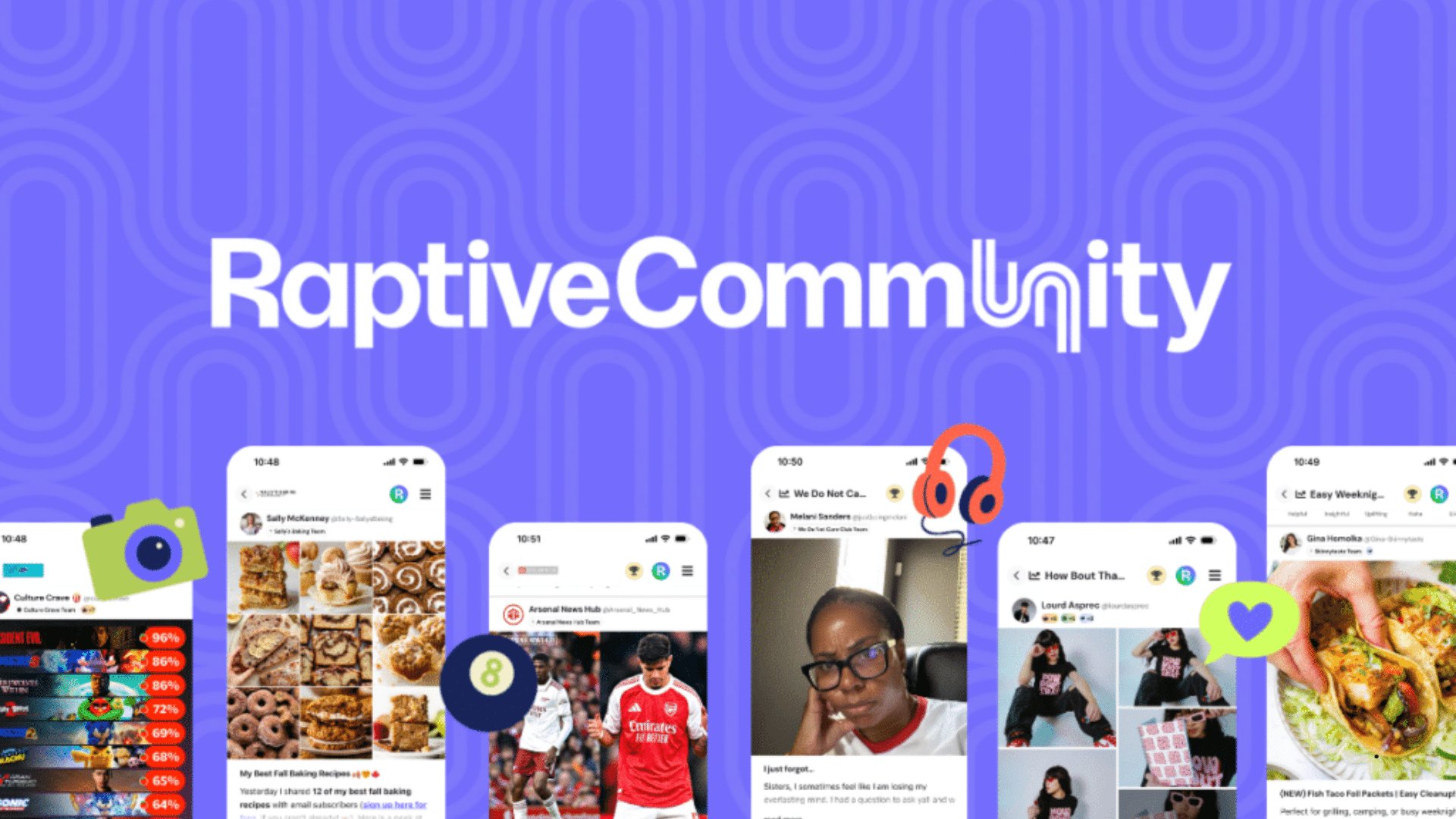
Raptive has launched Raptive Community, a free, ad-supported platform that gives creators a dedicated space to build and monetize direct audience relationships outside the social feed. Revenue is split 50/50 between creator and platform, and more than 150 communities went live at launch.
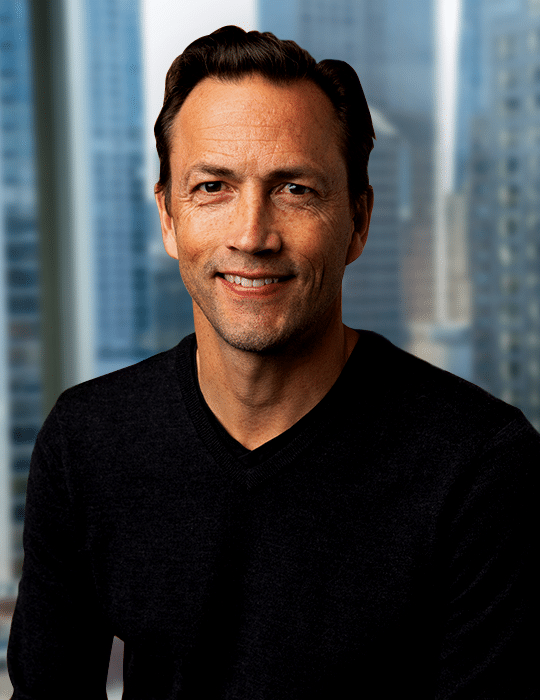
Andrew Shue, who co-founded Raptive with Michael Sanchez in 1999, has spent more than two decades building programmatic advertising infrastructure for web-based creator businesses. Today, the New York company partners with more than 7,000 creator sites and reports reaching 224 million monthly unique visitors. The new platform extends that business to a second audience: social-first creators who have built large followings without a web presence.
Andrew’s rationale for the timing centers on the instability of social distribution. Instagram’s organic reach declined 30% to 40% across posts, carousels, and Reels in 2025, according to analytics firm Emplifi, and AI-generated content is crowding independent creators out of feeds.
“This is a key juncture for folks who have built very big audiences to figure out how to adapt in this moment,” he says. His case is that a creator-owned, ad-supported community gives creators depth in the audience relationship, control over how it is governed, and a revenue stream that does not depend on the next algorithm update.
Two-Dimensional Relationships Are No Longer Enough
Most creator-audience interactions on social, Andrew argues, stop at the surface. A post goes up, followers comment, and the cycle resets. “It’s really a two-dimensional relationship where they post, and people comment,” he says. “It’s not really the ability to get to know people in a more personal way.”
Raptive Community is built around what he calls a three-dimensional alternative: dedicated spaces where creators publish content unavailable on social, run challenges, and accumulate conversations with people who have specifically opted into the relationship. That depth, Andrew notes, is what turns a following into a community.
The control dimension is equally significant. “The platforms today, they decide how your relationship’s going to be, and they also decide how the revenue is going to work,” Andrew says. “You don’t really have control.”
The Case for Free Over the Paywall
Raptive Community’s decision to forgo a subscription model is intentional. Patreon, Substack, and similar platforms let creators charge for access, which narrows the audience to paying subscribers. Andrew sees that trade-off as the wrong bet for creators with large existing followings.
“Scale matters,” he says. “We are literally the best in the world at monetizing what I’ll call free web traffic.” In Andrew’s view, a paid community that draws a few thousand subscribers is a structurally different product from a free community that allows hundreds of thousands of existing followers to participate without friction.
Andrew adds that scale also determines community quality. He offers a specific illustration: a post that resonates with a shared experience might reach a thousand relevant people in a large free community, versus ten in a narrower paid one. That volume of shared context is what makes communities feel active enough to sustain themselves.
Raptive Community’s 50/50 split is intentional. YouTube’s long-form program offers creators 55%. Andrew’s rationale for the difference: Raptive builds and maintains the platform, handles all moderation, and brings existing direct advertising relationships with major CPG companies and retailers to bear on each community from day one.
Consistency Is the Operative Variable
Raptive advises creators to spend 15 to 20 minutes per day in their community. The difference between communities that build momentum and those that go quiet, Andrew says, comes down to consistency rather than the volume of content published.
“When you’re building a relationship, like in any relationship, if you show up consistently, it makes a difference,” he says. Creators who give community members something to do, rather than just something to read, tend to generate the word-of-mouth that brings new members in. Andrew points to participation-driven formats, such as challenges, as particularly effective at triggering that dynamic.
The platform uses a volunteer layer Andrew calls community leaders, or high-participation members, who help sustain conversation when the creator is not present. Selection is based on engagement level and tone. The system is under a year old, and Andrew acknowledges the process is still being refined. Raptive handles all moderation, with the aim of maintaining what Andrew describes as a “safe, positive space” that differs from more permissive platforms like Reddit.
Creators seed initial membership by migrating their existing social and email audiences onto the platform. “It’s the kind of thing that once it gets going, it starts to work really well,” Andrew says, describing the early period as “priming the pump.”
Programmatic Depth as the Underlying Engine
Raptive’s ability to monetize Raptive Community rests on advertising infrastructure built in a different context. Andrew and Michael developed their programmatic expertise at CaféMedia, building direct annualized relationships with major CPG companies during a period when the industry was shifting from custom brand deals toward programmatic buying.
“We have very targeted direct ad relationships with all the biggest CPG companies, biggest retailers, biggest manufacturers,” Andrew says. That network now extends into the community platform, where an interest-defined audience that has actively opted in represents inventory Raptive can sell against.
The underlying ad stack is managed by what Andrew describes as a team of data scientists and ad technologists refining delivery continuously.
Brand Value Belongs to Deep Audiences, Not Large Ones
For creators weighing whether a community strengthens or complicates their brand partnerships, Andrew’s position is clear: depth makes them more attractive, not more independent of brands.
“Brands want to know that they’re going to be around for a while,” he says. “Some of the social followings can have bursts and then go away. This is about consistency and trust and scale.” He draws a comparison to television advertising, where premium inventory was always defined by viewership depth rather than raw audience size.
Brand integration inside Raptive Community is currently limited to advertising. Sponsored activities and deeper brand integrations are a potential future phase, but those products are not live. The primary brand-facing value proposition at launch is the programmatic inventory the community generates, not bespoke sponsorship opportunities.
Keeping the Free Web Human
Andrew’s ten-year framing for Raptive Community extends beyond creator revenue. AI-generated content is making it harder for audiences to know whether what they are reading is human in origin. A platform with application-based entry, human-content requirements, and active moderation becomes, in his view, a trust signal as much as a product feature.
Andrew also founded The Forum, a civic platform that uses AI to facilitate political dialogues and help strangers find common ground. That experience shapes how he thinks about Raptive Community’s moderation philosophy. The goal is not to eliminate disagreement but to keep tone and intent constructive. Raptive’s application process currently reviews all communities by hand, and Andrew says the company is attentive to whether content is creator-led and human-driven rather than AI-generated.
“We want that full transparency on what you’re getting and who you’re getting it from,” Andrew says. “We want deeper human connection.” The long-term target is 7,000 active Raptive communities to match the company’s existing web creator footprint, drawing from both the web creators already in its network and social-first creators looking for a stable secondary platform.
“We want the free web to live and thrive,” Andrew says. “We want that to be a force for good.”
Subscribe to Our Newsletter
Check Out Our Podcast