Brand
Duolingo CMO Talks Risk, Trust, and Knowing When to Pull Back

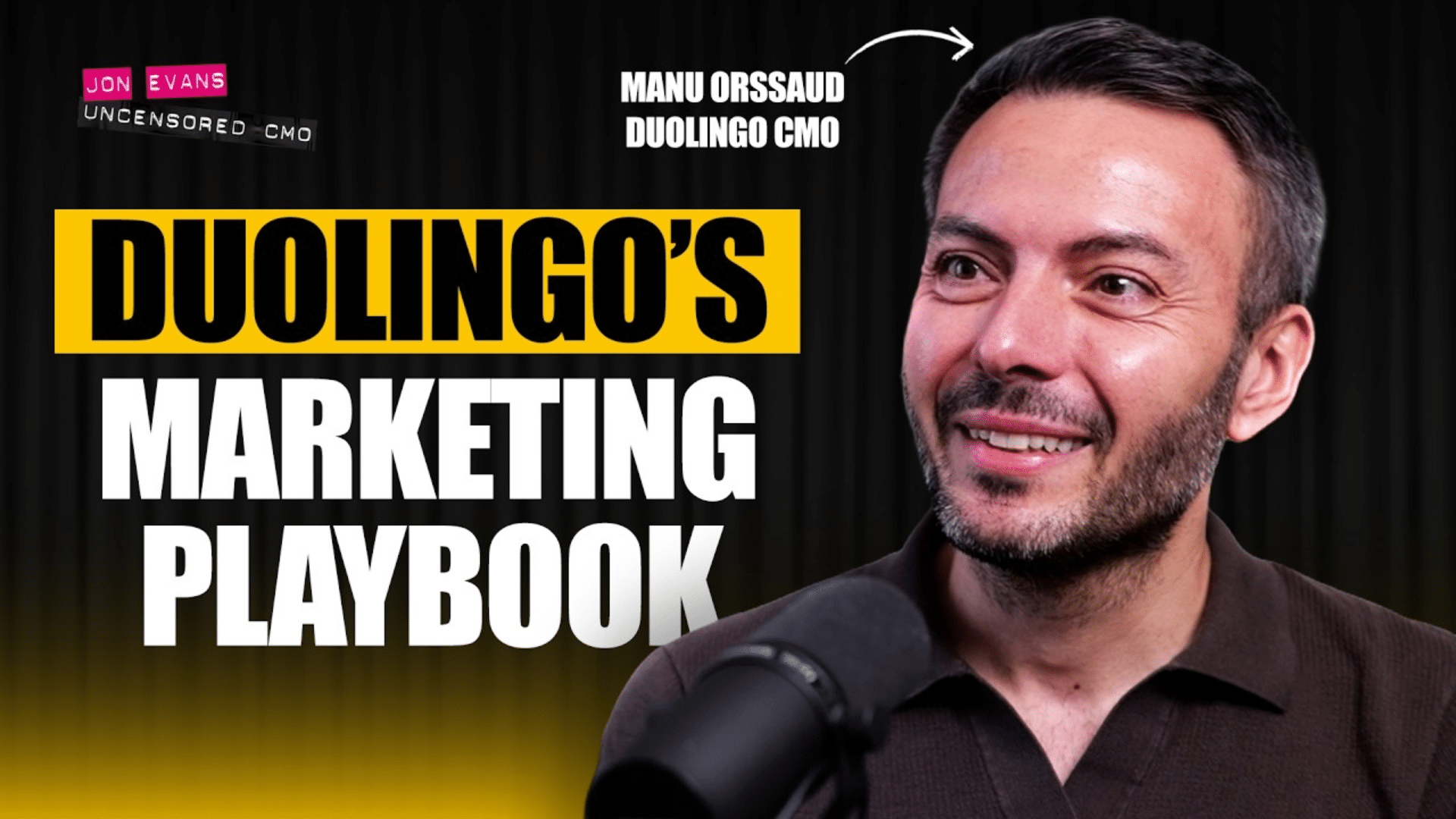
Manu Orssaud, Duolingo’s Chief Marketing Officer, told Jon Evans on the “Uncensored CMO” podcast that the brand is pulling back from its social media stunts, even as he credited that chaos with building Duolingo into one of the most recognizable brands in tech. Orssaud discussed the mechanics behind moments like the “death” of the Duo mascot, the brand’s rapid-response content around Apple’s iPhone Duo launch, and its Bad Bunny-tied Super Bowl campaign, while laying out how the company evaluates creative risk, measures marketing return, and is now shifting its content mix. Here are seven takeaways from the conversation:
1. Budget Constraints Forced Duolingo to Get Creative
Duolingo’s free-to-use model, Orssaud said, created the constraint that shaped its entire marketing approach. “90% of people don’t pay for Duolingo,” he said. “We do not have a hard pay wall, which means that you can’t spend that much money on marketing. Therefore, that becomes a limitation, and that limitation pushes you to think about creativity.” He pointed to the same logic behind Duolingo’s first Super Bowl spot: “The reason why we bought only a 5-second ad is because that’s what we were willing to spend for participating in Super Bowl.”
2. A Tiered Approval System Lets the Team Move Fast Without Him
Orssaud said he often sees Duolingo’s social content for the first time after it has already been posted. “A lot of the content that you saw from us on social media I didn’t actually review or approve any of this. I discovered it was as it was being posted online,” he said. Content deemed risky escalates through a chain: the team flags it to the head of brand, who decides whether it needs to go further. “It’s very rare that I would take anything to [CEO] Luis [von Ahn],” he said. “In fact, I can’t remember the last time we did this.”
3. The ‘Death’ of Duo Remains the Brand’s Biggest Viral Moment
Asked to rank Duolingo’s cultural moments, Orssaud pointed to the campaign in which the company killed off its mascot days after the 2025 Super Bowl. “The biggest one obviously was the death of Duo,” he said. “That was the largest impact in terms of virality, conversation, how our community engaged with it, but also user engagement and user growth.” He said the campaign generated earned media he estimated at “three or five [times] the size of Super Bowl ads.”
4. Duolingo Uses New-User Surveys to Track Brand Impact
Orssaud described a self-reported attribution system built to justify organic brand spend internally. “We are able to ask people where they’ve heard or where they’ve seen Duolingo recently and what exactly drove them to sign up,” he said. “Through this type of onboarding questionnaire and self-reported attribution, we are able to actually pinpoint exactly attribution registration to something specific that came from our brand.”
5. Duolingo Is Dialing Back the ‘Unhinged’ Content
Orssaud said the brand is shifting toward an 80/20 split favoring more restrained content, a change he attributed partly to diminishing returns on escalating stunts. “It’s been very difficult to keep up with the level of antics that we’ve been building over the years,” he said. “Once you’ve killed the owl, once you’ve done this, once you’ve done that, it’s harder for us to continue down that path without having to up the level of craziness.” He cited the Fashion Week pronunciation campaign as the model going forward: “It’s still funny, it’s still unexpected, but it has a deeper connection to the core proposition of learning.”
6. The AI Rollout Backlash Came From a Comms Failure, Not the Strategy Itself
Addressing criticism Duolingo faced over AI adoption, Orssaud said the company miscommunicated its intent rather than overreaching on automation. “The way we communicated this was not great,” he said. “Our audience read this as Duolingo is firing employees and replacing them with machines. That is definitely not the case. We’ve never had a layoff of employees at Duolingo.” He said AI is being used to produce language courses for smaller audience pairings that would not have been economical to build manually.
7. Duolingo Held Its Growth-over-Profit Stance Despite a Stock Drop
Orssaud said the company accepted market pushback after publicly prioritizing user growth over near-term monetization. “This decision that we made at the end of last year … it’s very easy to get to feel pressured from the street to deliver on what they want, and what they want might not be exactly perfectly matched with ultimately what you’re trying to do for the long-term success of this business,” he said. “We believe that growth is the path towards more monetization versus the other way around.”
Subscribe to Our Newsletter
Check Out Our Podcast