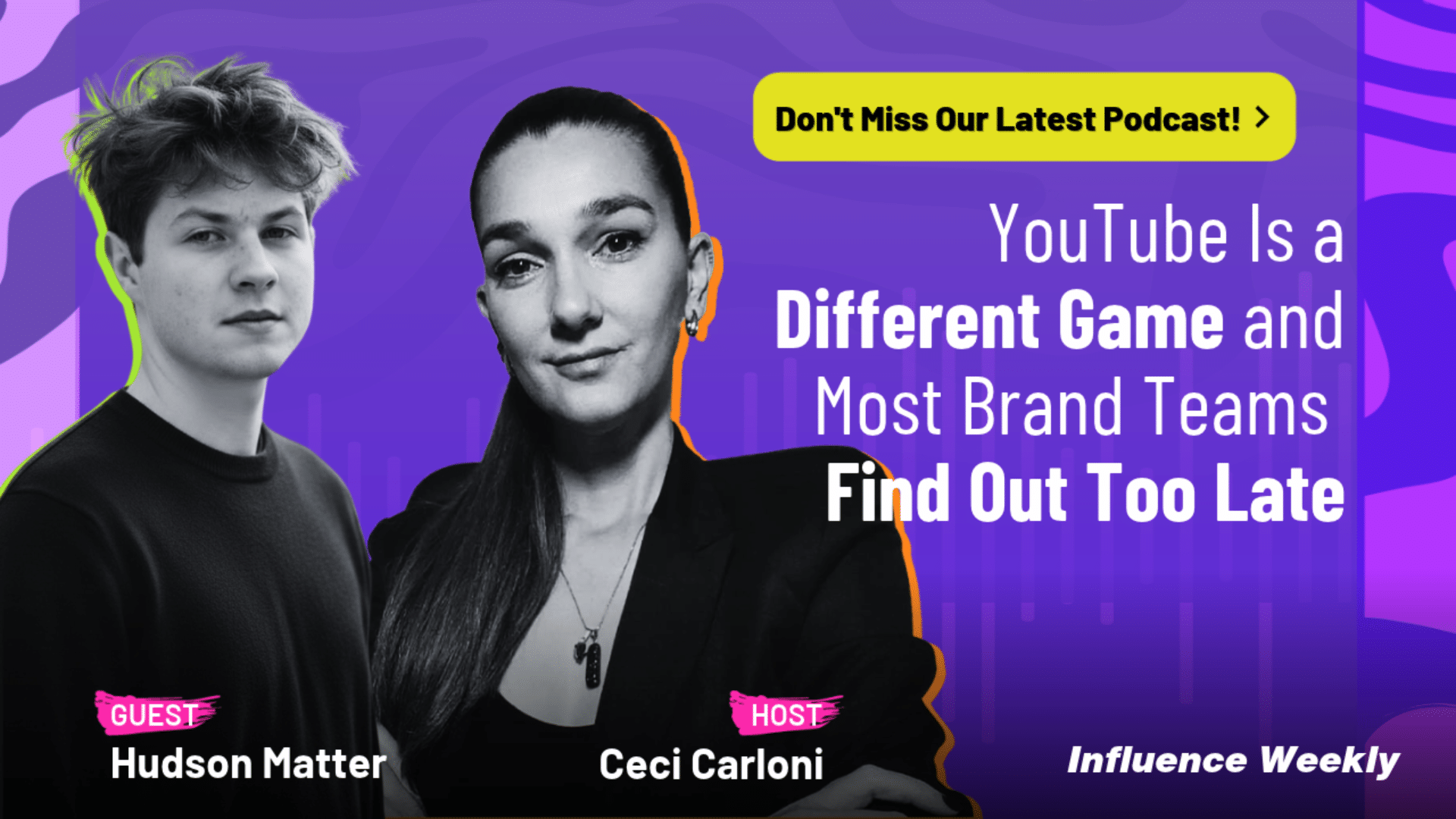
Hudson Matter, who grew his YouTube channel to more than 2 million subscribers before founding NextWave Media in December 2024, reads the ruling as confirmation of something creators already knew. His company helps brands and creators grow on YouTube, acting as an in-house YouTube team for enterprise clients.
Hudson sat down with Net Influencer Senior Editor Ceci Carloni to discuss the SBA guidance, the hire that turned his channel into a business, and why he believes a creator business has to outlive its founder.
1. The Paperwork Was Never the Hard Part
Hudson expects the SBA guidance to change little for full-time creators, though he suggested it could lift brand deal rates for some.
“It’s a billion-dollar industry. It’s nothing new,” Hudson said.
In his view, the legal setup is simpler than most creators assume. His advice to a creator with 50,000 subscribers and no LLC is to form one, connect a bank account and set up a way to get paid.
“I think people overcomplicate it,” he said. AI tools such as ChatGPT and Claude, he added, can now walk a creator through it.
The difficult part, in Hudson’s telling, starts after the paperwork is filed.
2. The First Hire Turns a Channel Into a Company
Hudson ran his channel alone until he was about 16. Going on 17, he hired a full-time “right-hand man” who edited, helped film and worked on the creative process with him.
Someone now depended on the channel to support a family. “When I first hired him, I was like, okay, this isn’t a passion project anymore,” Hudson said.
He sees the same pattern across creators, whether the first hire is an editor or a thumbnail designer. “You have this mental switch that kind of says, I’m the real deal now,” he said.
The switch also brings a load outsiders miss. Hudson said the hardest part of the job is the mental energy it takes to keep generating ideas and make sure revenue grows every month. “It takes such a toll on you,” he said.
3. Hiring Is the Skill Hudson Still Hasn’t Mastered
At NextWave, Hudson calls hiring the highest-leverage task a CEO has, and filling the company with “A players” his top priority. “I still struggle with it,” he said.
At 16, he was managing two or three people, all older than him. His early mistakes came from hiring people he already knew, with no track record to vet.
His process now splits the work by strength. For NextWave’s upcoming VP of enterprise sales, a more senior role than any he has filled, he asked a friend who owns a private equity firm which recruiter it uses. Hudson wrote the role’s requirements himself and left the search to the headhunting agency.
“If you know how to hire good people and manage good people, there’s no limits as to how big you can grow a business,” he said.
4. Three Satisfaction Metrics That Are Hard to Fake
Hudson optimizes for viewer satisfaction and avoids metrics that can be artificially inflated, such as retention. A creator can hold viewers to the end with what he called an “unethical reason to wait,” which lifts viewership without proving anyone enjoyed the video.
His first metric is new viewers who returned, meaning people who watched one video and came back for another. “This is a metric I barely see anyone talk about, and yet it’s so valuable,” he said.
The second is average views per viewer. A reading of 4.8 over 28 days, Hudson explained, means the average viewer watched four or five videos in that window, a result he called “incredible.”
The third is total returning viewers, tracked month over month. If November falls well below September and October, he reviews those videos for weak titles, thumbnails or content.
These numbers show a creator what is working. Getting a channel to that point is where Hudson sees most creators stall.
5. Knowledge Decides How Fast YouTube Pays
Hudson rejects a fixed timeline for YouTube payoff. Some channels pay off fast. Others post for five years and, in his words, “get nowhere because you don’t have the knowledge.”
His fast example is Mack Hopkins, who worked with MrBeast and, by Hudson’s account, has about eight uploads that each drew close to 10 million views or more. Hudson attributes that to the five to six years Mack spent working inside YouTube before launching his own channel.
“The main thing that keeps people stuck is just knowledge,” he said.
For someone starting a channel this week, he lays out three steps. Define the target audience, including whether it comes for entertainment or education. Build concepts that the audience already thinks about, then make them personal. Then find a way to stay motivated, because growth “does take a very long time.”
6. Brands Face the Same Experience Problem
The knowledge problem Hudson describes for new creators also applies to brands. Top brands want to build on YouTube, he said, but lean on in-house social teams with “virtually no experience” on the platform. “YouTube’s a very different game than traditional social media,” he said.
That, plus upcoming creators repeatedly asking him how to grow, led him to start NextWave. The company acts as an enterprise client’s in-house YouTube team, staffed by experienced specialists.
Hudson positions it between two groups he says rarely collaborate. Top creators keep making videos, and agencies keep doing agency work.
His second reason for leaving the creator-first path was durability.
7. A Creator Business Has to Outlive the Creator
Hudson estimates the average creator gets five to six years at the top, seven “if you’re really lucky,” because audiences of personality-led channels eventually want something new. A successful company, he argued, can last far longer. “It’s a lot higher risk, but the reward is much more significant,” he said.
Creators already earning real money, he said, should build something that runs without their face or voice. He pointed to KSI and Logan Paul with PRIME and Ryan Trahan with JOYRIDE as products that can keep selling after the creators behind them stop posting.
He applies the same test to himself, aiming to put NextWave in a position where someone better could eventually take over. “I want someone to hire NextWave and not hire me,” he said. “But it takes a long time to get there.”
What the Classification Can’t Decide
The SBA guidance clarifies creators’ federal classification. Hudson’s account suggests the decisions that make a creator a business sit elsewhere: taking responsibility for someone else’s paycheck, and building something that no longer needs the founder on camera.
Hudson ties both to how he defines passion. Every creator hits tasks they dislike, he said, so loving the work falls short. “You have to love and be obsessed with a potential outcome,” he said. His stated goal is to make NextWave the biggest Creator Economy platform in the world.
For creators now formally recognized under the SBA guidance, the question is how many will use that status to build companies that outlast their channels.
Dragomir is a Serbian freelance blog writer and translator. He is passionate about covering insightful stories and exploring topics such as influencer marketing, the creator economy, technology, business, and cyber fraud.








The U.S. Small Business Administration issued its first guidance recognizing content creators as small businesses in October 2026. For working creators, the classification changes the paperwork more than the job.
Hudson Matter, who grew his YouTube channel to more than 2 million subscribers before founding NextWave Media in December 2024, reads the ruling as confirmation of something creators already knew. His company helps brands and creators grow on YouTube, acting as an in-house YouTube team for enterprise clients.
Hudson sat down with Net Influencer Senior Editor Ceci Carloni to discuss the SBA guidance, the hire that turned his channel into a business, and why he believes a creator business has to outlive its founder.
1. The Paperwork Was Never the Hard Part
Hudson expects the SBA guidance to change little for full-time creators, though he suggested it could lift brand deal rates for some.
“It’s a billion-dollar industry. It’s nothing new,” Hudson said.
In his view, the legal setup is simpler than most creators assume. His advice to a creator with 50,000 subscribers and no LLC is to form one, connect a bank account and set up a way to get paid.
“I think people overcomplicate it,” he said. AI tools such as ChatGPT and Claude, he added, can now walk a creator through it.
The difficult part, in Hudson’s telling, starts after the paperwork is filed.
2. The First Hire Turns a Channel Into a Company
Hudson ran his channel alone until he was about 16. Going on 17, he hired a full-time “right-hand man” who edited, helped film and worked on the creative process with him.
Someone now depended on the channel to support a family. “When I first hired him, I was like, okay, this isn’t a passion project anymore,” Hudson said.
He sees the same pattern across creators, whether the first hire is an editor or a thumbnail designer. “You have this mental switch that kind of says, I’m the real deal now,” he said.
The switch also brings a load outsiders miss. Hudson said the hardest part of the job is the mental energy it takes to keep generating ideas and make sure revenue grows every month. “It takes such a toll on you,” he said.
3. Hiring Is the Skill Hudson Still Hasn’t Mastered
At NextWave, Hudson calls hiring the highest-leverage task a CEO has, and filling the company with “A players” his top priority. “I still struggle with it,” he said.
At 16, he was managing two or three people, all older than him. His early mistakes came from hiring people he already knew, with no track record to vet.
His process now splits the work by strength. For NextWave’s upcoming VP of enterprise sales, a more senior role than any he has filled, he asked a friend who owns a private equity firm which recruiter it uses. Hudson wrote the role’s requirements himself and left the search to the headhunting agency.
“If you know how to hire good people and manage good people, there’s no limits as to how big you can grow a business,” he said.
4. Three Satisfaction Metrics That Are Hard to Fake
Hudson optimizes for viewer satisfaction and avoids metrics that can be artificially inflated, such as retention. A creator can hold viewers to the end with what he called an “unethical reason to wait,” which lifts viewership without proving anyone enjoyed the video.
His first metric is new viewers who returned, meaning people who watched one video and came back for another. “This is a metric I barely see anyone talk about, and yet it’s so valuable,” he said.
The second is average views per viewer. A reading of 4.8 over 28 days, Hudson explained, means the average viewer watched four or five videos in that window, a result he called “incredible.”
The third is total returning viewers, tracked month over month. If November falls well below September and October, he reviews those videos for weak titles, thumbnails or content.
These numbers show a creator what is working. Getting a channel to that point is where Hudson sees most creators stall.
5. Knowledge Decides How Fast YouTube Pays
Hudson rejects a fixed timeline for YouTube payoff. Some channels pay off fast. Others post for five years and, in his words, “get nowhere because you don’t have the knowledge.”
His fast example is Mack Hopkins, who worked with MrBeast and, by Hudson’s account, has about eight uploads that each drew close to 10 million views or more. Hudson attributes that to the five to six years Mack spent working inside YouTube before launching his own channel.
“The main thing that keeps people stuck is just knowledge,” he said.
For someone starting a channel this week, he lays out three steps. Define the target audience, including whether it comes for entertainment or education. Build concepts that the audience already thinks about, then make them personal. Then find a way to stay motivated, because growth “does take a very long time.”
6. Brands Face the Same Experience Problem
The knowledge problem Hudson describes for new creators also applies to brands. Top brands want to build on YouTube, he said, but lean on in-house social teams with “virtually no experience” on the platform. “YouTube’s a very different game than traditional social media,” he said.
That, plus upcoming creators repeatedly asking him how to grow, led him to start NextWave. The company acts as an enterprise client’s in-house YouTube team, staffed by experienced specialists.
Hudson positions it between two groups he says rarely collaborate. Top creators keep making videos, and agencies keep doing agency work.
His second reason for leaving the creator-first path was durability.
7. A Creator Business Has to Outlive the Creator
Hudson estimates the average creator gets five to six years at the top, seven “if you’re really lucky,” because audiences of personality-led channels eventually want something new. A successful company, he argued, can last far longer. “It’s a lot higher risk, but the reward is much more significant,” he said.
Creators already earning real money, he said, should build something that runs without their face or voice. He pointed to KSI and Logan Paul with PRIME and Ryan Trahan with JOYRIDE as products that can keep selling after the creators behind them stop posting.
He applies the same test to himself, aiming to put NextWave in a position where someone better could eventually take over. “I want someone to hire NextWave and not hire me,” he said. “But it takes a long time to get there.”
What the Classification Can’t Decide
The SBA guidance clarifies creators’ federal classification. Hudson’s account suggests the decisions that make a creator a business sit elsewhere: taking responsibility for someone else’s paycheck, and building something that no longer needs the founder on camera.
Hudson ties both to how he defines passion. Every creator hits tasks they dislike, he said, so loving the work falls short. “You have to love and be obsessed with a potential outcome,” he said. His stated goal is to make NextWave the biggest Creator Economy platform in the world.
For creators now formally recognized under the SBA guidance, the question is how many will use that status to build companies that outlast their channels.
Listen to the full conversation on “The Big Three” podcast.
Subscribe to Our Newsletter
Check Out Our Podcast